All species › Passerines › Drongos › Ashy Drongo
Ashy Drongo | Dicrurus leucophaeus
Grijze drongo | Drongo cenizo
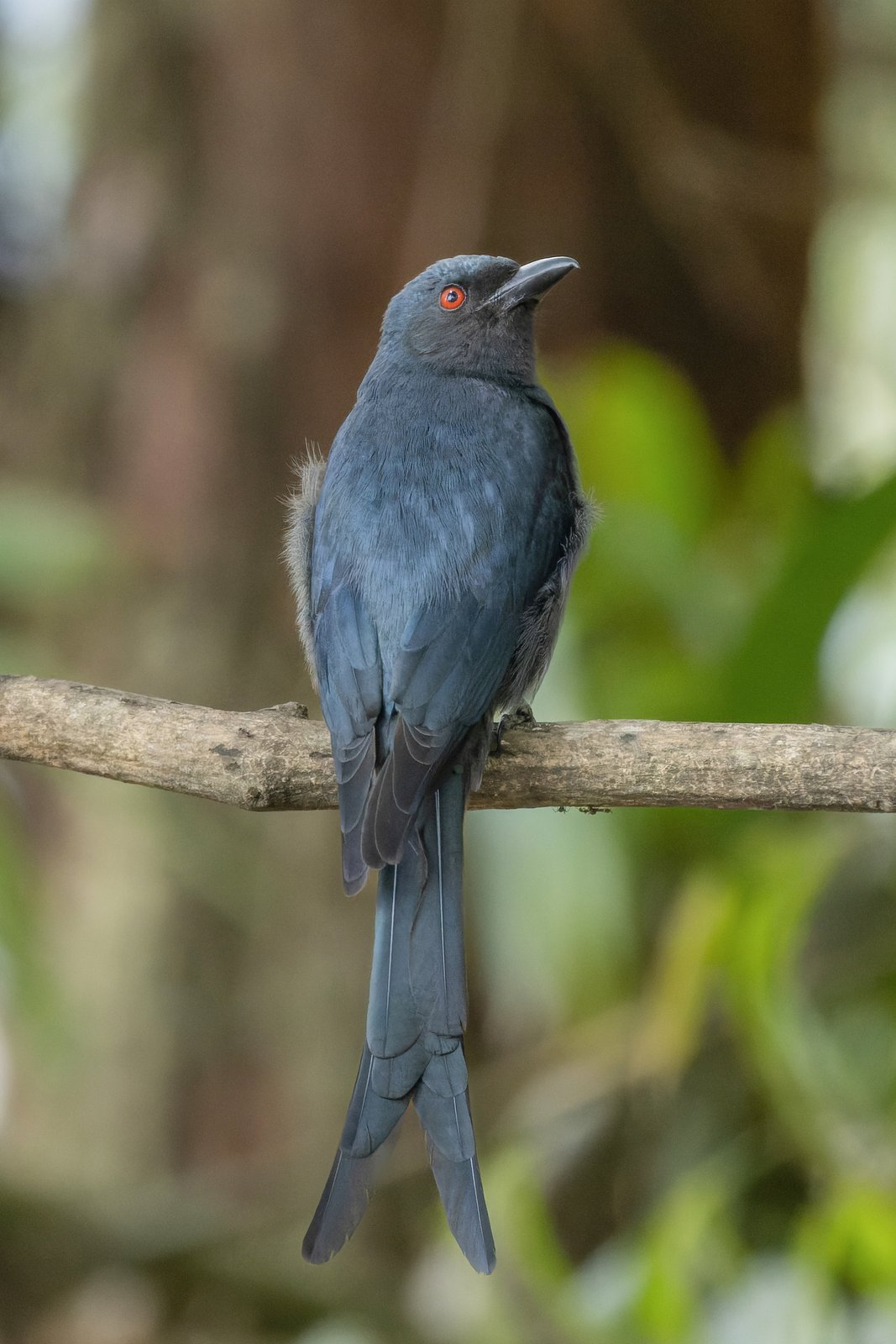
A slim, slate-grey drongo with a long, deeply forked tail and a red eye, breeding in forests from the Himalayas to South-East Asia. In the region it is a rare winter visitor, recorded a handful of times in the Emirates since 2006 and a few times in Kuwait, Oman and Israel.
Voice
A varied repertoire of clear whistles, harsh and nasal notes, such as drangh-gah or chee-chiu, and much mimicry. Wintering birds are usually silent.
Recording: Lars Lachmann — CC BY-NC-SA 4.0 · converted to mono · xeno-canto
Identification
25–29 cm, about half of it tail. Birds reaching the region, from the western Himalayas (subspecies longicaudatus), are fairly dark slate-grey with a faint gloss above, slightly paler and duller grey below, with brownish-black wings. The long tail is deeply forked and rather narrow, with slightly flared tips. The eye is strikingly red in adults; there is no white gape spot. First-winter birds have pale fringes on the belly and undertail coverts and a darker eye. Perches upright on an open branch in a tree and sallies for flying insects.
Confusion species
Black Drongo (Dicrurus macrocercus) is glossy black, usually has a white gape spot and a broader, less long tail; first-winter Black Drongos show a black upper breast contrasting sharply with a white-scaled belly, whereas a first-winter Ashy is more uniformly grey. Dark birds are tricky and need good photographs; tail shape alone is not reliable, as it changes with wear and moult.
Habitat
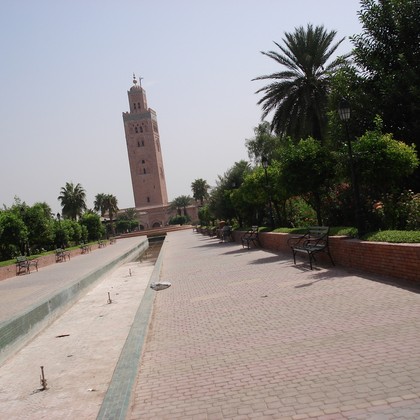
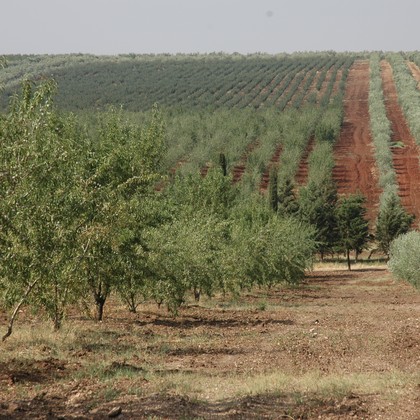
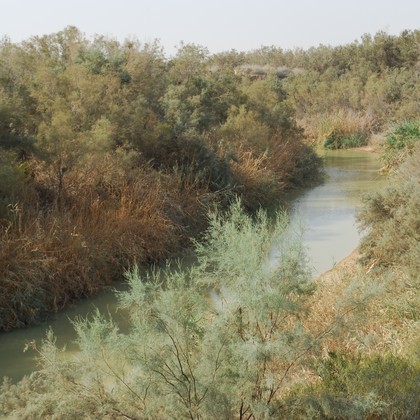
In the breeding range forest and forest edge in hills and mountains; in winter also open woodland, gardens and plantations. In the region birds have mainly been seen in parks, gardens, orchards and well-wooded farms, hunting insects from a lookout in a tree.
Where the bird is most at home, classified by the habitats of North Africa and the Middle East.
Range and movements
In the United Arab Emirates it has been recorded almost annually in small numbers since the first in December 2006 near Abu Dhabi (nine records up to 2015), mainly in the parks of Dubai and Al Ain, sometimes returning to the same site for several winters. In Kuwait three records between 2010 and 2013, the first in April 2010 at Jahra Farms. In Oman one record, in November 2014 at Qatbit in Dhofar. In Israel one, from 3 to 14 December 2014 at kibbutz Gan Shmuel on the northern coastal plain. Beyond the region it breeds from eastern Afghanistan and the Himalayas through southern China to South-East Asia and the Greater Sundas; northern birds winter in India and South-East Asia. A few vagrants also in Iran.
- Winter visitor (c. Oct–Mar)
- dark = core range, pale = thinly spread
How and when to look
There is no regular site. Most records fall in winter in the green parks of Dubai and Abu Dhabi, the best places to search for eastern vagrants; a bird often stays for weeks at the same spot.
Conservation status
Not globally threatened. In the region a rare winter visitor without colonisation; the number of records has increased since 2006, probably owing to more birdwatchers and the many irrigated parks in the Gulf states.
Scientific name
Dicrurus leucophaeus | Vieillot, 1817
Vieillot described the species in 1817 and placed it straight away in the genus where it still stands. The genus Dicrurus was introduced in 1816 by Vieillot. Dicrurus comes from the Greek dikros, 'forked', and oura, 'tail' — for the forked tail of most drongos. leucophaeus is Greek for 'ashy' or 'dusky white', from leukos 'white' and phaios 'grey, dusky'. The specimen the first description was based on came from Java, Indonesia.