All species › Waders, gulls and terns › Plovers and lapwings › American Golden-Plover
American Golden-Plover | Pluvialis dominica
Amerikaanse goudplevier | Chorlito dorado americano
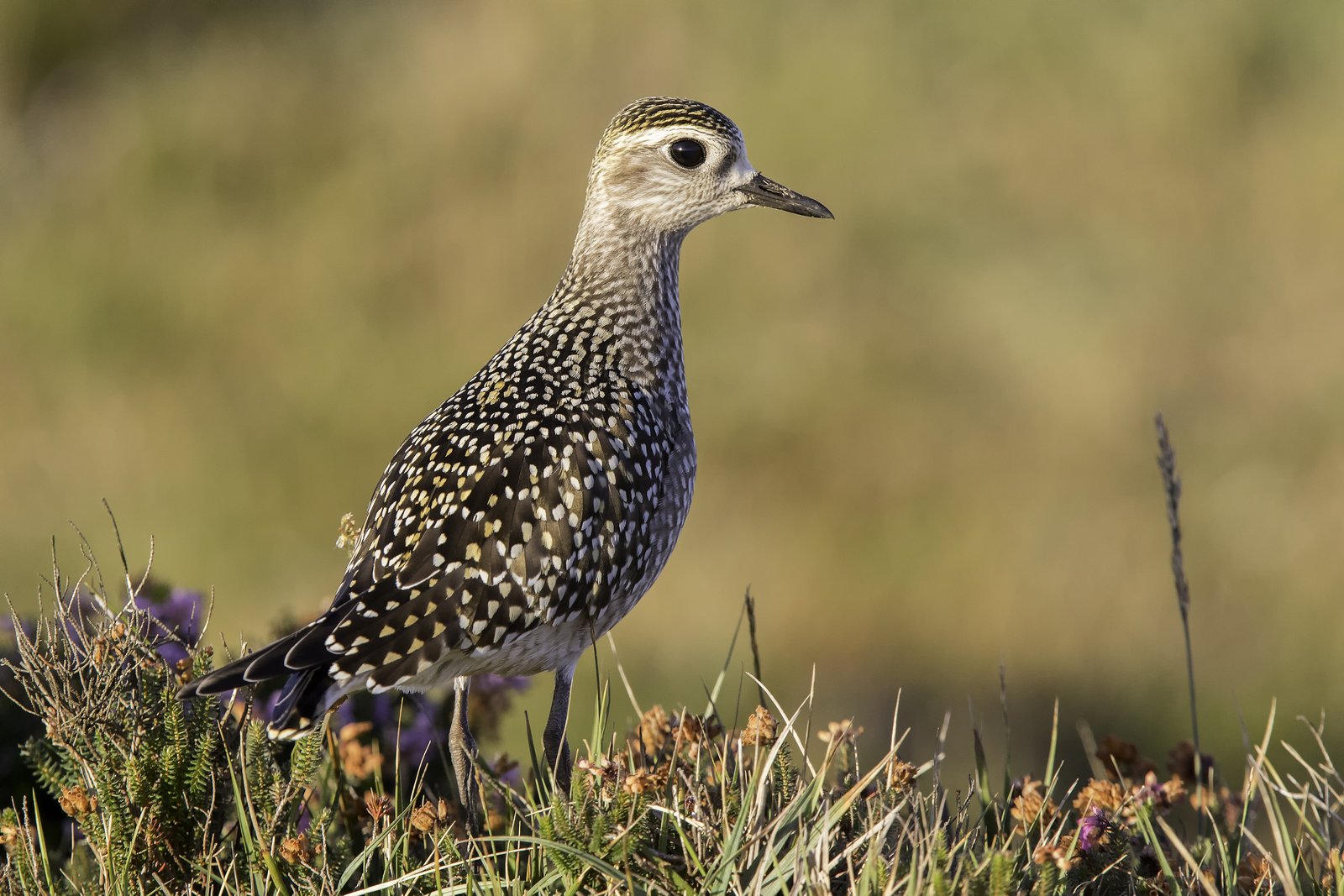
A slender, long-winged golden plover of the North American tundra, which normally migrates across the Atlantic to the pampas of South America. In the region it is a very rare vagrant: there are a handful of records from Morocco and Israel and one from Oman, most in autumn and winter.
Voice
A sharp, disyllabic kloo-ee or tloo-ee stressed on the first syllable, higher and sharper than the call of European Golden-Plover; also a short queep.
Recording: Doug Hynes — CC BY-SA 4.0 · converted to mono · xeno-canto
Identification
Slimmer than European Golden-Plover, with longer legs and above all long wings: the wing tips project well beyond the tail, with four to five primary tips visible beyond the short tertials. In winter and first-year plumage greyer and colder-toned than European Golden-Plover, with a striking white supercilium against a dark crown and a fairly dark ear patch. Breeding plumage: entirely black underparts including the undertail, with a broad white band ending at the breast sides. In flight grey axillaries and a grey underwing, and only a faint wing bar.
Confusion species
Pacific Golden-Plover (Pluvialis fulva) is the hardest: slightly smaller and more golden, with longer tertials and hence a shorter primary projection (two to three tips), and a different call. European Golden-Plover (Pluvialis apricaria) is warmer buff, with a fainter supercilium, short wing tips and a white underwing. Black-bellied Plover (Pluvialis squatarola) is larger and heavier-billed, with black axillaries and a white rump.
Habitat
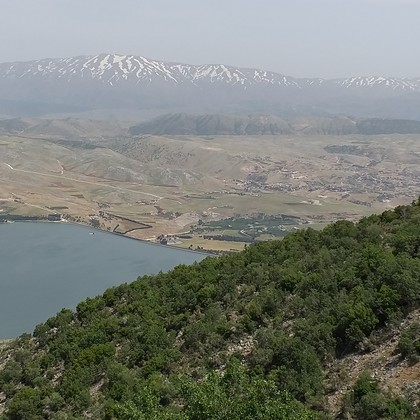
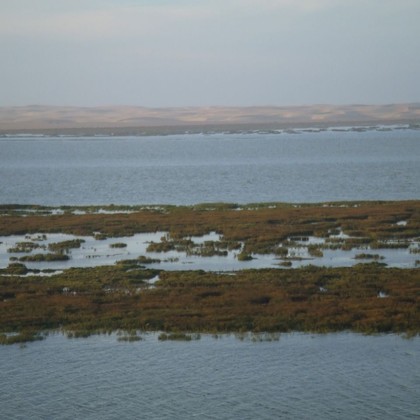
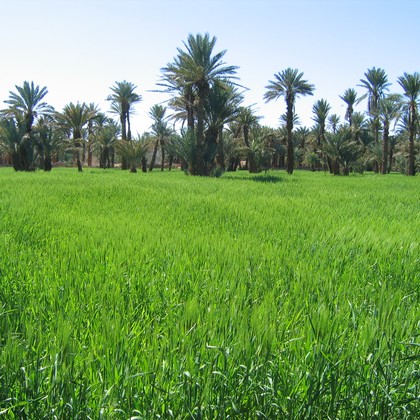
In the region it has turned up on short-grass fields, fish ponds, dayas and temporary pools, saltmarsh, salt pans and sewage ponds, often among European Golden-Plovers, lapwings or other waders.
Where the bird is most at home, classified by the habitats of North Africa and the Middle East.
Range and movements
Morocco: around ten records, mainly in autumn along the Atlantic coast between Casablanca and Agadir (including Oued Ksab near Essaouira in 2011, Zemamra near Oualidia in 2016, Dar Bouazza in 2019, the Souss in 2024 and Agadir in 2025). Israel: one at Ma'agan Michael and Akko in winter 2008–2009 (first record), one at Eilat in December 2020 and one at Poleg Marsh in January 2022. Oman: one at Sur in December 2003. Not known elsewhere in the region, although it could be overlooked among Pacific Golden-Plovers in Arabia. Breeds on the tundra of Alaska and northern Canada and winters on the pampas of Argentina and Uruguay; an annual vagrant to Europe, mainly to the British Isles and the Azores.
How and when to look
From October to December check flocks of golden plovers and lapwings on fields and dayas along the Moroccan Atlantic coast, and in Israel the fish ponds and salt pans. Look for a grey, long-winged bird with a white supercilium. Photograph the wing tips and the underwing as it takes off: they are decisive for acceptance by the rarities committee.
Conservation status
Not globally threatened, although it has clearly declined in North America. Only a vagrant in the region; records are assessed by the Moroccan and Israeli rarities committees.
Scientific name
Pluvialis dominica | (Müller, 1776)
Müller described the species in 1776 as Charadrius Dominicius; because it was later moved to another genus, the author and year stand in brackets. The genus Pluvialis was introduced in 1760 by Brisson. Pluvialis is Latin for 'relating to rain', from pluvia 'rain', from the old belief that these plovers flocked when rain was imminent. dominica refers to Santo Domingo, the island now called Hispaniola, in the West Indies. The specimen the first description was based on came from Hispaniola.