All species › Passerines › New World sparrows › Vesper Sparrow
Position in the tree Birds Aves › Birds with a flexible palate Neognathae › All other modern birds Neoaves › Landbirds Telluraves › Falcons, parrots and passerines Australaves › Falcons and passerines Eufalconimorphae › Parrots and passerines Psittacopasserae
Vesper Sparrow | Pooecetes gramineus
Avondgors | Gorrión cola blanca
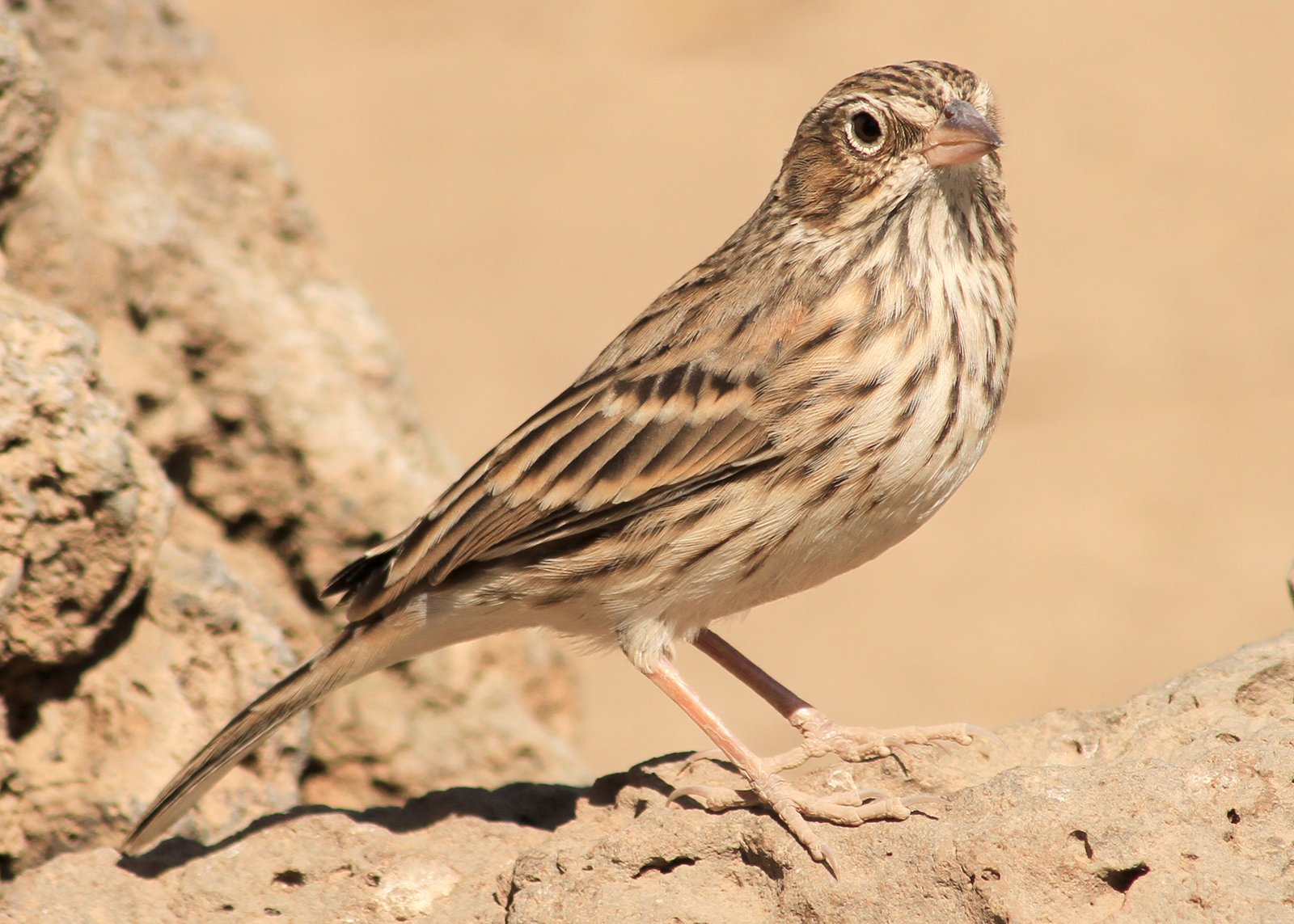
The Vesper Sparrow is a large, grey-brown, streaked sparrow of open grassland and farmland, recognised by its white outer tail feathers. It breeds in southern Canada and the northern and western United States and winters in large numbers in northern and central Mexico.
Voice
The song begins with two low, whistled notes, followed by a higher series of trills; in the guide area heard mainly in spring. The call is a soft, short chip and a thin see in flight.
Recording: Valerie Heemstra — CC BY-NC-SA 4.0 · shortened to the first 60 s, mono · xeno-canto
Identification
14–16 cm. Fairly large and sturdy, with a short, conical bill and a medium-length tail. Upperparts grey-brown with dark streaks. Head with a distinct white eye-ring, a dark-bordered brown ear-patch and a pale moustachial stripe. Small rufous patch on the shoulder, often hidden. Breast and flanks white with fine dark streaks, belly white. The outer tail feathers are white and especially visible when the bird takes off. The sexes are alike.
Confusion species
Savannah Sparrow Passerculus sandwichensis is smaller, has a shorter tail without white, a yellow spot above the eye and no conspicuous eye-ring. Lark Sparrow Chondestes grammacus also has white tail corners, but a chestnut-and-white striped head and an unstreaked breast. Longspurs of the genus Calcarius have a different tail pattern and call, and walk rather than hop.
Habitat
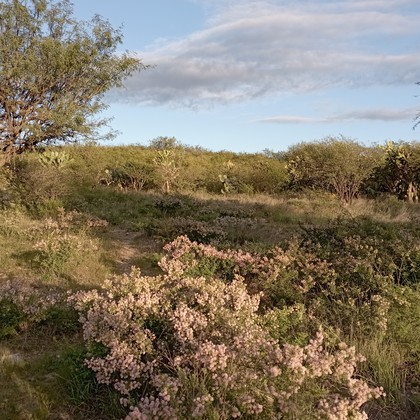
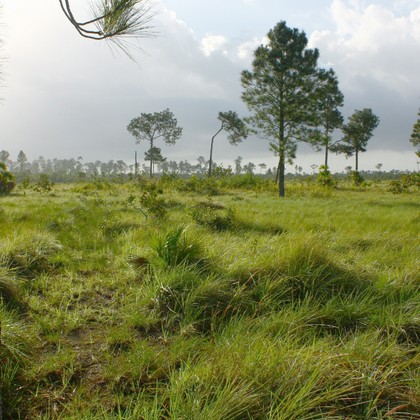
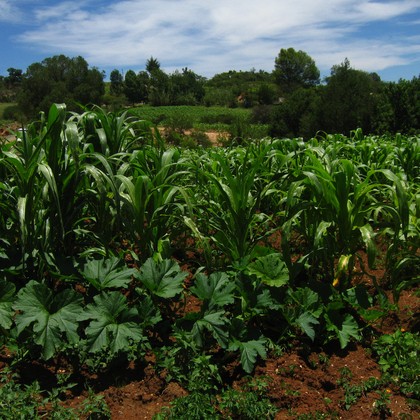
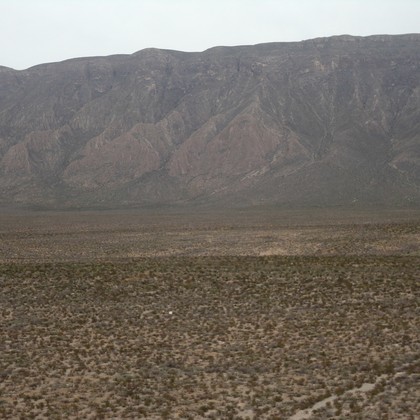
In winter semi-desert grassland, open grassland, fields, stubble, fallow land and pasture with bare patches, from the lowlands up onto the plateau. It lives in loose flocks, often with other sparrows and longspurs. It takes seeds and insects on the ground and flies up to a wire or bush when disturbed.
Where the bird is most at home, classified by the vegetation units of Mexico and Central America.

Range and movements
Breeds in southern Canada and the northern and western United States. Winters in the southern United States and in Mexico. In the guide area widespread in the north and centre, from Baja California and Sonora to Tamaulipas and south to Michoacán, Puebla and Veracruz; scarce as far as Oaxaca.
- Winter visitor (c. Oct–Mar)
- dark = core range, pale = thinly spread
How and when to look
When a bird flushes from grassland or a field, the white outer tail feathers are the quickest feature; on the ground the white eye-ring helps.
Conservation status
Least Concern (LC). Numerous, but in parts of North America it has declined through the loss of grassland and more intensive farming.
Scientific name
Pooecetes gramineus | (Gmelin, 1789)
Gmelin described the species in 1789 as Fringilla graminea; because it was later moved to another genus, the author and year stand in brackets. The genus Pooecetes was introduced in 1858 by Baird. Pooecetes is Greek, from poa 'grass' and oikētēs 'dweller': 'grass-dweller'. gramineus is Latin for 'grassy, of grass', after the open grassland the species inhabits. The specimen the first description was based on came from New York.