All species › Swifts › Hummingbirds › Tres Marias Hummingbird
Position in the tree Birds Aves › Birds with a flexible palate Neognathae › All other modern birds Neoaves › Birds of the elements Elementaves › Nightjars and swifts Strisores
Tres Marias Hummingbird | Cynanthus lawrencei
Mariakolibrie | Colibrí pico ancho de Islas Marías
The Tres Marias Hummingbird occurs only on the Islas Marías, an island group in the Pacific Ocean off the coast of Nayarit. It was long regarded as a subspecies of Broad-billed Hummingbird and is now treated as a separate species. It is the only hummingbird that breeds on the islands.
Voice
A dry, short chit or che-dit, and in chases a rattling twitter, as in Broad-billed Hummingbird.
No recording with a suitable Creative Commons licence is available for this species yet.
Identification
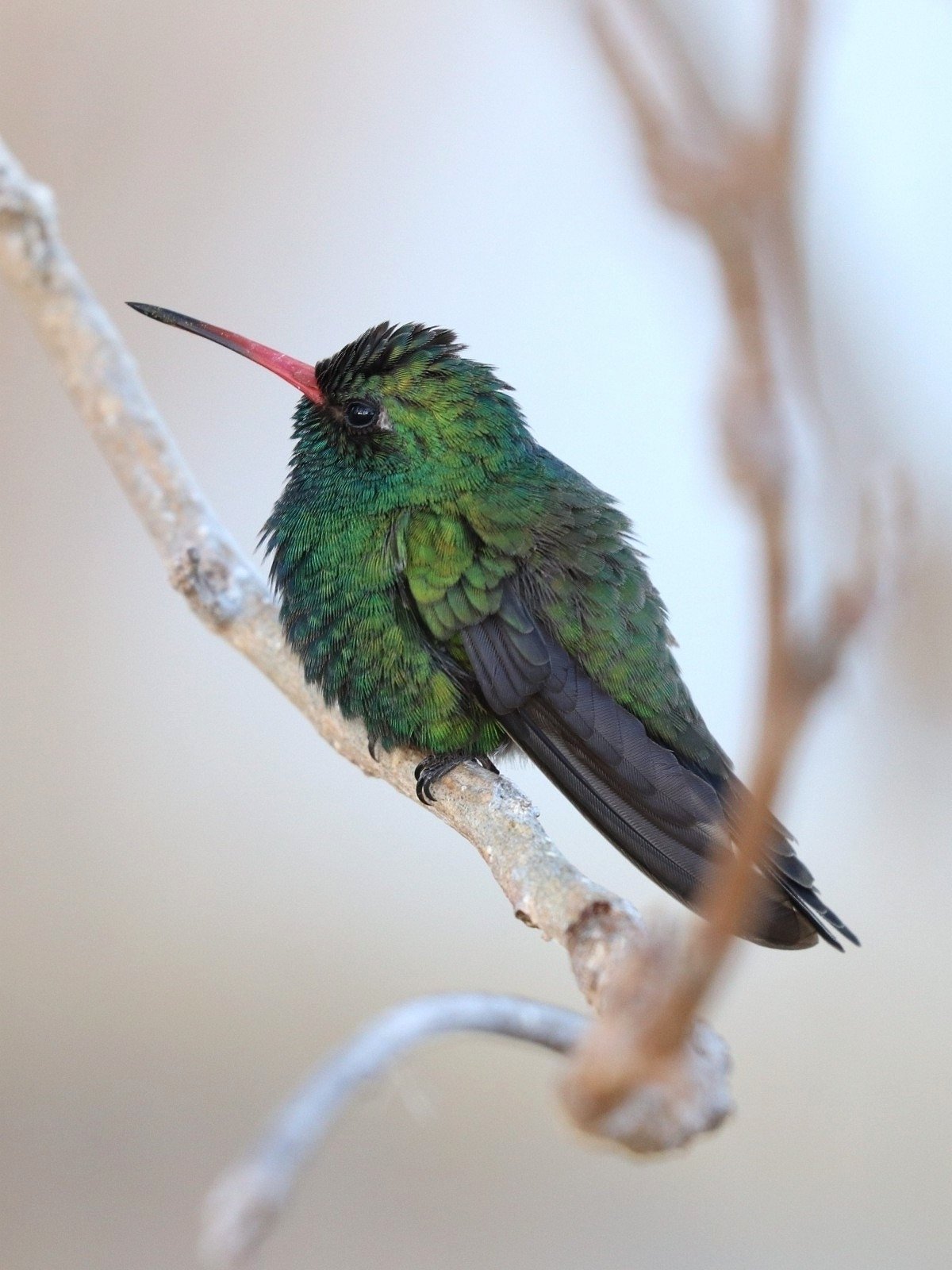
9–10 cm, with a straight bill that is broad at the base; red with a black tip in the male, duller in the female. The male is glittering green with a blue throat and a blue-black, slightly forked tail. The female is green above and grey below, with a white stripe behind the eye above a dark ear patch and white tips to the outer tail feathers. The differences from Broad-billed Hummingbird lie mainly in small details of plumage and measurements.
Confusion species
Broad-billed Hummingbird Cynanthus latirostris on the mainland is almost identical and does not occur on the islands. Golden-crowned Emerald Cynanthus auriceps, which occurs on the mainland of Nayarit, is smaller, and the male has a green throat and a long, deeply forked tail.
Habitat
Dry deciduous forest, scrub and forest edges on the islands, from the coast to the highest parts. It feeds at flowers of shrubs and trees, and catches small insects.
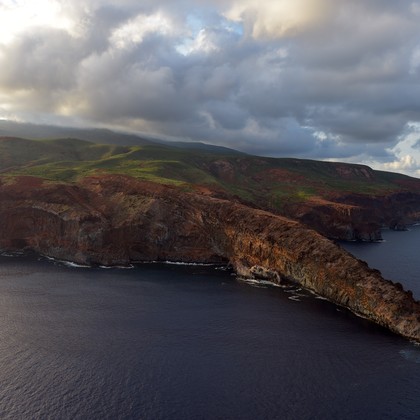
Where the bird is most at home, classified by the vegetation units of Mexico and Central America.


Range and movements
Endemic to the guide area, and restricted to the Islas Marías off the coast of Nayarit: María Madre, María Magdalena, María Cleofas and San Juanito.
- Resident
- Summer visitor (c. Apr–Sep)
- dark = core range, pale = thinly spread
How and when to look
The islands can only be visited under conditions and on organised boat trips. Where visits are possible, it is found at flowering shrubs in and around the settlement on María Madre and along forest edges.
Conservation status
Near Threatened. The range is very small and limited to a few islands, where feral animals and degradation of the forest pose a risk. The islands are a biosphere reserve.
Scientific name
Cynanthus lawrencei | (Berlepsch, 1887) (GBIF: Cynanthus latirostris)
Berlepsch described the species in 1887 as Iache lawrencei; because it was later moved to another genus, the author and year stand in brackets. The genus Cynanthus was introduced in 1827 by Swainson. Cynanthus is Greek, from kuanos 'dark blue' and anthos 'blossom, flower', after the glittering blue plumage. lawrencei honours the American businessman, collector and ornithologist George Newbold Lawrence (1806–1895). The specimen the first description was based on came from Tres Marías Islands, Mexico.