All species › Passerines › Wrens › Southern House Wren
Position in the tree Birds Aves › Birds with a flexible palate Neognathae › All other modern birds Neoaves › Landbirds Telluraves › Falcons, parrots and passerines Australaves › Falcons and passerines Eufalconimorphae › Parrots and passerines Psittacopasserae
Southern House Wren | Troglodytes musculus
Zuidelijke huiswinterkoning | Ratona común
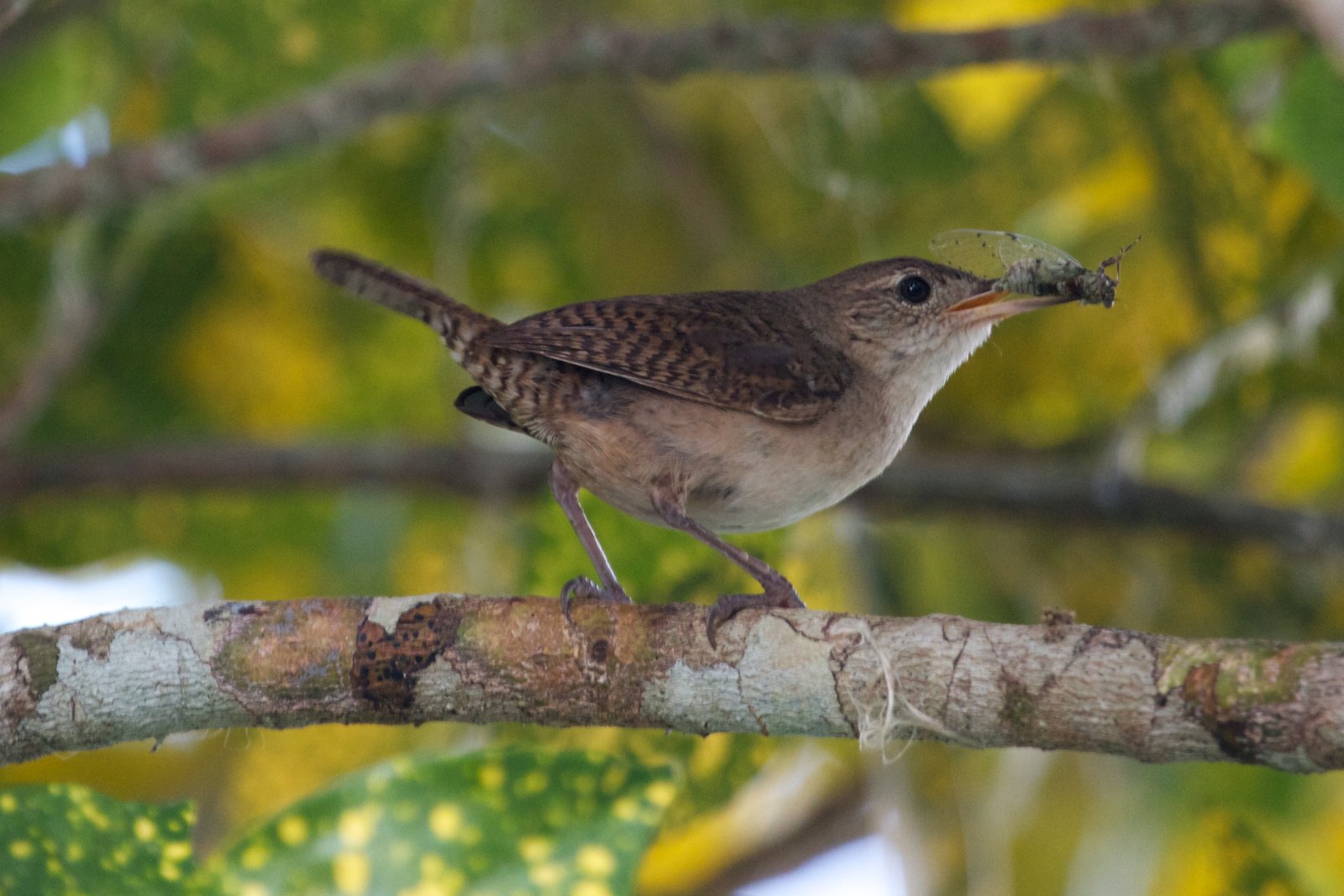
The Southern House Wren is a small brown wren of open and semi-open country and one of the most widespread songbirds of tropical America. It was long treated as one species with Northern House Wren. In the guide area it lives from southern Mexico to Panama, often close to people.
Voice
A rapid, bubbling and varied song of trills and clear notes, heard all year. Calls include a harsh, rattling chatter and a nasal jeer.
Recording: Marco Pecoraro — CC BY-NC 4.0 · converted to mono · iNaturalist
Identification
11–12 cm. Upperparts plain brown, wings and tail with narrow dark bars. A faint buffy-brown supercilium. Throat and breast pale buffy brown, flanks and undertail coverts warmer brown, the undertail coverts barred dark. Bill thin and slightly curved. Tail fairly short and often cocked. Male and female are alike.
Confusion species
Northern House Wren Troglodytes aedon is resident in northern and central Mexico and present farther south in winter; northern birds are usually greyer brown and paler below, and birds of the Mexican highlands have a warm brown throat. Rufous-browed Wren Troglodytes rufociliatus and Ochraceous Wren Troglodytes ochraceus live in montane forest and have a bold rufous or ochre supercilium. Grass Wren Cistothorus platensis has a streaked back and lives in grassland.
Habitat
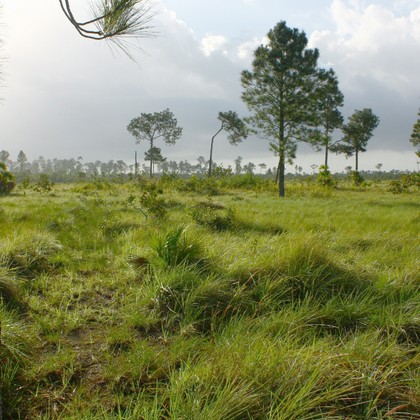
Open and semi-open country with bushes: forest edges, clearings, fields, pastures with hedges, coffee plantations, villages, gardens and city parks, from sea level high into the mountains. Absent from closed forest. It forages low in vegetation for insects and spiders. Nests in cavities, cracks in walls, under roofs and in nest boxes.
Where the bird is most at home, classified by the vegetation units of Mexico and Central America.






Range and movements
From southern Mexico through all of Central America to Panama. Outside the guide area throughout almost all of South America to Tierra del Fuego.
- Resident
- dark = core range, pale = thinly spread
How and when to look
Found almost everywhere in villages, gardens and farmland, and often first noticed by its loud song from a roof or fence.
Conservation status
Not assessed separately by the IUCN; as part of the broader House Wren it is listed as not threatened. Very common and benefits from open land created by deforestation.
Scientific name
Troglodytes musculus | Naumann, 1823
Naumann described the species in 1823 and placed it straight away in the genus where it still stands. The genus Troglodytes was introduced in 1809 by Vieillot. Troglodytes is Greek, from troglē 'hole, crevice' and dyein 'to creep into': 'cave-dweller', after the habit of disappearing into crevices and holes while foraging. musculus is Latin for 'little mouse', a diminutive of mus 'mouse', after the small, brown, mouse-like bird. The specimen the first description was based on came from Bahia, Brazil.