All species › Passerines › Ovenbirds and woodcreepers › Slaty Spinetail
Position in the tree Birds Aves › Birds with a flexible palate Neognathae › All other modern birds Neoaves › Landbirds Telluraves › Falcons, parrots and passerines Australaves › Falcons and passerines Eufalconimorphae › Parrots and passerines Psittacopasserae
Slaty Spinetail | Synallaxis brachyura
Leikleurige stekelstaart | Pijuí pizarroso
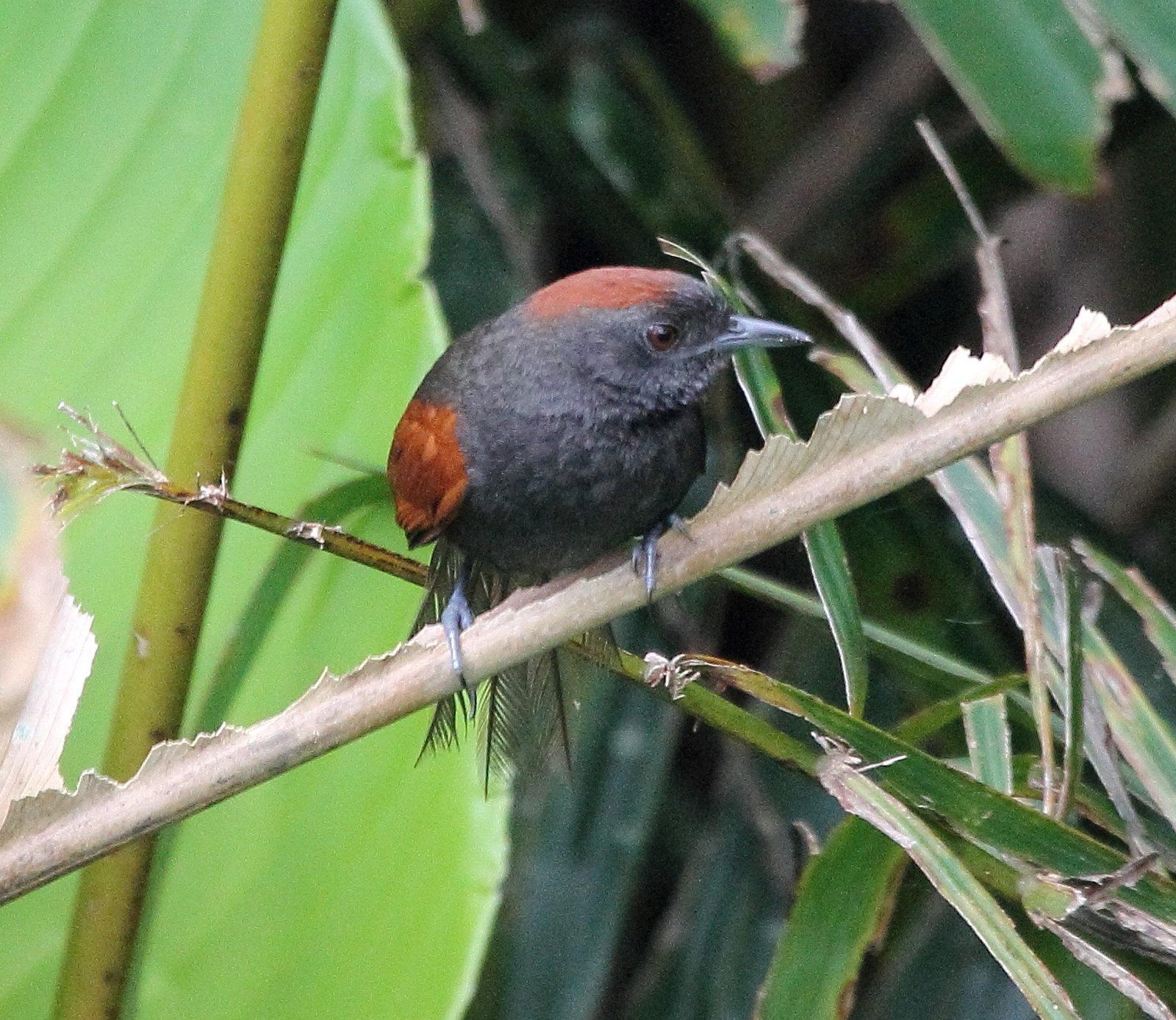
The Slaty Spinetail is a dark grey spinetail with a rufous crown and rufous wings that lives in dense scrub and rank growth. It is heard much more often than seen and usually stays low in the vegetation. In the guide area it lives from Honduras to Panama.
Voice
A short, dry, rattling phrase, often repeated from cover.
Recording: Juan Freile — CC BY-NC-SA 4.0 · converted to mono · xeno-canto
Identification
15–16 cm, about half of which is tail; tail long, graduated and dark greyish-brown, with pointed feather tips. Crown and wing coverts rufous. Head and body dark slate-grey, underparts slightly paler; throat with fine black and white streaks. Bill fairly short and pointed.
Confusion species
Pale-breasted Spinetail Synallaxis albescens is much paler, with whitish underparts, and lives in grassland with bushes. Rufous-breasted Spinetail Synallaxis erythrothorax has a rufous breast and lives mainly further north, from Mexico to Honduras.
Habitat
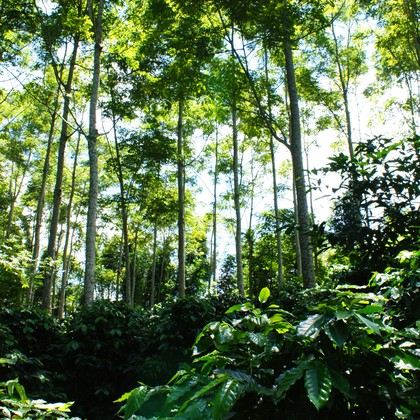
Dense scrub, rank growth, young secondary growth, abandoned fields and forest edges in humid lowlands and foothills. Forages low in the vegetation for insects, usually in pairs. Builds a large stick nest with a tubular entrance.
Where the bird is most at home, classified by the vegetation units of Mexico and Central America.


Range and movements
Caribbean slope of Honduras, Nicaragua and Costa Rica, also in south-western Costa Rica; in Panama on both slopes. Outside the guide area in western Colombia and Ecuador and further into north-western South America.
- Resident
- dark = core range, pale = thinly spread
How and when to look
Often found in rank growth and scrub along roads and forest edges; patience and following the sound help to get the bird briefly into view.
Conservation status
Not threatened. Common and benefits in part from the spread of secondary growth.
Scientific name
Synallaxis brachyura | de Lafresnaye, 1843
De Lafresnaye described the species in 1843 and placed it straight away in the genus where it still stands. The genus Synallaxis was introduced in 1818 by Vieillot. Synallaxis is Greek, from sunallaxis 'exchange'; why Vieillot chose the name is unclear. brachyura is Greek, from brakhus 'short' and oura 'tail': 'short-tailed', short for a spinetail. The specimen the first description was based on came from Bogotá, Colombia.