All species › Waders, gulls and terns › Sandpipers and allies › Semipalmated Sandpiper
Position in the tree Birds Aves › Birds with a flexible palate Neognathae › All other modern birds Neoaves › Birds of the elements Elementaves › Cranes and waders Gruimorphae
Semipalmated Sandpiper | Calidris pusilla
Grijze strandloper | Correlimos semipalmeado
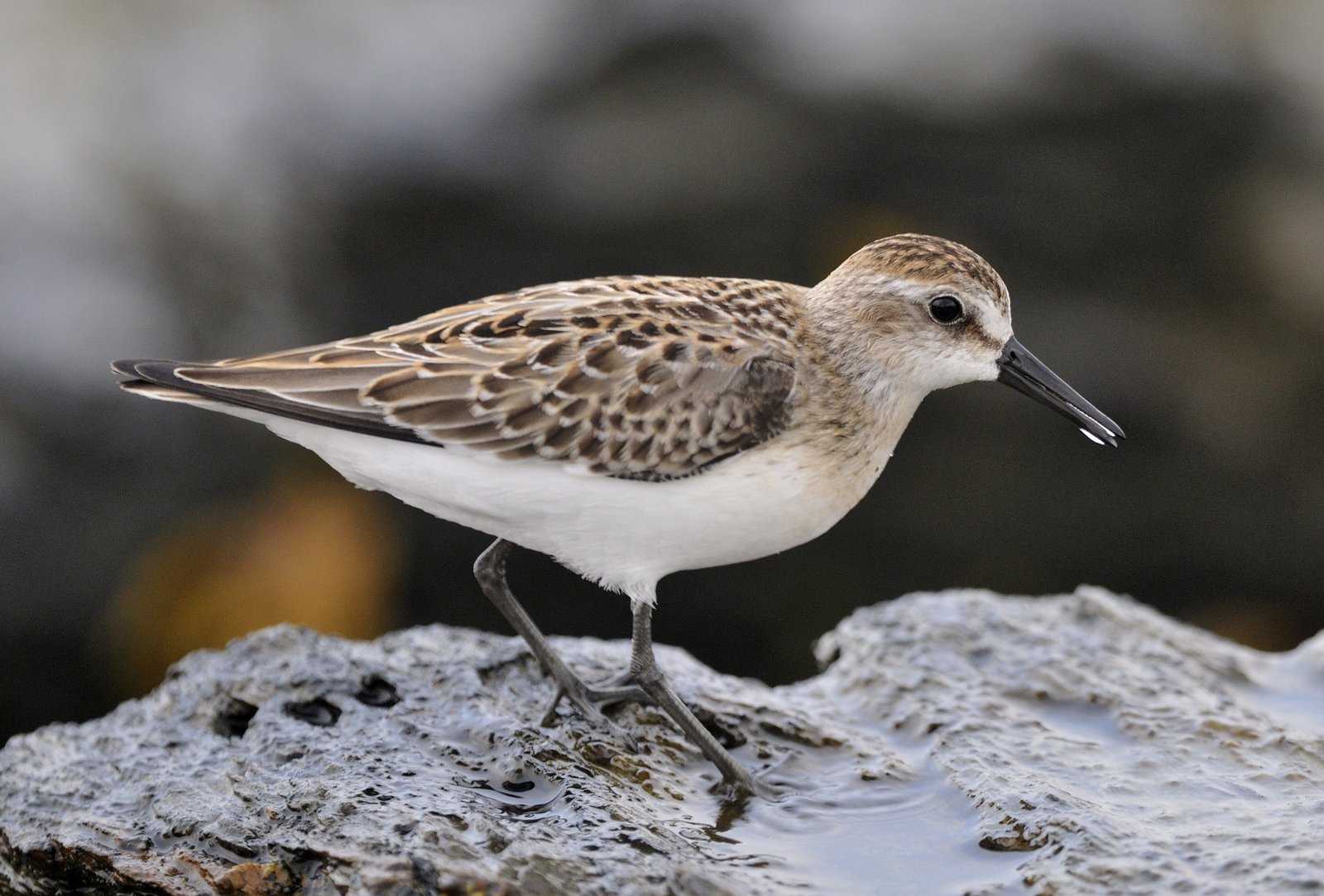
The Semipalmated Sandpiper is a small grey sandpiper with black legs and a short, straight, blunt-tipped bill. It breeds on the tundra of Alaska and Canada and winters mainly along the coasts of northern South America. In the guide area it is a passage migrant and, especially in the south, a winter visitor.
Voice
A short, low churk or krrt, lower and less shrill than the call of Western Sandpiper; flocks give a soft twittering.
Recording: AUDEVARD Aurélien — CC BY-NC-SA 4.0 · converted to mono · xeno-canto
Identification
13–15 cm, compact, with a fairly large head, black legs and a short, straight black bill with a slightly swollen, blunt tip. Small webs between the toes are visible only at close range. In non-breeding plumage plain grey above, with a faint grey wash on the breast sides and a white belly; a pale supercilium. Juveniles have a scaly pattern above with pale feather fringes. In breeding plumage browner, with fine streaks on the breast. In flight a narrow white wing bar and a rump with a dark centre.
Confusion species
Western Sandpiper Calidris mauri is very similar but usually has a longer bill with a finer, slightly drooping tip; juveniles have rufous scapulars. Least Sandpiper Calidris minutilla is browner, with yellow legs and a thinner, pointed bill. White-rumped Sandpiper Calidris fuscicollis and Baird's Sandpiper Calidris bairdii are larger and longer-winged. Sanderling Calidris alba is larger and much paler in winter.
Habitat
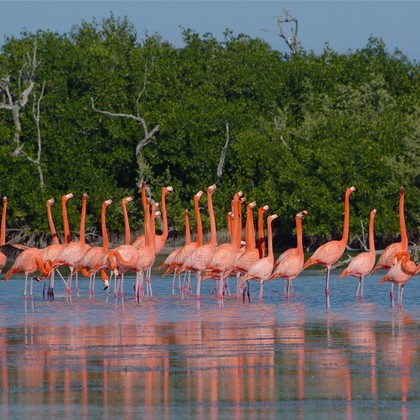
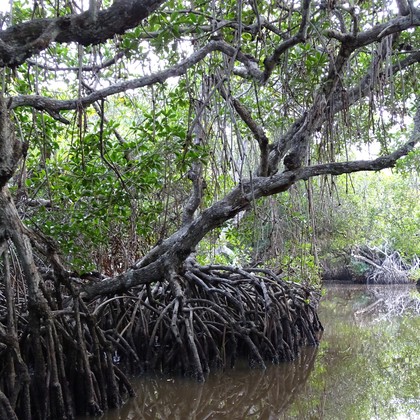
Mudflats and tidal flats, lagoons, estuaries, salt pans, sandy beaches and the muddy edges of mangroves, on migration also the shores of inland lakes, ponds and rice fields. It feeds in flocks with short probes in wet mud and shallow water, often together with Western Sandpipers.
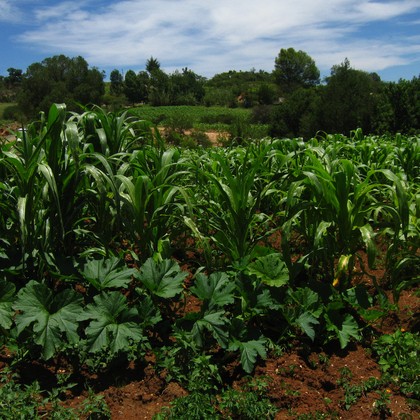
Where the bird is most at home, classified by the vegetation units of Mexico and Central America.



Range and movements
Passage migrant throughout the guide area; in spring mainly along the Gulf coast of Mexico and the Caribbean coast, in autumn also on the Pacific side. As a winter visitor scarce in Mexico and more numerous in southern Central America, especially along the coasts of Panama. Outside the guide area the species breeds on the tundra of Alaska and Arctic Canada and winters mainly along the coasts of the Caribbean and northern South America, as far as Brazil and Peru.
- Winter visitor (c. Oct–Mar)
- dark = core range, pale = thinly spread
How and when to look
On the mudflats of the Gulf coast and of Panama, flocks mixed with Western Sandpipers pass through in April and May; comparing bill length and calls separates the two species.
Conservation status
Near Threatened. The population has declined in recent decades, especially in the eastern part of the breeding range. In the wintering areas the species is hunted locally, and mudflats and mangroves are being lost to shrimp farming, port construction and development.
Scientific name
Calidris pusilla | (Linnaeus, 1766)
Linnaeus described the species in 1766 as Tringa pusilla; because it was later moved to another genus, the author and year stand in brackets. The genus Calidris was introduced in 1804 by Merrem. Calidris goes back to Ancient Greek kalidris or skalidris, a name Aristotle used for an unidentified grey waterside bird. pusilla is Latin for 'very small'. The specimen the first description was based on came from Santo Domingo.