All species › Passerines › Antpittas › Scaled Antpitta
Position in the tree Birds Aves › Birds with a flexible palate Neognathae › All other modern birds Neoaves › Landbirds Telluraves › Falcons, parrots and passerines Australaves › Falcons and passerines Eufalconimorphae › Parrots and passerines Psittacopasserae
Scaled Antpitta | Grallaria guatimalensis
Schubkapmierpitta | Hormiguero cholino escamoso
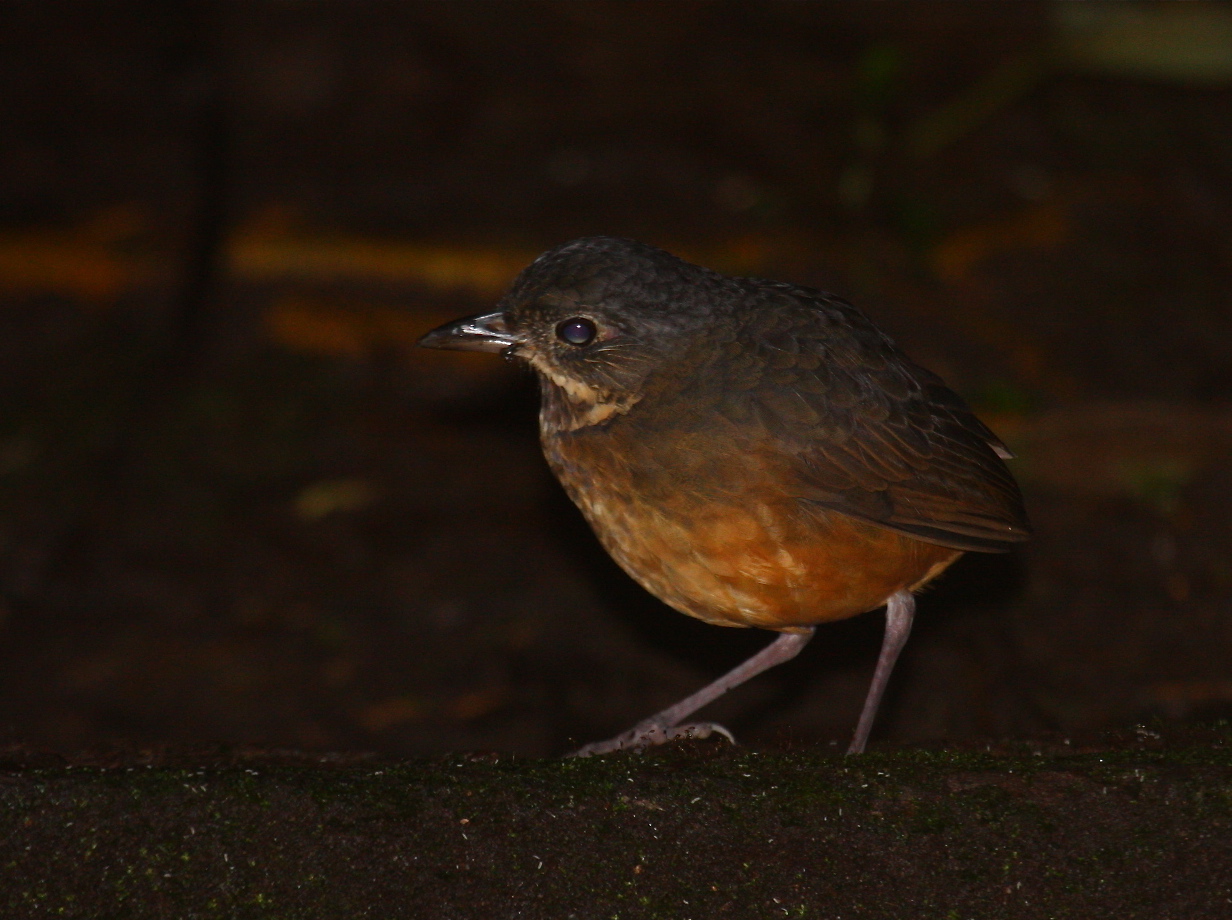
The Scaled Antpitta is the largest and most widespread antpitta in the guide area: a round, long-legged ground bird of humid montane forest, with scaled upperparts and warm rufous-brown underparts. It occurs from Mexico to Panama.
Voice
A low, hollow, quavering series of notes that swells and rises in pitch and falls slightly at the end. It sings mainly at dawn and dusk, often from the ground or a low branch.
Recording: Julio Delgado — CC BY-NC-SA 4.0 · converted to mono · xeno-canto
Identification
16–18 cm, with a very short tail and long, greyish-pink legs. Crown and nape grey with black scaling, back olive-brown with black scales. A dark malar stripe, an ochre-buff cheek patch and a pale crescent across the lower throat. Breast and belly warm ochre-brown to rufous. Male and female are alike.
Confusion species
Other antpittas in the guide area are much smaller and lack the scaled crown and back. Antthrushes of the genus Formicarius have a longer, cocked tail and an unscaled, dark head.
Habitat
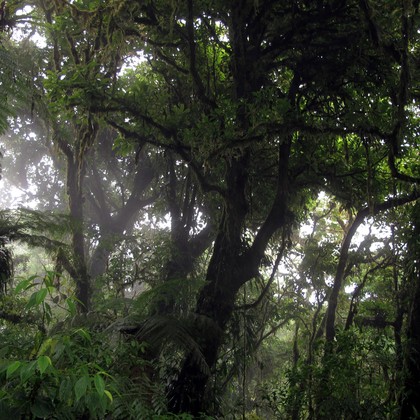
Floor of humid montane and cloud forest, especially in ravines, along streams and on steep slopes with a dense understorey, also mature secondary forest and overgrown forest edges. It walks and hops over the forest floor in search of earthworms, insects and other invertebrates.
Where the bird is most at home, classified by the vegetation units of Mexico and Central America.


Range and movements
In the guide area in the mountains of southern and central Mexico, the highlands of Guatemala, El Salvador, Honduras and Nicaragua, and the mountains of Costa Rica and Panama. Outside the guide area in the mountains of South America.
- Resident
- dark = core range, pale = thinly spread
How and when to look
The best chance is quiet listening at dawn or dusk in a forested ravine. After rain or on muddy trails the bird sometimes comes briefly into the open.
Conservation status
Not threatened. Scarce and seldom seen, but widespread; sensitive to clearance of montane forest.
Scientific name
Grallaria guatimalensis | de Lafresnaye, 1842
De Lafresnaye described the species in 1842 and placed it straight away in the genus where it still stands. The genus Grallaria was introduced in 1816 by Vieillot. Grallaria is from Latin grallae 'stilts', after the long legs. guatimalensis means 'from Guatemala', the country of the type locality. The specimen the first description was based on came from Guatemala.