All species › Passerines › Tyrant flycatchers and allies › Say's Phoebe
Position in the tree Birds Aves › Birds with a flexible palate Neognathae › All other modern birds Neoaves › Landbirds Telluraves › Falcons, parrots and passerines Australaves › Falcons and passerines Eufalconimorphae › Parrots and passerines Psittacopasserae
Say's Phoebe | Sayornis saya
Says phoebe | Mosquero llanero
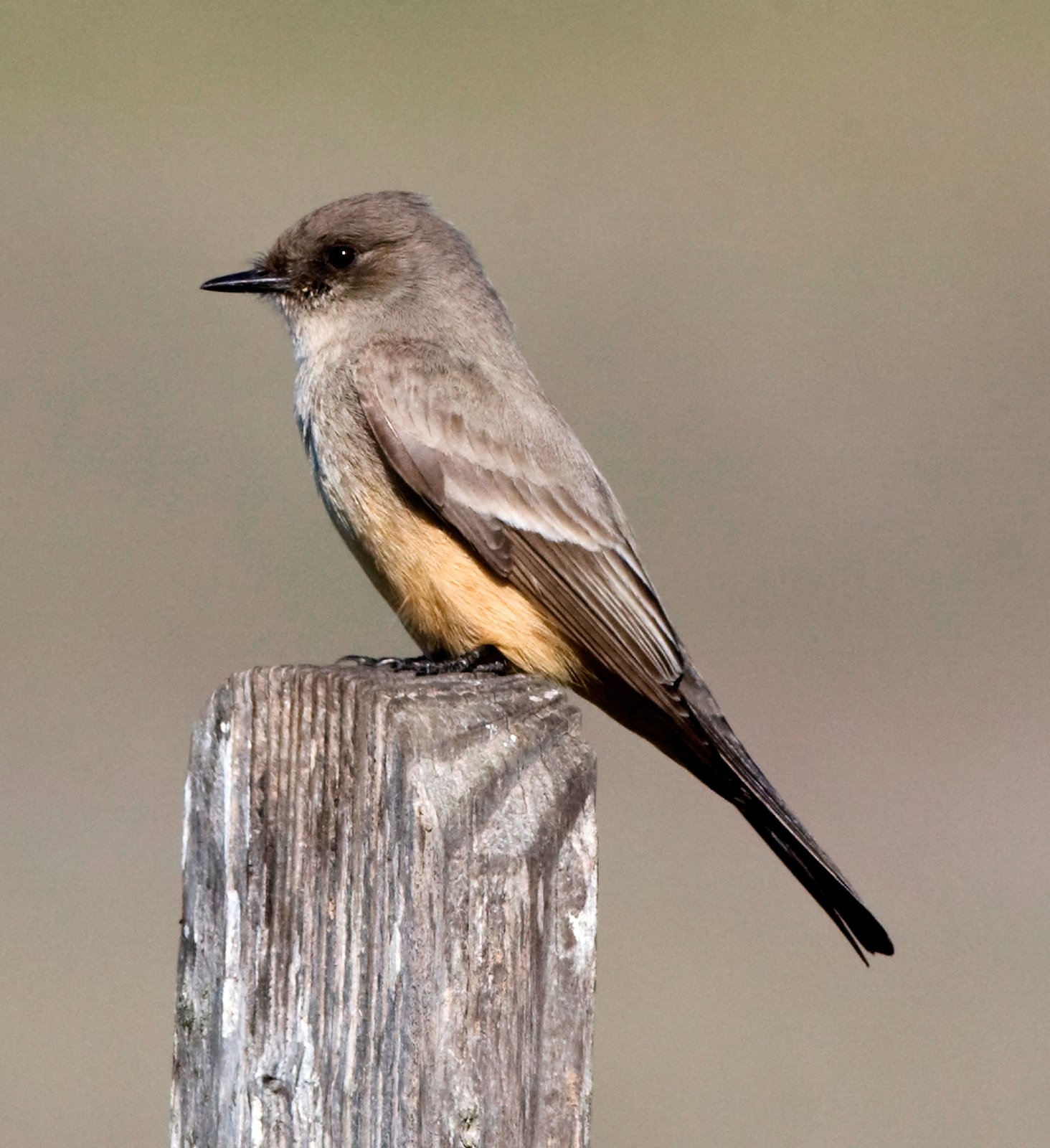
Say's Phoebe is a medium-sized, greyish-brown tyrant flycatcher of dry, open country, with a cinnamon belly and a black tail. It perches low on a bush, post or wall, pumps its tail and catches insects in short sallies. In the guide area it breeds in northern and central Mexico; in winter birds from the north join them.
Voice
A plaintive, descending whistled pee-ur; the song combines this with a hoarse pit-seer.
Recording: Patrick J. Blake — CC BY-NC-SA 4.0 · converted to mono · xeno-canto
Identification
17–18 cm, with a thin black bill. Upperparts greyish-brown, head slightly darker, wings darker brown with faint pale wing-bars. Tail black. Throat and breast pale grey to greyish-brown, belly and undertail coverts cinnamon to rusty. Male and female are alike.
Confusion species
The female Vermilion Flycatcher Pyrocephalus rubinus is smaller, with a streaked breast and a salmon-pink belly. Eastern Phoebe Sayornis phoebe (winter visitor in the east) is whitish below without cinnamon. Black Phoebe Sayornis nigricans is black with a white belly.
Habitat
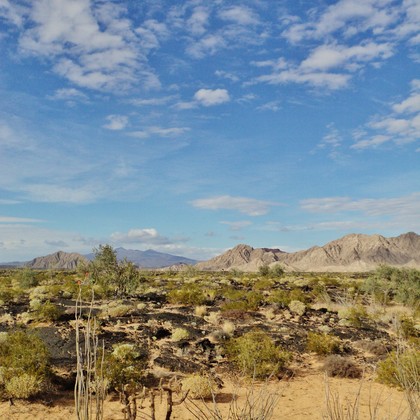
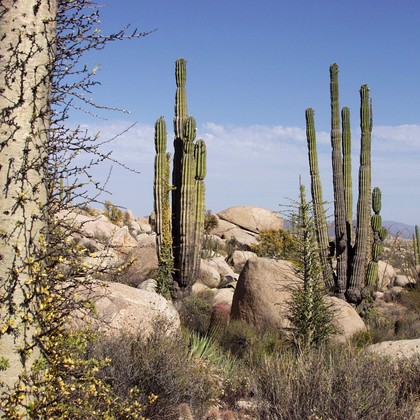
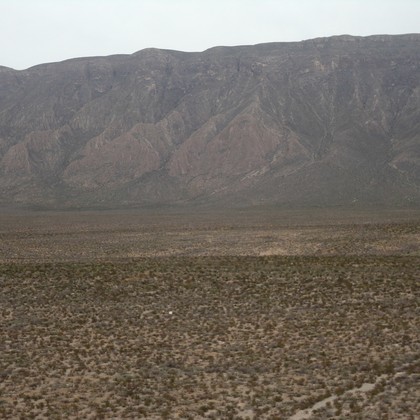
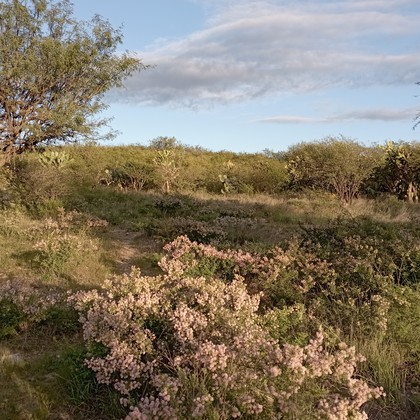
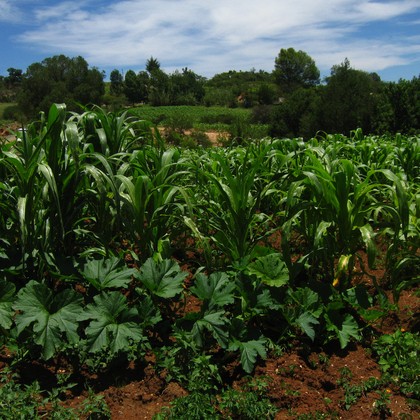
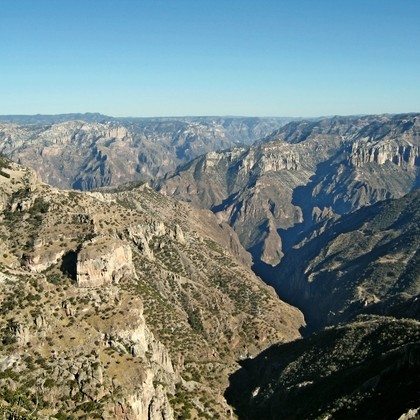
Dry, open country: desert, semi-desert, dry grassland, field edges, ranches and farmyards, villages and rocky ravines. It pumps its tail from a low perch and catches insects in the air or on the ground, also by hovering. It nests on a ledge in a cliff, under a bridge or in a building.
Where the bird is most at home, classified by the vegetation units of Mexico and Central America.

Range and movements
Breeds from Alaska and western Canada through the western United States to northern and central Mexico, including Baja California. In winter northern birds move south; it is then more widespread in the guide area, south to southern Mexico.
- Resident
- Winter visitor (c. Oct–Mar)
- Passage (Mar–Apr, Oct–Nov)
- dark = core range, pale = thinly spread
How and when to look
Common in farmyards and along fences in the dry regions of northern Mexico; the cinnamon belly and tail-pumping are distinctive.
Conservation status
Not threatened. Common and widespread; benefits from buildings and bridges as nest sites.
Scientific name
Sayornis saya | (Bonaparte, 1825)
Bonaparte described the species in 1825 as Muscicapa saya; because it was later moved to another genus, the author and year stand in brackets. The genus Sayornis was introduced in 1854 by Bonaparte. Sayornis honours the American naturalist Thomas Say (1787–1834), via Bonaparte's Muscicapa saya, with Greek ornis 'bird': 'Say's bird'. saya honours the American naturalist Thomas Say (1787–1834), who collected the species on Long's expedition to the Rocky Mountains. The specimen the first description was based on came from Arkansas River near Pueblo, Colorado.