All species › Pelicans, herons and ibises › Herons, egrets and bitterns › Reddish Egret
Position in the tree Birds Aves › Birds with a flexible palate Neognathae › All other modern birds Neoaves › Birds of the elements Elementaves › Tropicbirds and waterbirds Phaethoquornithes › Core waterbirds Aequornithes
Reddish Egret | Egretta rufescens
Roodhalsreiger | Garceta rojiza
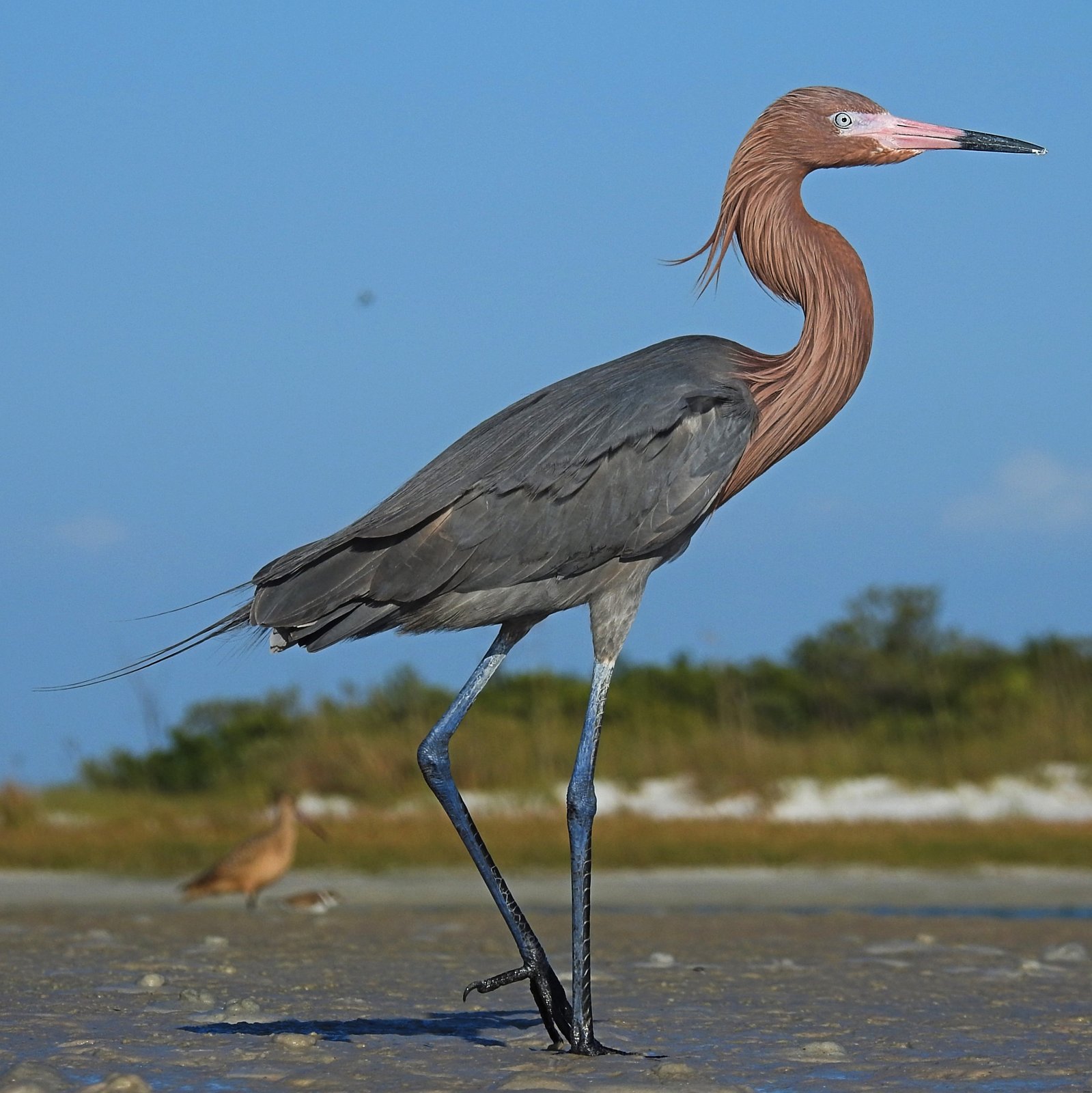
The Reddish Egret is a bulky coastal heron with a pink bill with a black tip, occurring in a dark and a white morph. It is conspicuous for its restless way of hunting, running, turning and spreading its wings. In the guide area it breeds along the coasts of Mexico; further south it is mainly a scarce winter visitor.
Voice
Usually silent. At the colony and in confrontations with other birds a low, hoarse croak and a short, growling kraa.
Recording: Isain Contreras Rodríguez — CC BY-NC-SA 4.0 · converted to mono · xeno-canto
Identification
68–82 cm. A bulky heron with a long, straight bill and long, blue-black legs. The dark morph is slate-grey with a rufous-brown head and neck; in the breeding season the neck feathers are long and shaggy, giving the neck a maned look, and the back carries long grey plumes. The white morph is entirely white. In breeding adults of both morphs the bill is pink with a sharply demarcated black tip; outside the breeding season it is largely dark. Juveniles of the dark morph are fairly uniform grey-brown with a paler, rufous-tinged neck, those of the white morph white; both have a dark bill. The sexes are alike.
Confusion species
Tricolored Heron Egretta tricolor is smaller and slimmer, with a white belly and a white neck stripe. Little Blue Heron Egretta caerulea is smaller, with a smooth, purplish-maroon neck and a grey-blue bill with a black tip. The white morph resembles Great Egret Ardea alba, which is larger, with a yellow bill and black legs, and Snowy Egret Egretta thula, which is smaller, with a black bill and yellow feet. The two-toned bill, the blue-black legs and the restless hunting point to Reddish Egret.
Habitat
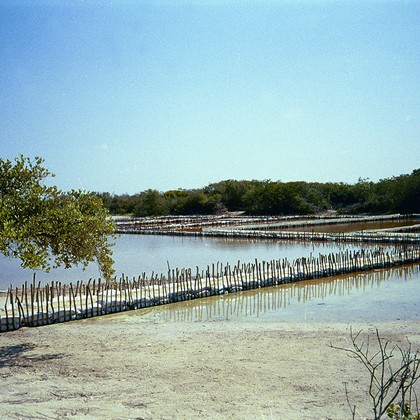
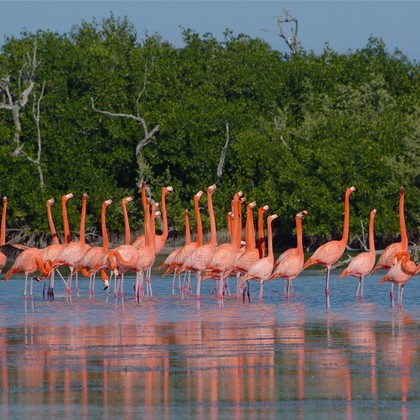
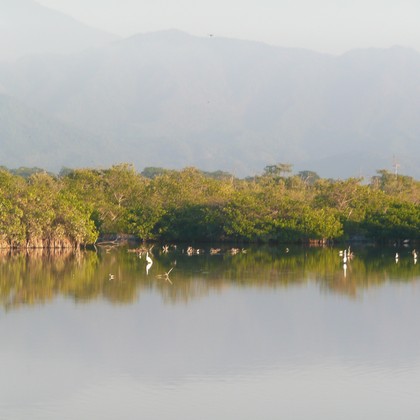
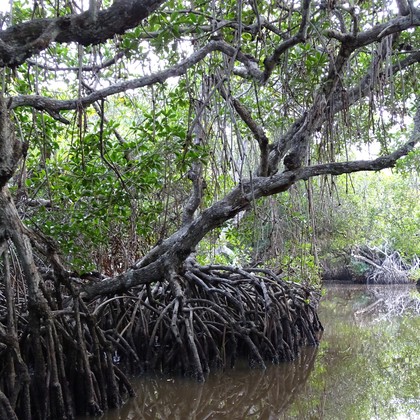
Shallow, open saltwater flats: salt pans, clear-water lagoons, tidal mudflats, sandbars and salt marshes; rarely fresh water. It hunts small fish and crustaceans in water a few centimetres to a few decimetres deep. It breeds in colonies, often together with other herons, in low mangroves or scrub on islets in lagoons.
Where the bird is most at home, classified by the vegetation units of Mexico and Central America.

Range and movements
Breeds in Mexico along both coasts of Baja California, along the Gulf of California in Sonora and Sinaloa, and along the Gulf coast from Tamaulipas to the Yucatán Peninsula; also present year-round on the cays of Belize. Outside the breeding season also along the Pacific coast south to Chiapas, and as a scarce winter visitor further to Guatemala, El Salvador, the Gulf of Fonseca and the Gulf of Nicoya in Costa Rica; rare in Panama. Outside the guide area in Texas and Florida, the Bahamas, Cuba and Hispaniola and the ABC Islands.
- Resident
- dark = core range, pale = thinly spread
How and when to look
Laguna Madre in Tamaulipas, Río Lagartos and Celestún in Yucatán and the lagoons of Baja California Sur, such as at Guerrero Negro and Bahía Magdalena, hold many birds. The hunting style, with lurching dashes and raised wings that cast shade on the water, can be recognised from far away.
Conservation status
Near Threatened. A fairly small world population, which declined sharply in the late nineteenth and early twentieth centuries through hunting for plumes. Mexico holds a large part of the world population. Threats are coastal development, disturbance of breeding colonies and the loss of shallow lagoons and salt pans.
Scientific name
Egretta rufescens | (Gmelin, 1789)
Gmelin described the species in 1789 as Ardea rufescens; because it was later moved to another genus, the author and year stand in brackets. The genus Egretta was introduced in 1817 by Forster. Egretta comes from Provençal aigrette, the name for the little egret, a diminutive of aigron 'heron'. rufescens is Latin for 'reddish', after the rusty head and neck of the dark morph. The specimen the first description was based on came from Louisiana.