All species › Passerines › Nuthatches › Pygmy Nuthatch
Position in the tree Birds Aves › Birds with a flexible palate Neognathae › All other modern birds Neoaves › Landbirds Telluraves › Falcons, parrots and passerines Australaves › Falcons and passerines Eufalconimorphae › Parrots and passerines Psittacopasserae
Pygmy Nuthatch | Sitta pygmaea
Dwergboomklever | Sita enana
The Pygmy Nuthatch is a small nuthatch of open pine forest in the mountains of Mexico. It lives year-round in noisy groups that move through the tops of the pines and often roost together in a tree cavity at night.
Voice
High, piping calls, pip or teedee, given constantly by members of a group.
Recording: Greg Irving — CC BY-NC-SA 4.0 · shortened to the first 60 s, mono · xeno-canto
Identification
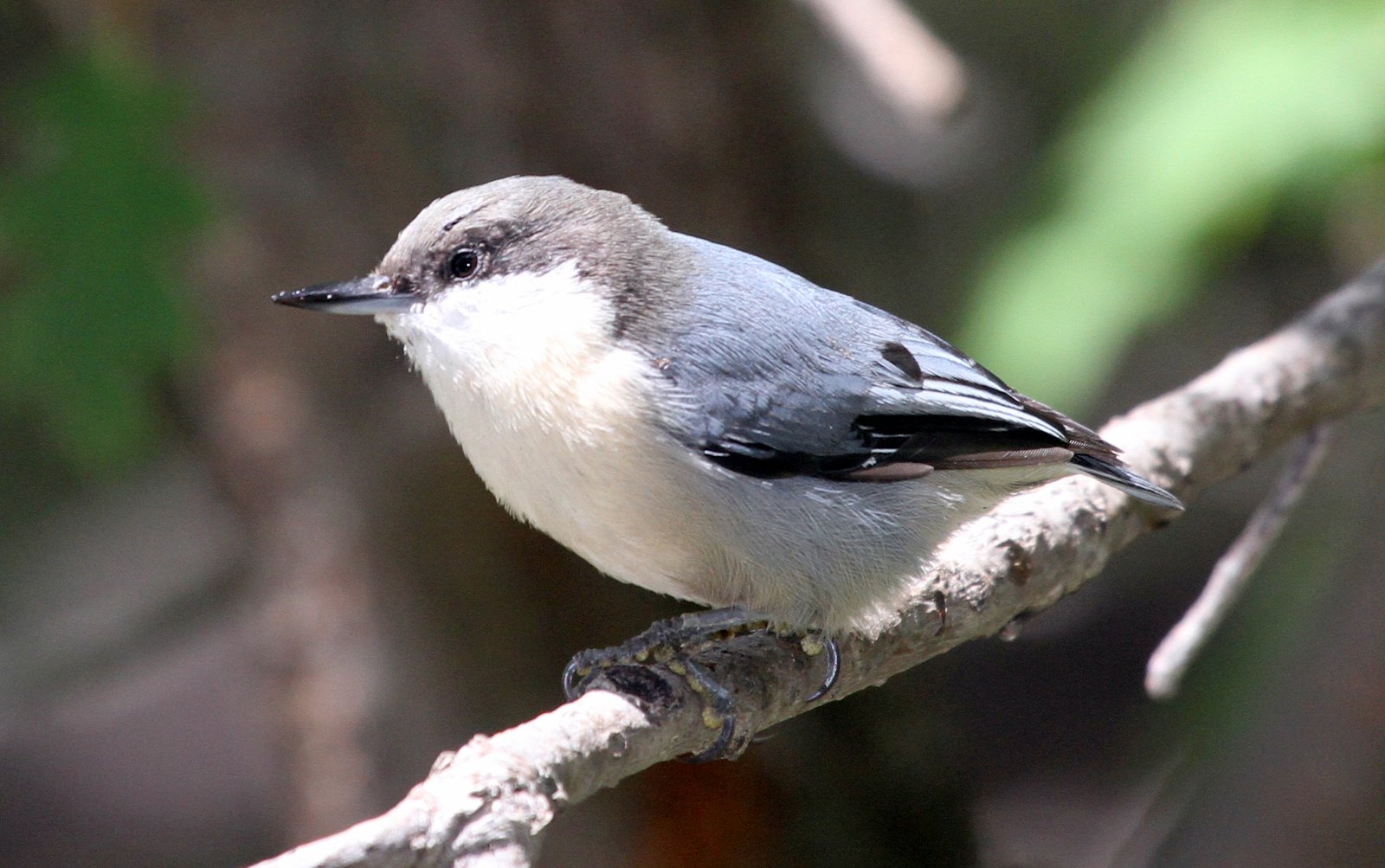
10–11 cm. Cap greyish brown, reaching the eye and sharply demarcated from the whitish throat; dark eyestripe merging with the cap and a faint pale spot on the nape. Back blue-grey, underparts dull buff. Tail short. Bill fairly long and pointed.
Confusion species
White-breasted Nuthatch Sitta carolinensis is much larger, with a black crown and a white face. Red-breasted Nuthatch Sitta canadensis has a black crown and eyestripe separated by a white supercilium, and rusty underparts.
Habitat
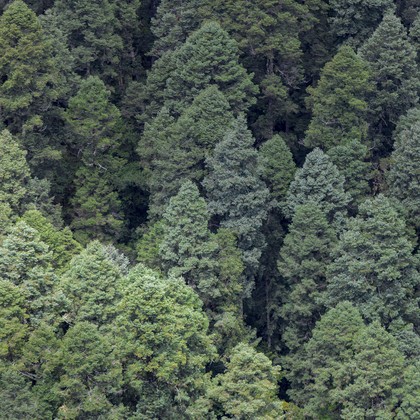
Open pine and pine-oak forest in the mountains, especially with old, long-needled pines. It searches high in the crowns among needles and cones for insects and also eats pine seeds. It nests in a tree cavity; additional adults often help to raise the young.
Where the bird is most at home, classified by the vegetation units of Mexico and Central America.


Range and movements
In the guide area in the mountains of Mexico: northern Baja California, the Sierra Madre Occidental, the Sierra Madre Oriental and the Trans-Mexican Volcanic Belt. Outside the guide area in the western United States and extreme southern Canada.
- Resident
- dark = core range, pale = thinly spread
How and when to look
Usually heard first: a group of high-piping little birds moving from pine to pine. Look high in the crowns, near the tips of the branches.
Conservation status
Not threatened. Locally common in suitable pine forest, but dependent on forest with old pines.
Scientific name
Sitta pygmaea | Vigors, 1839
Vigors described the species in 1839 and placed it straight away in the genus where it still stands. The genus Sitta was introduced in 1758 by Linnaeus. Sitta is the Ancient Greek name sittē for the nuthatch. pygmaea is Latin for 'dwarf', from Greek pugmaios, after its small size. The specimen the first description was based on came from Monterey, California, USA.