All species › Passerines › Shrike-babblers, Erpornis and vireos › Plumbeous Vireo
Position in the tree Birds Aves › Birds with a flexible palate Neognathae › All other modern birds Neoaves › Landbirds Telluraves › Falcons, parrots and passerines Australaves › Falcons and passerines Eufalconimorphae › Parrots and passerines Psittacopasserae
Plumbeous Vireo | Vireo plumbeus
Loodkleurige vireo | Vireo plomizo
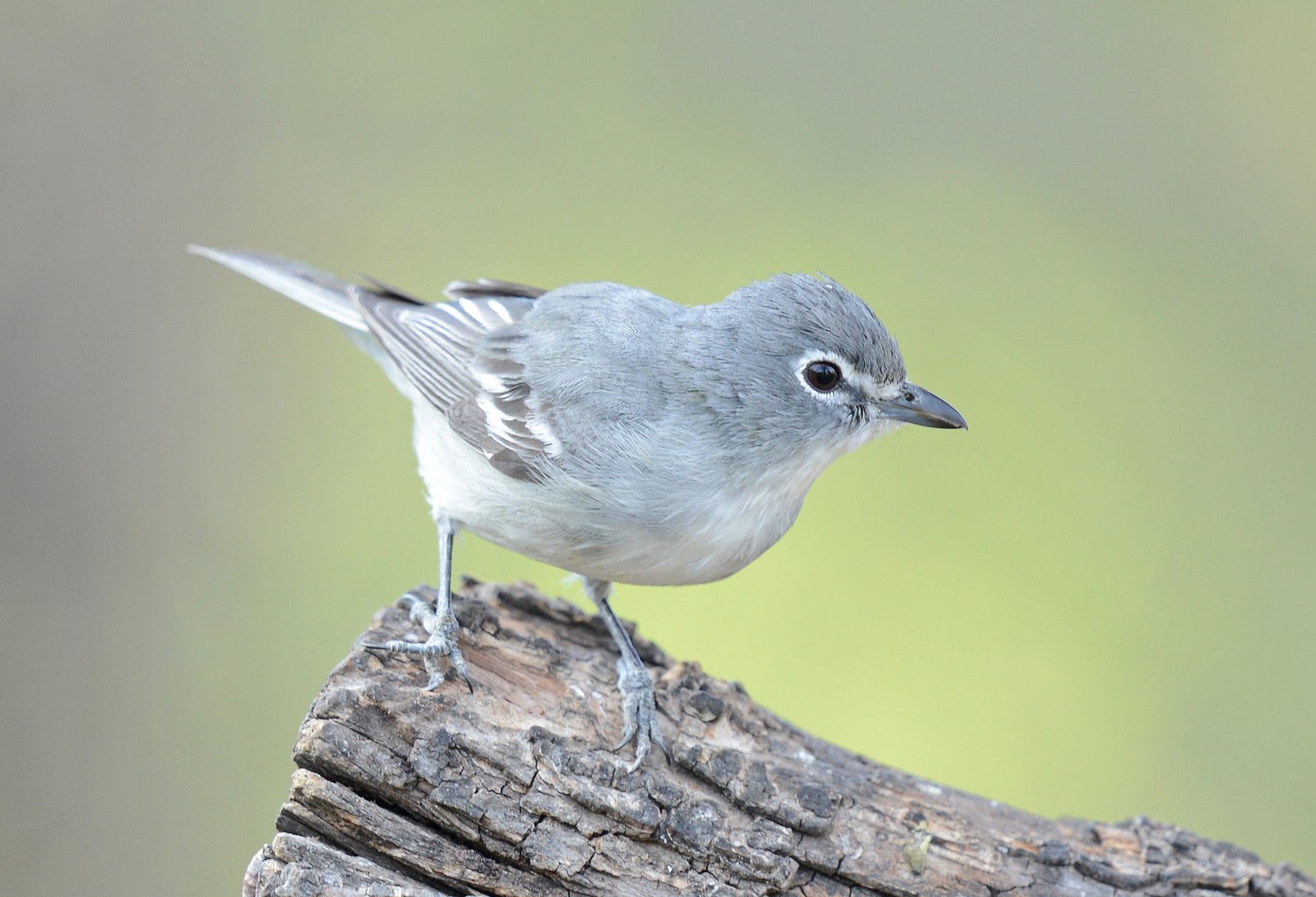
The Plumbeous Vireo is a grey-and-white vireo with conspicuous white spectacles and white wing bars. Northern birds are migratory, but resident populations also live in the highlands of Mexico and northern Central America.
Voice
The song is a series of short, hoarse phrases with pauses in between, similar to that of Cassin's Vireo. The call is a harsh chatter.
Recording: Sue Riffe — CC BY-NC-SA 4.0 · converted to mono · xeno-canto
Identification
13–15 cm. Upperparts grey, sometimes with a faint olive wash on the rump. Underparts white, flanks greyish. White lores and eye-ring form bold white spectacles. Two white wing bars. Almost no yellow or green in the plumage.
Confusion species
Cassin's Vireo Vireo cassinii has an olive-green back and yellowish flanks. Grey Vireo Vireo vicinior has only a narrow eye-ring, one faint wing bar and a longer, mobile tail. Blue-headed Vireo Vireo solitarius has a green back and yellow flanks.
Habitat
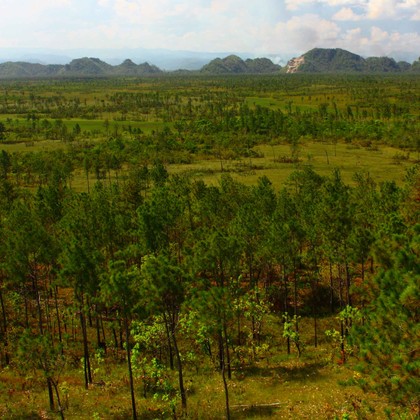
Open pine, pine-oak and oak forest in the mountains; in Belize also in pine savanna. In winter also in dry forest and riparian woodland at lower elevations. It forages deliberately among the foliage for insects, often in mixed flocks.
Where the bird is most at home, classified by the vegetation units of Mexico and Central America.




Range and movements
Breeds in the interior of the western United States and in northern Mexico; these birds winter mainly in western and southern Mexico. Resident birds live in the highlands of Mexico and further south in Belize, Guatemala, El Salvador and Honduras.
- Resident
- Summer visitor (c. Apr–Sep)
- Winter visitor (c. Oct–Mar)
- Passage (Mar–Apr, Oct–Nov)
- dark = core range, pale = thinly spread
How and when to look
In the highlands of Mexico and Guatemala best found in mixed flocks in pine-oak forest. In Belize, look in the pine forest of Mountain Pine Ridge.
Conservation status
Not threatened. Fairly common in open pine-oak forest.
Scientific name
Vireo plumbeus | Coues, 1866
Coues described the species in 1866 and placed it straight away in the genus where it still stands. The genus Vireo was introduced in 1808 by Vieillot. Vireo was used by Latin authors for a small, green, migratory bird, probably the Eurasian golden oriole, though the European greenfinch has also been suggested. plumbeus is Latin for 'lead-coloured', after the grey plumage. The specimen the first description was based on came from Fort Whipple, Arizona (USA).