All species › Gamebirds › New World quail › Ocellated Quail
Position in the tree Birds Aves › Birds with a flexible palate Neognathae › Fowl Galloanserae
Ocellated Quail | Cyrtonyx ocellatus
Gevlekte bergkwartel | Codorniz ocelada
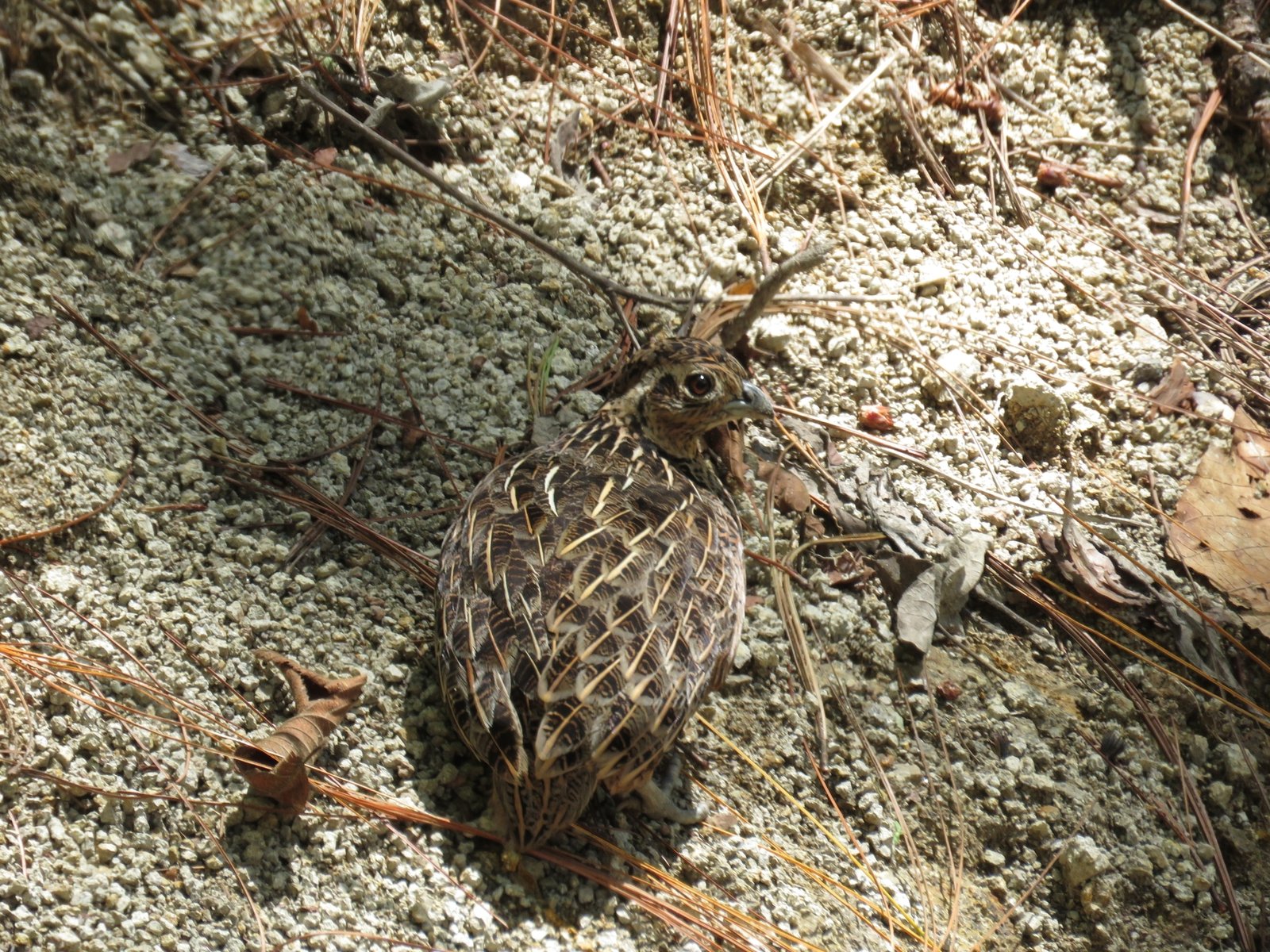
Ocellated Quail is a compact, short-tailed quail of the pine-oak forests in the highlands from Chiapas to Nicaragua. The male has a black-and-white harlequin mask, like the related Montezuma Quail. The species is shy, poorly known and usually found only when a bird flushes right at the observer's feet. It does not occur outside the guide area.
Voice
The male gives a single, descending, buzzy whistle. The female gives a descending series of short notes. The birds call mainly in the breeding season and are otherwise silent.
Recording: John van Dort — CC BY-NC-SA 4.0 · shortened to the first 60 s, mono · xeno-canto
Identification
21–23 cm; round, with a very short tail, a short neck and long claws for digging. The male has a black-and-white harlequin pattern on the head, a buff to olive-brown crown with a thick, rufous crest hanging backwards, and a white throat with black stripes. The upperparts are grey and brown with cinnamon streaks and black spots. The centre of the breast is cinnamon-brown with grey edges and cinnamon spots, the belly deeper cinnamon, the flanks grey with cinnamon scallops and the undertail coverts black. The female has a buff-and-black head with a rufous crest, brown upperparts with pale streaks and wine-red underparts with small black bars and spots.
Confusion species
Montezuma Quail Cyrtonyx montezumae lives further north-west, west of the Isthmus of Tehuantepec; the male has grey flanks with white rather than cinnamon spots and a darker breast. Buffy-crowned Wood Partridge Dendrortyx leucophrys in the same highlands is much larger, with a long tail. Northern Bobwhite Colinus virginianus has a longer tail and lacks the harlequin mask.
Habitat
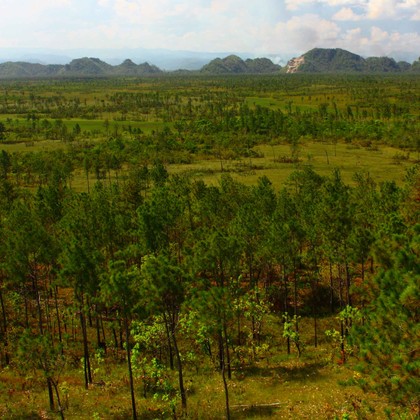
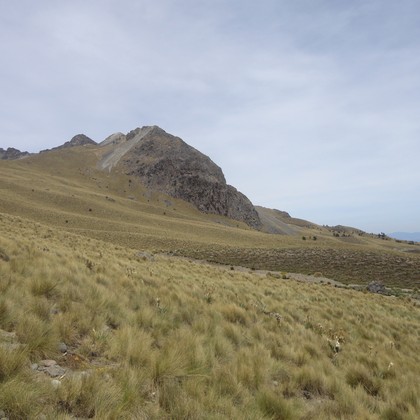
Open pine-oak and pine forest with dense grass undergrowth, grassy slopes with shrubs and scrub in forest clearings, from about 750 to 3000 m. It digs with its long claws for tubers and bulbs and also eats seeds and insects. It depends on a dense, undisturbed grass layer.
Where the bird is most at home, classified by the vegetation units of Mexico and Central America.

Range and movements
Highlands of Chiapas and Guatemala, where most recent records come from; formerly also known from the highlands of El Salvador, Honduras and possibly northern Nicaragua, where the species has hardly been recorded in recent decades. The species does not occur outside the guide area.
- Resident
- dark = core range, pale = thinly spread
How and when to look
The best chance is on grassy slopes in pine-oak forest in the highlands of Guatemala, especially in the breeding season when the males call. A bird presses itself to the ground when threatened and flushes only at the last moment.
Conservation status
Vulnerable. The species is declining rapidly through the conversion of pine-oak forest to fields, overgrazing and burning of the grass layer, mining in Guatemala and hunting. The world population is estimated at fewer than ten thousand birds.
Scientific name
Cyrtonyx ocellatus | (Gould, 1837)
Gould described the species in 1837 as Ortyx ocellatus; because it was later moved to another genus, the author and year stand in brackets. The genus Cyrtonyx was introduced in 1844 by Gould. Cyrtonyx is Greek, from kurtos 'curved' and onux 'nail, claw', after the long curved claws used to dig for bulbs. ocellatus is Latin for 'with eye-spots', from ocellus 'little eye', after the round spots in the plumage. The specimen the first description was based on came from Guatemala.