All species › Passerines › Mockingbirds and thrashers › Northern Mockingbird
Position in the tree Birds Aves › Birds with a flexible palate Neognathae › All other modern birds Neoaves › Landbirds Telluraves › Falcons, parrots and passerines Australaves › Falcons and passerines Eufalconimorphae › Parrots and passerines Psittacopasserae
Northern Mockingbird | Mimus polyglottos
Spotlijster | Cenzontle común
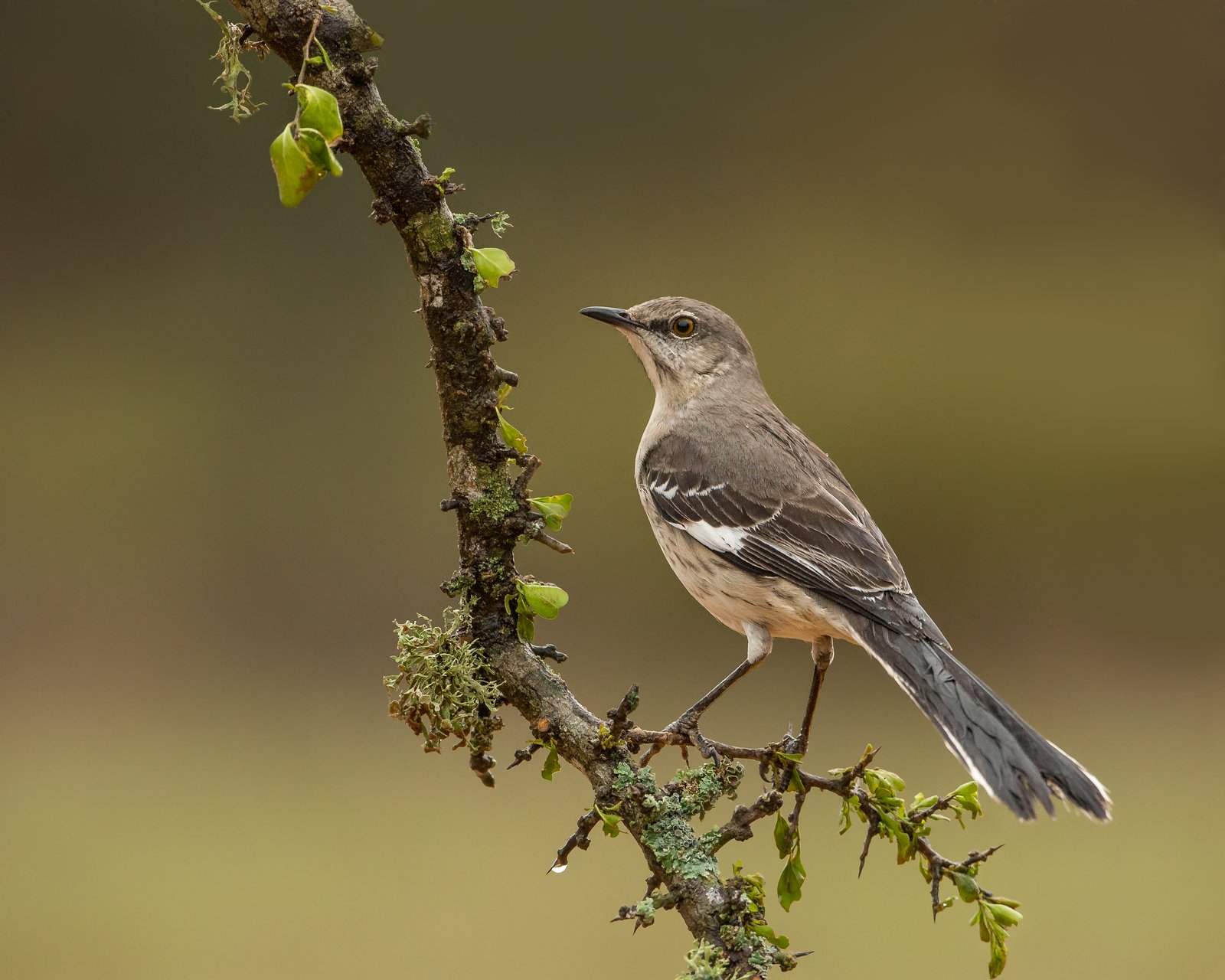
The Northern Mockingbird is a slender, grey mockingbird with large white patches in wings and tail, known for its long song full of imitations of other birds and sounds. In the guide area it is a common bird of open, dry country, gardens and towns across most of Mexico.
Voice
The song is a long, varied series of phrases, each usually repeated three or more times in succession; it contains many imitations of other birds and of other sounds. It often sings from a high perch and also at night, sometimes fluttering up while singing. The call is a hard, dry chak.
Recording: Manuel Grosselet — CC BY-NC-SA 4.0 · shortened to the first 60 s, mono · xeno-canto
Identification
23–26 cm. Slender, with a long tail and a fairly short, slightly decurved black bill. Upperparts grey, underparts dirty white. Narrow dark eye-stripe, without a distinct mask. Wings dark grey with two white wing bars and a large white patch at the base of the primaries, conspicuous in flight. Tail blackish with much white on the outer feathers. Iris yellow. Juveniles have a spotted breast and a grey-brown iris. The sexes are alike.
Confusion species
Tropical Mockingbird Mimus gilvus in the south-east has no large white wing patch, a more distinct dark mask and a longer tail with white tips instead of white sides. Loggerhead Shrike Lanius ludovicianus has a broad black mask, a short, hooked bill and a larger head, and flies with faster wingbeats. Sage Thrasher Oreoscoptes montanus resembles a juvenile Northern Mockingbird, but is smaller, with a shorter tail, a streaked breast and less white in the wing.
Habitat
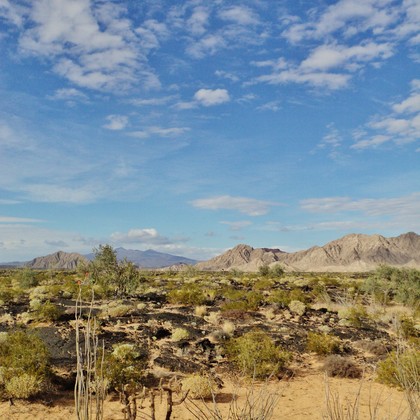
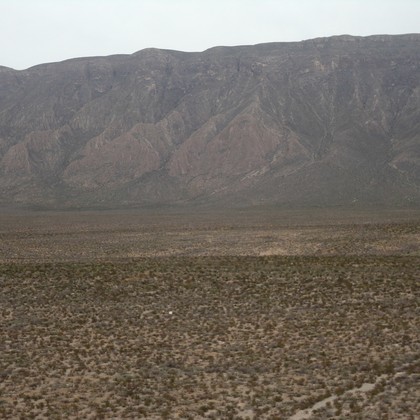
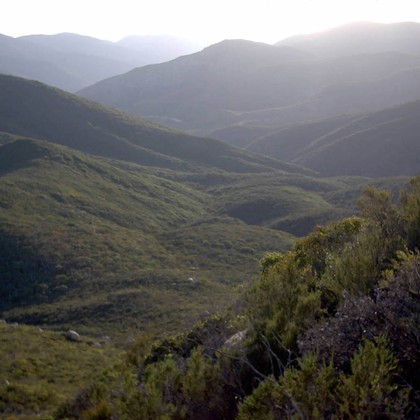
Open and semi-open country with shrubs and scattered trees: desert scrub, thorn scrub, semi-desert grassland, chaparral, pastures, villages, gardens, parks and town centres, from sea level to about 2500 m. It forages for insects on the ground, often flashing its wings open with a jerk, and eats much fruit and many berries. It defends its territory fiercely.
Where the bird is most at home, classified by the vegetation units of Mexico and Central America.




Range and movements
From southern Canada through the United States to Mexico, also in the Greater Antilles and the Bahamas. In the guide area across most of Mexico, including Baja California and the Revillagigedo Islands, south to Oaxaca and central Veracruz; replaced by Tropical Mockingbird in the humid south-east. Northern birds partly move south in winter.
- Resident
- dark = core range, pale = thinly spread
How and when to look
Found in almost every Mexican village or town park in the north and centre of the country; singing birds often perch on antennas, roofs and bush tops.
Conservation status
Not threatened (LC). Common and well adapted to man-made landscapes.
Scientific name
Mimus polyglottos | (Linnaeus, 1758)
Linnaeus described the species in 1758 as [Turdus] polyglottos; because it was later moved to another genus, the author and year stand in brackets. The genus Mimus was introduced in 1826 by Boie. Mimus is Latin for 'mimic', after the habit of imitating other sounds. polyglottos is Greek, from polus 'many' and glossa 'tongue', after the extensive mimicking repertoire. The specimen the first description was based on came from Virginia.