All species › Passerines › Wrens › Northern House Wren
Position in the tree Birds Aves › Birds with a flexible palate Neognathae › All other modern birds Neoaves › Landbirds Telluraves › Falcons, parrots and passerines Australaves › Falcons and passerines Eufalconimorphae › Parrots and passerines Psittacopasserae
Northern House Wren | Troglodytes aedon
Noordelijke huiswinterkoning | Chivirín saltapared
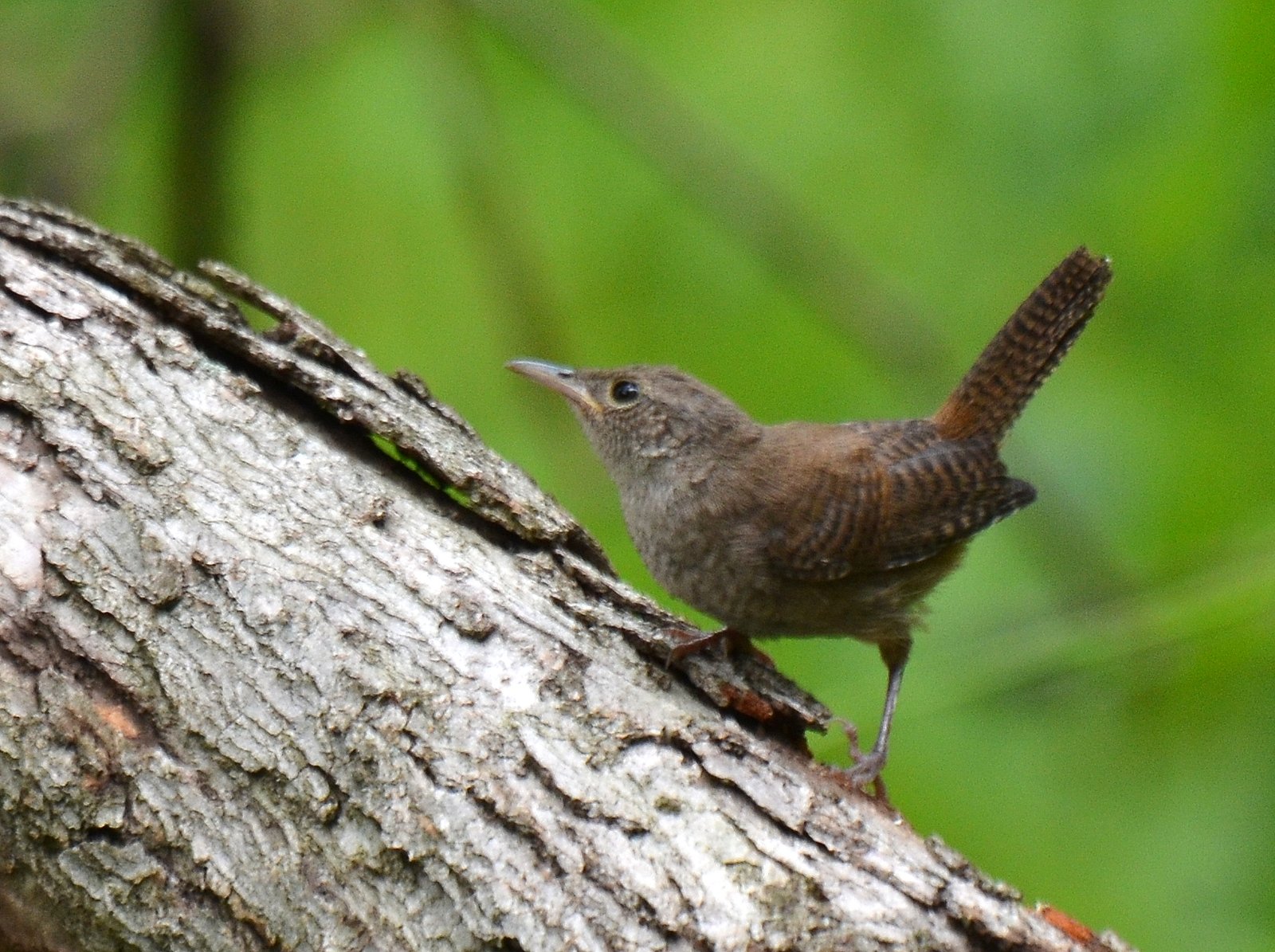
The Northern House Wren is a small, plainly coloured wren with a loud, bubbling song. It has only recently been split as a separate species from Southern House Wren. In the guide area brown-throated resident birds live in the mountains of Mexico, while winter visitors from Canada and the United States reach northern and central Mexico in large numbers.
Voice
A fast, bubbling, descending series of clear notes and trills, often repeated. Calls include a harsh, rattling chrrr and a dry chek.
Recording: Ned Bohman — CC BY-NC-SA 4.0 · converted to mono · xeno-canto
Identification
11–13 cm. Upperparts greyish brown to warm brown, with a faint pale supercilium. Underparts pale greyish buff, flanks and undertail coverts with fine dark bars. Wings and tail with dark bars. Residents in the Mexican mountains have a warm buff-brown throat and breast and a clearer buff supercilium; northern winter visitors are greyer. Bill fine and slightly curved. The sexes are alike.
Confusion species
Southern House Wren Troglodytes musculus is very similar and best separated by range: it lives from south-eastern Veracruz, Chiapas and the Yucatán Peninsula southward. Bewick's Wren Thryomanes bewickii has a bold white supercilium and a longer tail with white corners. Rufous-browed Wren Troglodytes rufociliatus, in the mountains from Chiapas southward, has a cinnamon supercilium, throat and breast. Cozumel Wren Troglodytes beani lives only on Cozumel.
Habitat
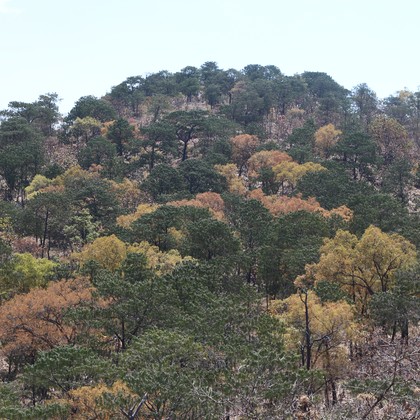
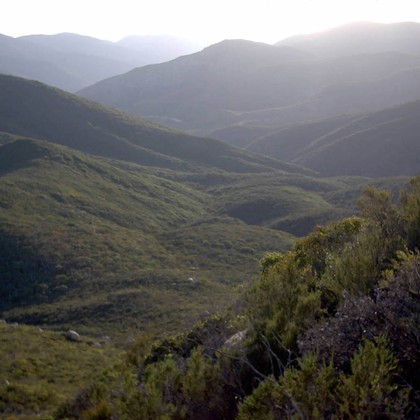
Open pine-oak and oak forest, forest edges, scrub and chaparral, gardens, parks and yards. Winter visitors also use dry scrub, hedges and thickets in the lowlands. It searches for insects and spiders low in shrubs and on the ground. It nests in cavities, including nest boxes and holes in walls.
Where the bird is most at home, classified by the vegetation units of Mexico and Central America.





Range and movements
Resident in the mountains of Mexico, from the north-west across the central plateau and the mountains of central and southern Mexico, south to about Oaxaca. Winter visitors in much of northern and central Mexico, in Baja California and in the Gulf of Mexico lowlands into the north-east. Also breeds across much of Canada and the United States.
- Resident
- Summer visitor (c. Apr–Sep)
- Winter visitor (c. Oct–Mar)
- Passage (Mar–Apr, Oct–Nov)
- dark = core range, pale = thinly spread
How and when to look
In the mountains of Mexico often heard in gardens and forest edges; the warm brown-throated resident birds are best seen in pine-oak forest in the central mountains.
Conservation status
Not threatened. Not assessed separately by the IUCN; as part of the broad House Wren not threatened. Widespread and numerous.
Scientific name
Troglodytes aedon | Vieillot, 1809
Vieillot described the species in 1809 and placed it straight away in the genus where it still stands. He introduced the genus Troglodytes in that same work. Troglodytes is Greek, from troglē 'hole, crevice' and dyein 'to creep into': 'cave-dweller', after the habit of disappearing into crevices and holes while foraging. aedon is Greek aēdōn 'nightingale', after the rich, bubbling song. The specimen the first description was based on came from New York (later designated).