All species › Passerines › Thrushes and allies › Mountain Thrush
Position in the tree Birds Aves › Birds with a flexible palate Neognathae › All other modern birds Neoaves › Landbirds Telluraves › Falcons, parrots and passerines Australaves › Falcons and passerines Eufalconimorphae › Parrots and passerines Psittacopasserae
Mountain Thrush | Turdus plebejus
Cabanis' lijster | Mirlo montañero
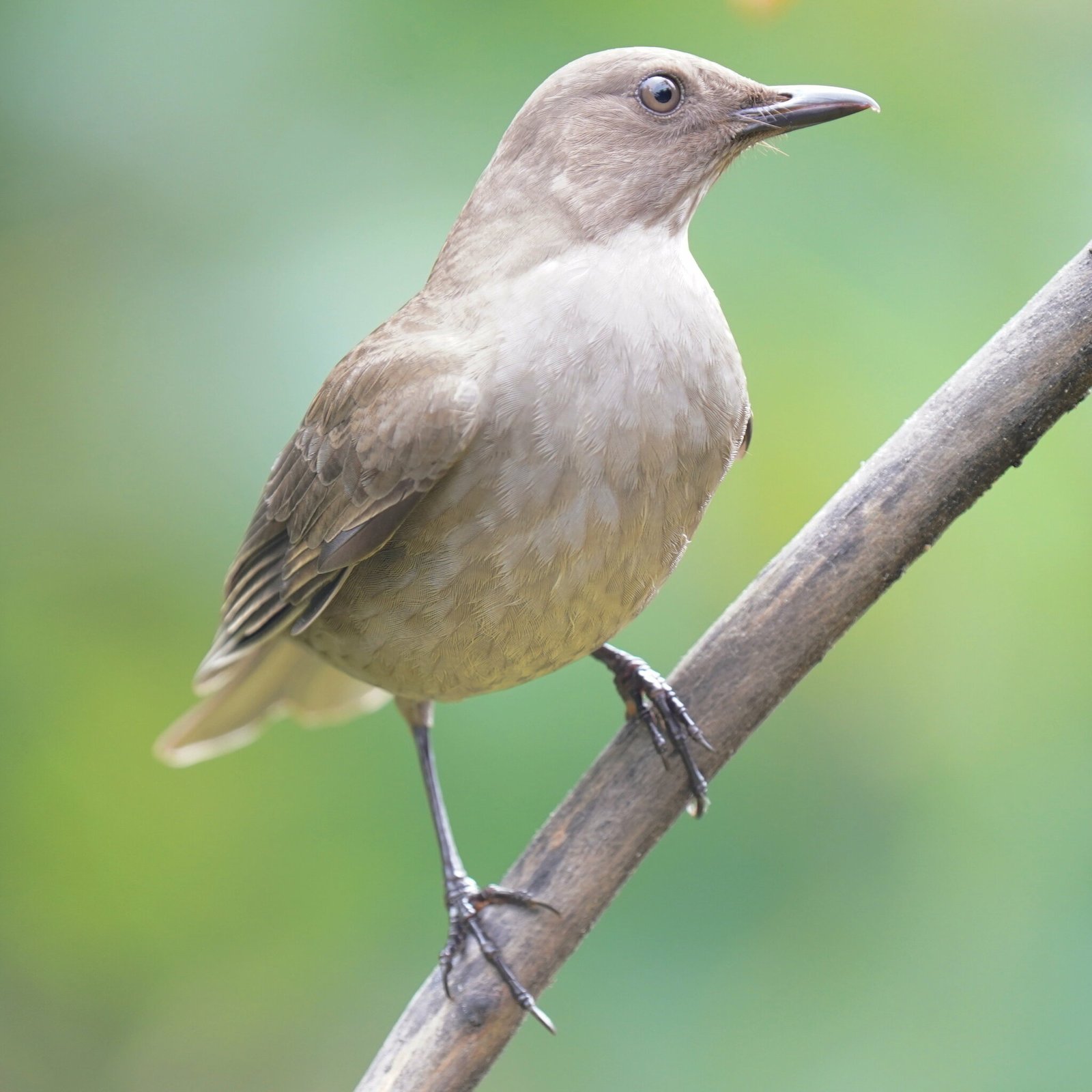
The Mountain Thrush is a plainly coloured, olive-brown thrush of montane forest from southern Mexico to western Panama. It lacks striking features and is noticed mainly by its monotonous song and by small groups feeding in fruiting trees. Outside the breeding season many birds wander and move down to lower slopes.
Voice
The song is a monotonous, unmusical series of short, creaky and chirping notes, often repeated for long periods. Calls include a low kwuk, a metallic wurt and high, thin notes in flight.
Recording: Allen T. Chartier — CC BY-NC-SA 3.0 · converted to mono · xeno-canto
Identification
23–25 cm. Almost uniformly dull olive-brown to greyish brown, the underparts slightly paler and greyer. Throat faintly paler with indistinct dark streaks. No eye-ring, or a very narrow, inconspicuous one. Bill blackish, legs dark brown, iris dark. The sexes are alike; juveniles have pale spots above and dark spots below.
Confusion species
Clay-colored Thrush Turdus grayi is paler and warmer buffy brown, has a yellowish bill and lives mainly lower down, in open country and gardens. Pale-vented Thrush Turdus obsoletus has a white lower belly and undertail and lives lower, in foothill forest. White-throated Thrush Turdus assimilis has a white crescent below the streaked throat and a yellow eye-ring. Sooty Thrush Turdus nigrescens is sooty black with an orange bill and lives in open country higher in the mountains.
Habitat
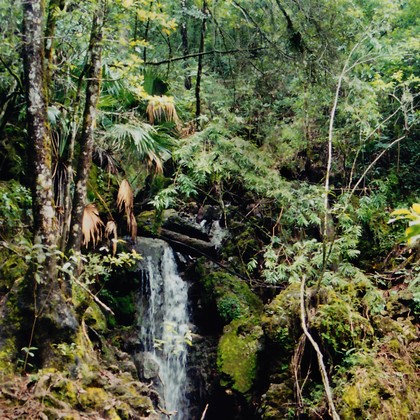
Humid montane forest, cloud forest and oak and pine-oak forest, also forest edges, mature secondary forest and pastures with trees, mostly between 1200 and 3000 m. Lower outside the breeding season. It feeds in small groups, often with other thrushes, in fruiting trees, and also searches the ground for invertebrates.
Where the bird is most at home, classified by the vegetation units of Mexico and Central America.


Range and movements
Endemic to the guide area: the highlands of Chiapas in southern Mexico, through Guatemala, El Salvador, Honduras and Nicaragua to Costa Rica and western Panama.
- Resident
- dark = core range, pale = thinly spread
How and when to look
In Costa Rica regularly seen in the Savegre valley at San Gerardo de Dota and along Cerro de la Muerte, in Panama on the slopes of Barú volcano. Most conspicuous when groups sit in fruiting trees along forest edges.
Conservation status
Not threatened (LC). Fairly common, but locally dependent on montane forest; conversion of forest to farmland is the main threat.
Scientific name
Turdus plebejus | Cabanis, 1861
Cabanis described the species in 1861 and placed it straight away in the genus where it still stands. The genus Turdus was introduced in 1758 by Linnaeus. Turdus is the ordinary Latin word for 'thrush'. plebejus is Latin for 'common, plebeian', after the plain olive-brown plumage. The specimen the first description was based on came from Costa Rica.