All species › Waterfowl › Ducks, swans and geese › Mallard
Position in the tree Birds Aves › Birds with a flexible palate Neognathae › Fowl Galloanserae
Mallard | Anas platyrhynchos
Wilde eend | Ánade azulón
The Mallard is the ancestor of almost all domestic ducks. In the guide area wild, migrating birds from North America are winter visitors to northern Mexico, while domestic and feral ducks of all breeds live year-round on ponds, in parks and around farms throughout the region. In northern Mexico it interbreeds with the closely related Mexican Duck.
Voice
The female gives the familiar loud, descending quack-quack-quack; the male is quieter, with a soft, rasping raeb and a short whistle during display.
Recording: Esperanza Poveda — CC BY-NC-SA 4.0 · shortened to the first 60 s, mono · xeno-canto
Identification
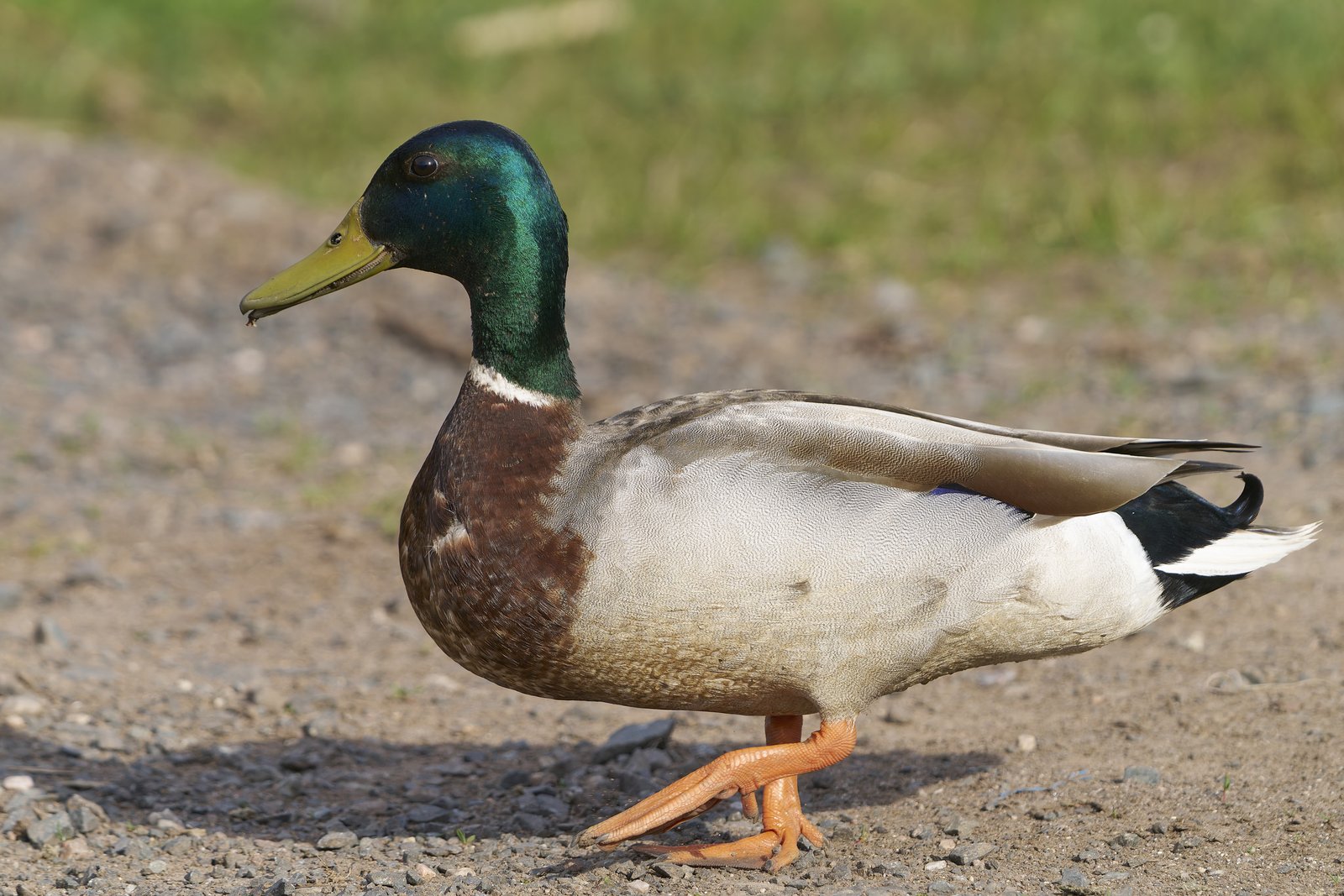
50–65 cm, a large, heavy dabbling duck. The male has a glossy green head, a narrow white neck ring, a purplish-brown breast, a pale grey body, a black rear end with curled central tail feathers and a yellow bill. The female is mottled brown, with a dark eye-stripe, a rather pale, whitish tail and an orange bill with a dark saddle. Both sexes have a blue to purplish-blue speculum with a broad white border on both sides. The eclipse male resembles the female but has a plain yellow bill. Domestic and feral birds are often heavier and vary greatly in colour, from all white to dark with a white breast.
Confusion species
Mexican Duck Anas diazi closely resembles the female, but both sexes are darker, with a dark brown tail without white and a narrower white border in front of the speculum; the male lacks a green head and has an olive-yellow bill. Hybrids between the two are numerous in northern Mexico and cannot always be named. Mottled Duck Anas fulvigula is darker, with a plain pale head and neck, a small black spot at the base of the bill and almost no white along the speculum. The female Gadwall Mareca strepera is smaller, with a thinner bill and a white wing patch.
Habitat
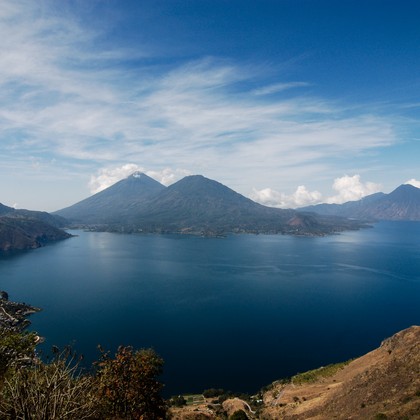
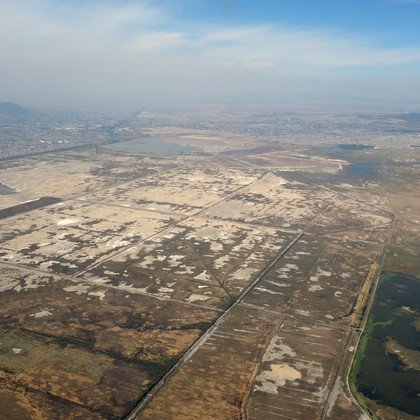
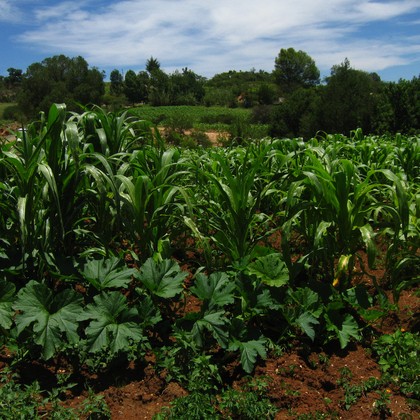
All kinds of fresh water: lakes, reservoirs, ponds, marshes, saline lakes on the plateau and rice fields, and in the case of domestic birds also parks, gardens and farmyards. It dabbles and eats seeds, aquatic plants, invertebrates and food given by people.
Where the bird is most at home, classified by the vegetation units of Mexico and Central America.


Range and movements
Wild birds winter mainly in northern Mexico, in Baja California, Sonora, Chihuahua, Coahuila and Nuevo León, and in smaller numbers further south to Tamaulipas, Hidalgo and Puebla. Further south and in Central America wild birds are rare, and a large share of the records concern domestic or feral ducks. Breeds across most of North America, Europe and Asia; introduced elsewhere.
- Resident
- dark = core range, pale = thinly spread
How and when to look
A Mallard can only be counted as a genuine winter visitor if it looks entirely like a wild bird in size, colour and behaviour and is shy, ideally in a flock of other migrating ducks on the lakes of the north. On the plateau of Chihuahua and Durango every green-headed male is also worth checking for features of Mexican Duck.
Conservation status
Not threatened globally; one of the most numerous ducks in the world. In the guide area interbreeding with Mexican Duck, by wild and above all by feral birds, is a threat to that species.
Scientific name
Anas platyrhynchos | Linnaeus, 1758
Linnaeus described the species in 1758 and placed it straight away in the genus where it still stands. He introduced the genus Anas in that same work. Anas is the Latin word for 'duck'. platyrhynchos is Greek for 'broad-billed', from platus 'broad' and rhunkhos 'bill'. The specimen the first description was based on came from Sweden.