All species › Passerines › Larks › Horned Lark
Position in the tree Birds Aves › Birds with a flexible palate Neognathae › All other modern birds Neoaves › Landbirds Telluraves › Falcons, parrots and passerines Australaves › Falcons and passerines Eufalconimorphae › Parrots and passerines Psittacopasserae
Horned Lark | Eremophila alpestris
Strandleeuwerik | Alondra cornuda
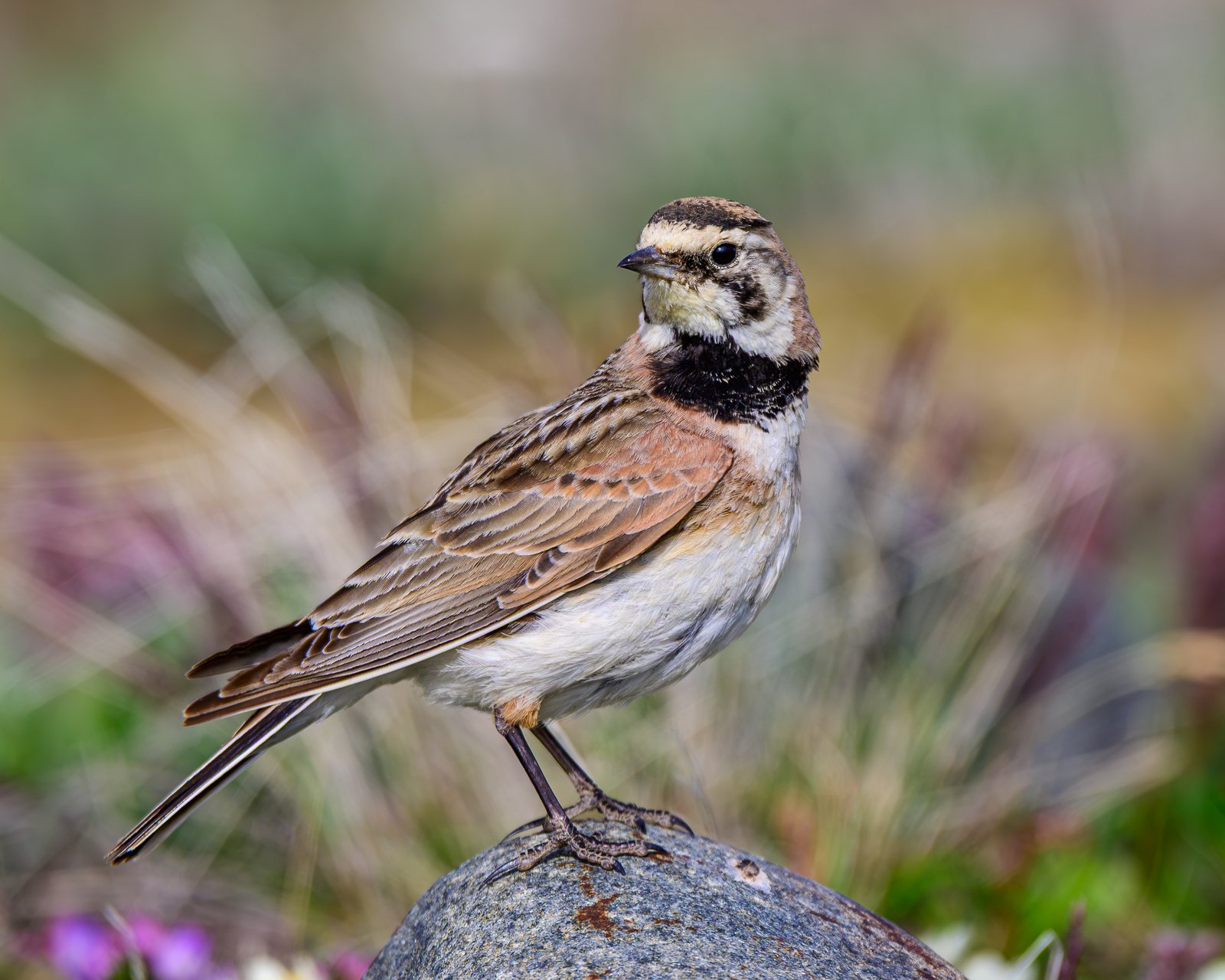
The Horned Lark is the only lark in the guide area: a brown ground bird of bare, open country with a black-and-yellow face mask and, in the male, small black 'horns'. In Mexico resident populations breed on the plateaus; in winter they are joined in the north by birds from North America.
Voice
Calls are high, clear tsee-ti or tsee-tee-ti notes, often in flight. The song is a high, tinkling twitter that speeds up, delivered from the ground, a stone or in a high song flight.
Recording: Meena Haribal — CC BY-NC-SA 4.0 · shortened to the first 60 s, mono · xeno-canto
Identification
16–19 cm. Upperparts brown to rufous-brown, in Mexico often warm cinnamon, underparts white with a black breast band. Face yellow to whitish with a black stripe from the bill below the eye to the cheek. The male has two small black feather tufts on the sides of the crown; females and young birds are duller with less black. Tail black with pale outer edges, well visible in flight.
Confusion species
American Pipit Anthus rubescens and Sprague's Pipit Anthus spragueii are slimmer, have a streaked breast and lack the black face mask. Chestnut-collared Longspur Calcarius ornatus and Thick-billed Longspur Rhynchophanes mccownii (winter visitors to northern Mexico) have a thicker bill and a different tail pattern and lack the black-and-yellow face.
Habitat
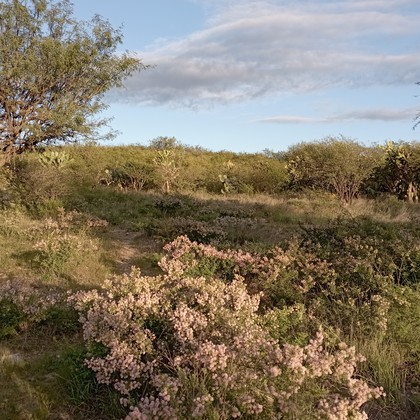
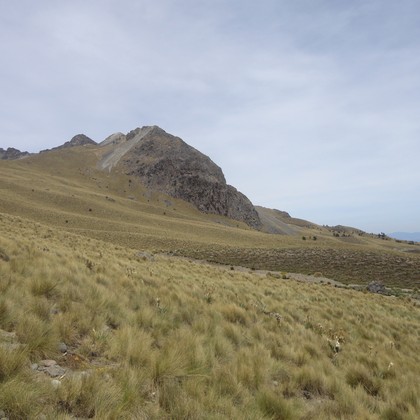
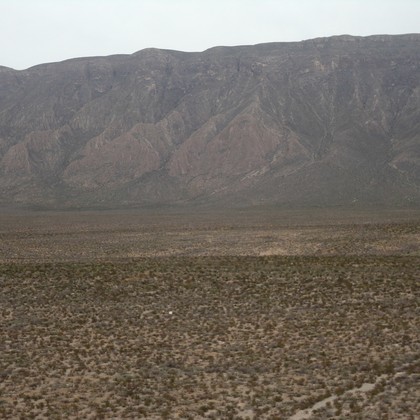
Bare or sparsely vegetated open country: semi-desert grassland, bare plains with low shrubs, montane grassland, dry lake beds, farmland, fallow land, heavily grazed pasture and airfields. It eats seeds and, in the breeding season, many insects. It nests in a scrape on the ground.
Where the bird is most at home, classified by the vegetation units of Mexico and Central America.


Range and movements
In the guide area it breeds in Baja California and scattered across the plateaus of northern and central Mexico south to Oaxaca; in winter often in flocks and joined by birds from the north, mainly in northern Mexico. Absent from Central America. Outside the guide area widespread in North America, Europe and Asia, with an isolated population in Colombia.
- Resident
- dark = core range, pale = thinly spread
How and when to look
Outside the breeding season it occurs in flocks on bare fields and dry plains; a flock is often noticed only when it takes off and the high calls are heard and the black tail is seen.
Conservation status
Not threatened. Very numerous worldwide, but much declined in North America; in the guide area locally common in suitable open country.
Scientific name
Eremophila alpestris | (Linnaeus, 1758)
Linnaeus described the species in 1758 as Alauda alpestris; because it was later moved to another genus, the author and year stand in brackets. The genus Eremophila was introduced in 1828 by Boie. Eremophila is Ancient Greek, from erēmos, 'desert', and phileō, 'to love'. alpestris is Latin for 'of the high mountains', from Alpes, the Alps. The specimen the first description was based on came from the coast of South Carolina.