All species › Gamebirds › Guans, curassows and chachalacas › Grey-headed Chachalaca
Position in the tree Birds Aves › Birds with a flexible palate Neognathae › Fowl Galloanserae
Grey-headed Chachalaca | Ortalis cinereiceps
Grijskopchachalaca | Chachalaca cabecigrís
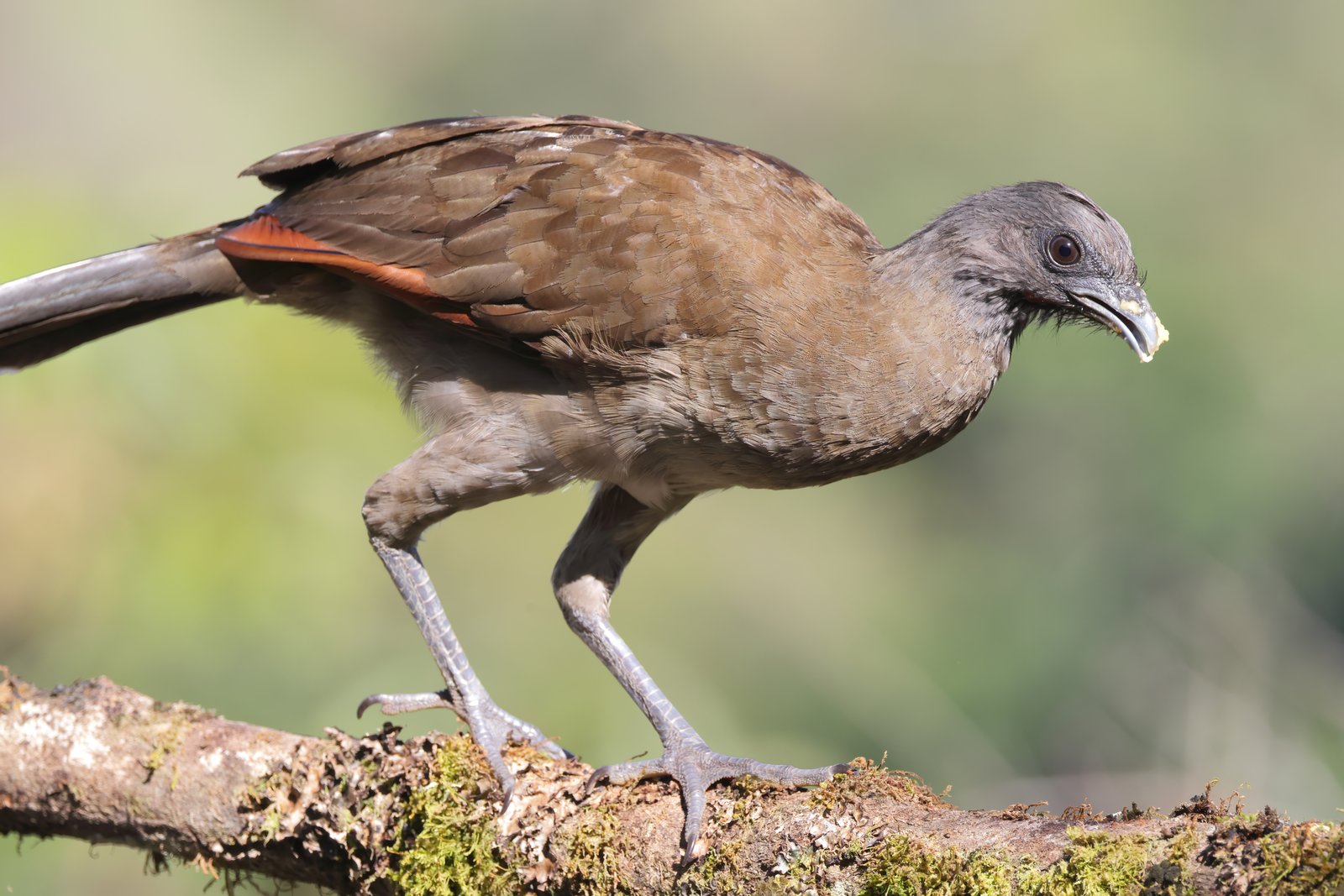
The Grey-headed Chachalaca is the chachalaca of the humid south of the guide area, from eastern Honduras to Panama. Flocks live in dense growth along forest edges, in secondary forest and in overgrown farmland. In flight the rufous primaries stand out. Outside the guide area the species occurs only in north-western Colombia.
Voice
Less noisy than other chachalacas. The song is a softer, less rhythmic cha-cha-lak-a. Flocks also give hoarse, screeching and cackling calls, a sharp alarm call and soft purring.
Recording: Sue Riffe — CC BY-NC-SA 4.0 · converted to mono · xeno-canto
Identification
48–58 cm; a slender chachalaca with a small head and a long tail. The head and upper neck are dark slate-grey and contrast with the grey-brown body. The underparts are paler, greyish ochre-brown. The primaries are bright rufous, which is most obvious in flight. The tail is blackish with a green gloss and pale, grey-brown to ochre tips to the outer feathers. There is a small bare red patch on the throat. Male and female are alike; young birds are browner, especially on the head.
Confusion species
Plain Chachalaca Ortalis vetula has a less contrasting, grey-brown head and brown primaries; it lives in north-western Costa Rica and further north. Crested Guan Penelope purpurascens is much larger, with white streaks on the neck and breast and a large red dewlap. The female Great Curassow Crax rubra is much larger and lives mainly on the ground.
Habitat
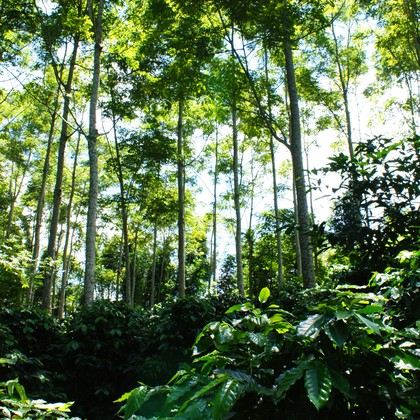
Dense thickets, secondary forest, abandoned fields growing over, forest edges and riverbanks, also shade coffee and plantations; the species avoids the interior of closed forest. From sea level to about 1700 m, mainly in the lowlands and hills. It lives in groups of six to twelve, sometimes up to twenty birds, which forage in vegetation and also on the ground. It eats mainly fruit, also leaves and invertebrates. In the dry season flocks come to the river to drink in the morning and evening.
Where the bird is most at home, classified by the vegetation units of Mexico and Central America.





Range and movements
In eastern Honduras (Gracias a Dios and Olancho), on the Caribbean side of Nicaragua, in Costa Rica on the Caribbean side and on the central and southern Pacific side, but not in the dry north-west, and throughout Panama, including Isla del Rey in the Pearl Islands. Outside the guide area in north-western Colombia.
- Resident
- dark = core range, pale = thinly spread
How and when to look
Regularly found in the Panama Canal area, for example along Pipeline Road and at Summit, and in Costa Rica along forest edges and rivers in the Caribbean lowlands and in the valley of San Isidro de El General. A group visiting a fruiting tree often stays there for a long time.
Conservation status
Not threatened. The species is common and benefits from logged forest and overgrown farmland, but is hunted locally.
Scientific name
Ortalis cinereiceps | Gray, 1867
Gray described the species in 1867 and placed it straight away in the genus where it still stands. The genus Ortalis was introduced in 1786 by Merrem. Ortalis is Greek for 'chick, young hen'. cinereiceps is Latin, from cinereus 'ash-grey' and -ceps '-headed', after the grey head. The specimen the first description was based on came from unknown.