All species › Pelicans, herons and ibises › Herons, egrets and bitterns › Green Heron
Position in the tree Birds Aves › Birds with a flexible palate Neognathae › All other modern birds Neoaves › Birds of the elements Elementaves › Tropicbirds and waterbirds Phaethoquornithes › Core waterbirds Aequornithes
Green Heron | Butorides virescens
Groene reiger | Garcita verdosa
The Green Heron is the small, stocky heron of mangroves, ponds and stream banks. It hunts from a branch or root just above the water, neck drawn in, and then darts at lightning speed for a small fish. In the guide area it is a widespread resident, joined in winter by migrants from North America. Some classifications treat it together with Striated Heron Butorides striata as one species; in this guide the two are kept separate.
Voice
When flushed a loud, harsh skeow or kyowk; also soft, dry kuk-kuk-kuk calls, especially when alarmed.
Recording: Stanislas Wroza — CC BY-NC-SA 4.0 · converted to mono · xeno-canto
Identification
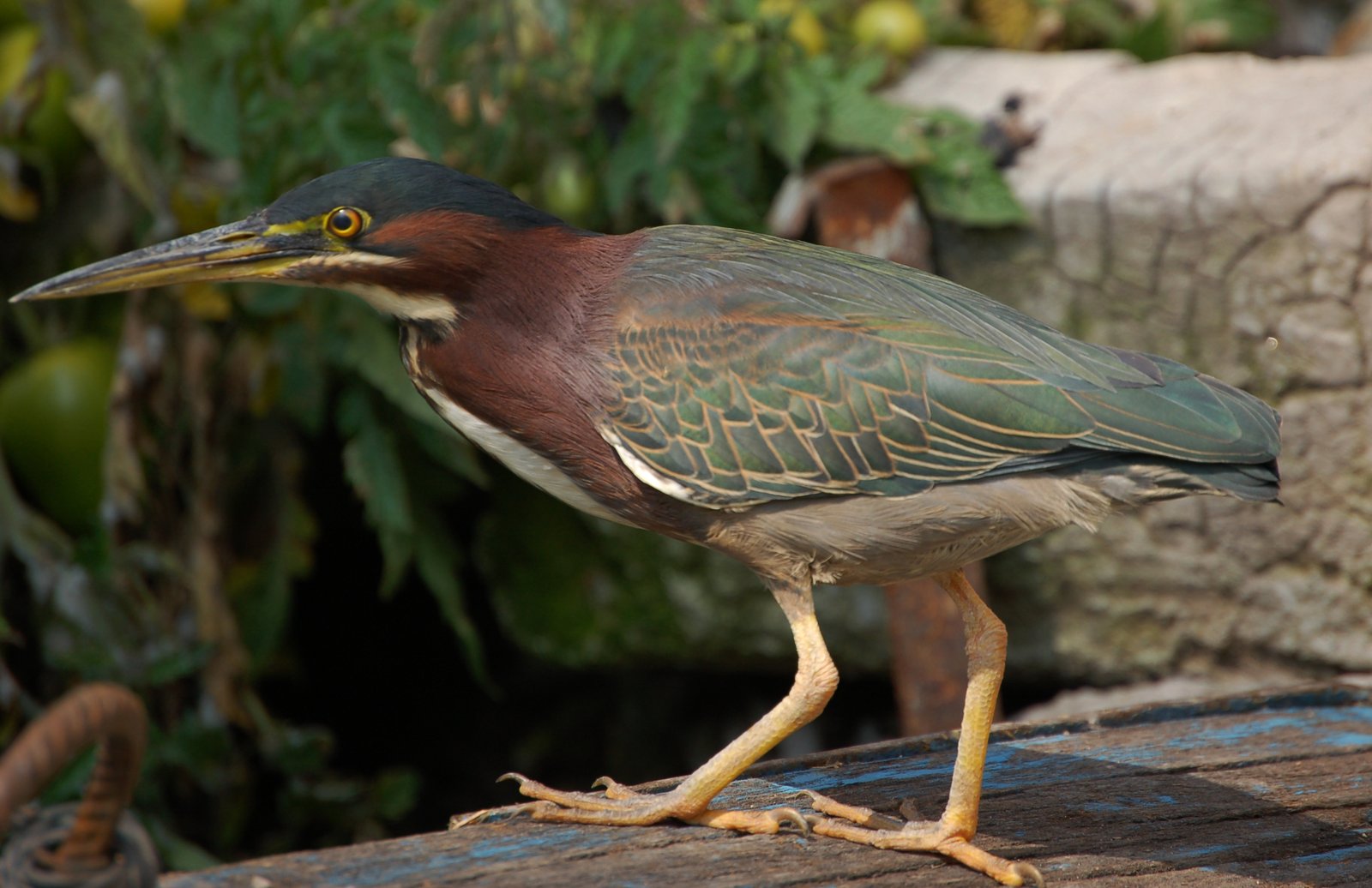
40–48 cm, with short legs, a thick neck usually drawn in and a long, pointed, dark bill with a paler lower mandible. Adults have a dark, greenish-black crown with a crest raised when excited, a chestnut neck with a white stripe down the centre of the throat and a dark blue-grey back with a green gloss. The wing coverts are narrowly edged pale. The legs are yellow to orange, brighter in the breeding season. Juveniles are browner, densely streaked brown and white on the neck and breast and with pale spots on the wing coverts. In flight the bird looks dark, with slow, deep beats.
Confusion species
Striated Heron Butorides striata, the common species in Panama, has a grey instead of chestnut neck; intermediates occur in Panama and Costa Rica and cannot always be assigned. Agami Heron Agamia agami has a similar colour pattern, but is much larger, with a very long bill and a long neck. Young Black-crowned Night Herons Nycticorax nycticorax and Yellow-crowned Night Herons Nyctanassa violacea are larger and grey-brown with white drops on the wings, a thicker bill and longer legs. Least Bittern Botaurus exilis is smaller, with large buff patches on the wings.
Habitat
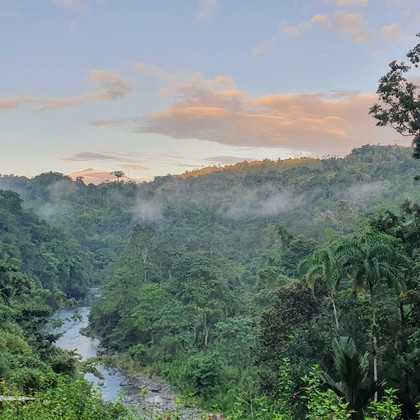
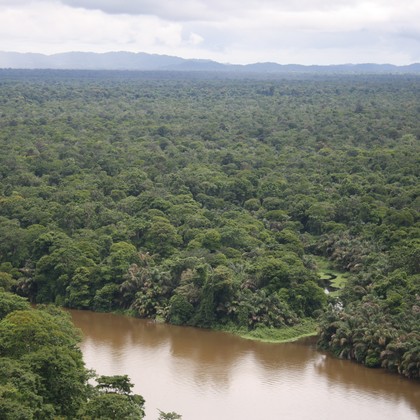
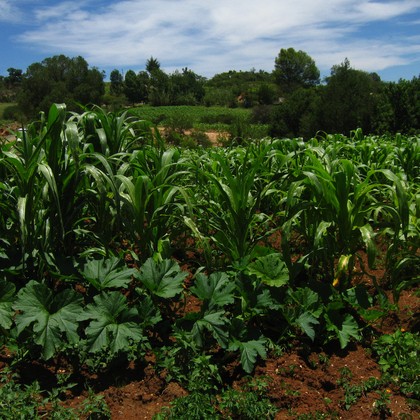
Mangroves, banks of ponds, lakes, canals, rivers and streams, freshwater marshes and swamp forest, rice fields and fish farms; also small pools in parks. Mainly in the lowlands, locally higher in the mountains. It usually hunts alone, standing or perched low at the water's edge, for small fish, frogs, crabs and insects. Green Herons have been recorded placing bait, such as a bread crumb or a feather, on the water to lure fish. It breeds alone or in small groups; the nest is a thin platform of twigs in a tree or shrub, often over or near water.
Where the bird is most at home, classified by the vegetation units of Mexico and Central America.



Range and movements
In Mexico through almost the whole country, along the Pacific side from Sonora and Baja California south to Chiapas, on the Gulf side from Tamaulipas to the Yucatán Peninsula, and locally inland. Further throughout Central America, from Belize and Guatemala to Costa Rica. In Panama mainly a winter visitor and passage migrant, with breeding birds mainly in the west. Migrants from North America add to the numbers in winter. Outside the guide area it breeds from southern Canada through the United States and in the Caribbean; northern birds winter south to northern South America.
- Resident
- dark = core range, pale = thinly spread
How and when to look
Best at the edges of mangroves, vegetated ponds and riverbanks, where the bird perches low on a branch or root above the water. If approached without disturbance it often stays motionless for a long time; the harsh call on take-off often gives the bird away before it is seen. In Panama and Costa Rica the hindneck deserves attention because of Striated Heron.
Conservation status
Not threatened. Common in the guide area. The species also uses man-made water, such as reservoirs, settling ponds and fish farms. Habitat is locally lost through mangrove clearance and the filling of wetlands.
Scientific name
Butorides virescens | (Linnaeus, 1758)
Linnaeus described the species in 1758 as Ardea virescens; because it was later moved to another genus, the author and year stand in brackets. The genus Butorides was introduced in 1852 by Blyth. Butorides combines Butor, the genus Thomas Forster introduced for the bitterns in 1827, with Ancient Greek -oides 'resembling'. virescens is Latin for 'greenish', after the green gloss on the crown and back. The specimen the first description was based on came from the coast of South Carolina.