All species › Waterfowl › Ducks, swans and geese › Greater White-fronted Goose
Position in the tree Birds Aves › Birds with a flexible palate Neognathae › Fowl Galloanserae
Greater White-fronted Goose | Anser albifrons
Kolgans | Ánsar careto
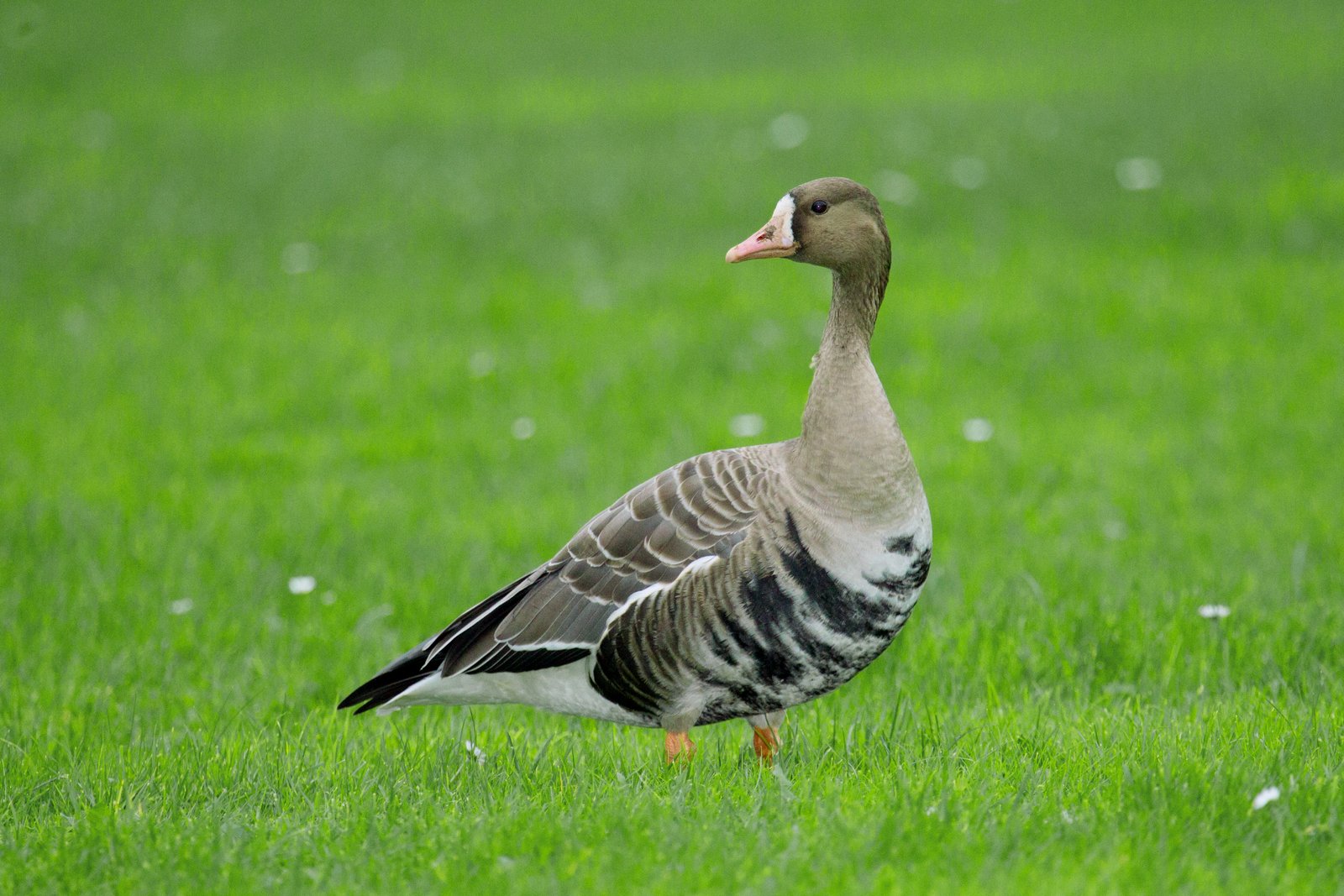
The Greater White-fronted Goose is a greyish-brown goose of the Arctic tundra that winters in northern Mexico, usually in smaller numbers than Snow Goose and often in mixed flocks. In the guide area the birds are North American, which on average have an orange-pink bill, more orange than the pink bill of most European birds.
Voice
A high, laughing kla-leek or kow-lyow, higher and more musical than in domestic geese; flocks call continuously in flight.
Recording: David Darrell-Lambert — CC BY-NC-SA 4.0 · converted to mono · xeno-canto
Identification
64–81 cm. Greyish-brown, with a white blaze around the base of the bill, an orange-pink bill and orange legs. The belly has irregular black bars, the undertail coverts are white and a white line runs along the flank. Juveniles lack the white blaze and the black belly bars and have a dark bill tip. In flight a greyish-brown forewing, dark flight feathers and a white band above the dark tail.
Confusion species
The blue morph of Snow Goose Anser caerulescens has a white head and neck. Domestic geese descended from Greylag Goose Anser anser are heavier and paler, with a thick bill and no black belly bars. Canada Goose Branta canadensis has a black neck and head with a white chinstrap.
Habitat
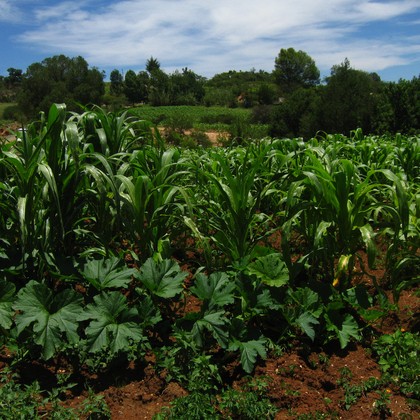
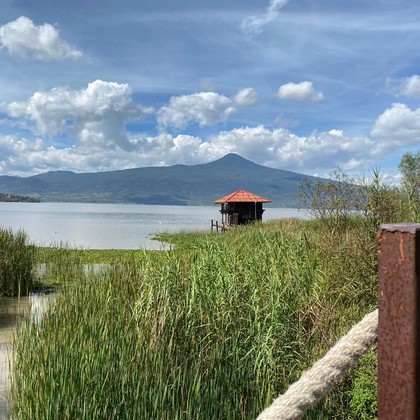
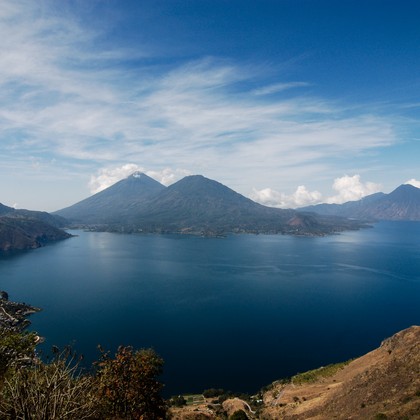
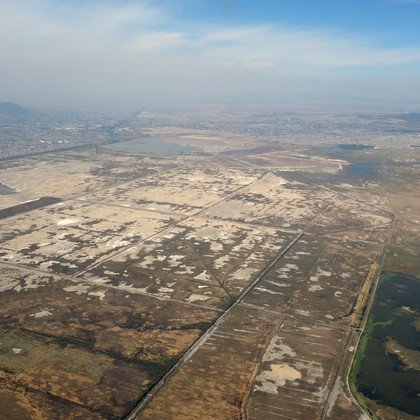
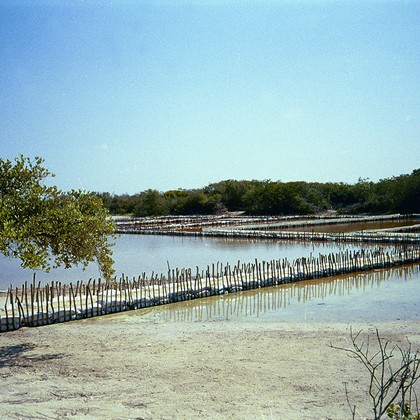
Maize and grain stubble, wet grassland, shallow lakes and lagoons. It roosts on open water, often with Snow Geese and Sandhill Cranes.
Where the bird is most at home, classified by the vegetation units of Mexico and Central America.
Range and movements
Winters in northern Mexico, mainly on the plateau of Chihuahua, Durango and Zacatecas, further in Coahuila, Nuevo León, Tamaulipas, San Luis Potosí, Sonora, Sinaloa and Baja California, and scarcely south to Jalisco and Guanajuato. Rare in Central America, with records in Nicaragua and Costa Rica, among other places. Breeds around the North Pole, in Alaska, Canada, Greenland and northern Eurasia.
- Winter visitor (c. Oct–Mar)
- dark = core range, pale = thinly spread
How and when to look
Among Snow Geese on the fields and lakes of the Chihuahua and Durango plateau; in the white flocks White-fronted Geese stand out by their dark colour, white blaze and orange legs.
Conservation status
Not threatened globally. In the guide area a fairly scarce winter visitor in varying numbers.
Scientific name
Anser albifrons | (Scopoli, 1769)
Scopoli described the species in 1769 as Branta albifrons; because it was later moved to another genus, the author and year stand in brackets. The genus Anser was introduced in 1760 by Brisson. Anser is the Latin word for 'goose'. albifrons is Latin, from albus 'white' and frons 'forehead', after the white blaze around the base of the bill. The specimen the first description was based on came from northern Italy.