All species › Passerines › Wrens › Giant Wren
Position in the tree Birds Aves › Birds with a flexible palate Neognathae › All other modern birds Neoaves › Landbirds Telluraves › Falcons, parrots and passerines Australaves › Falcons and passerines Eufalconimorphae › Parrots and passerines Psittacopasserae
Giant Wren | Campylorhynchus chiapensis
Reuzenwinterkoning | Matraca chiapaneca
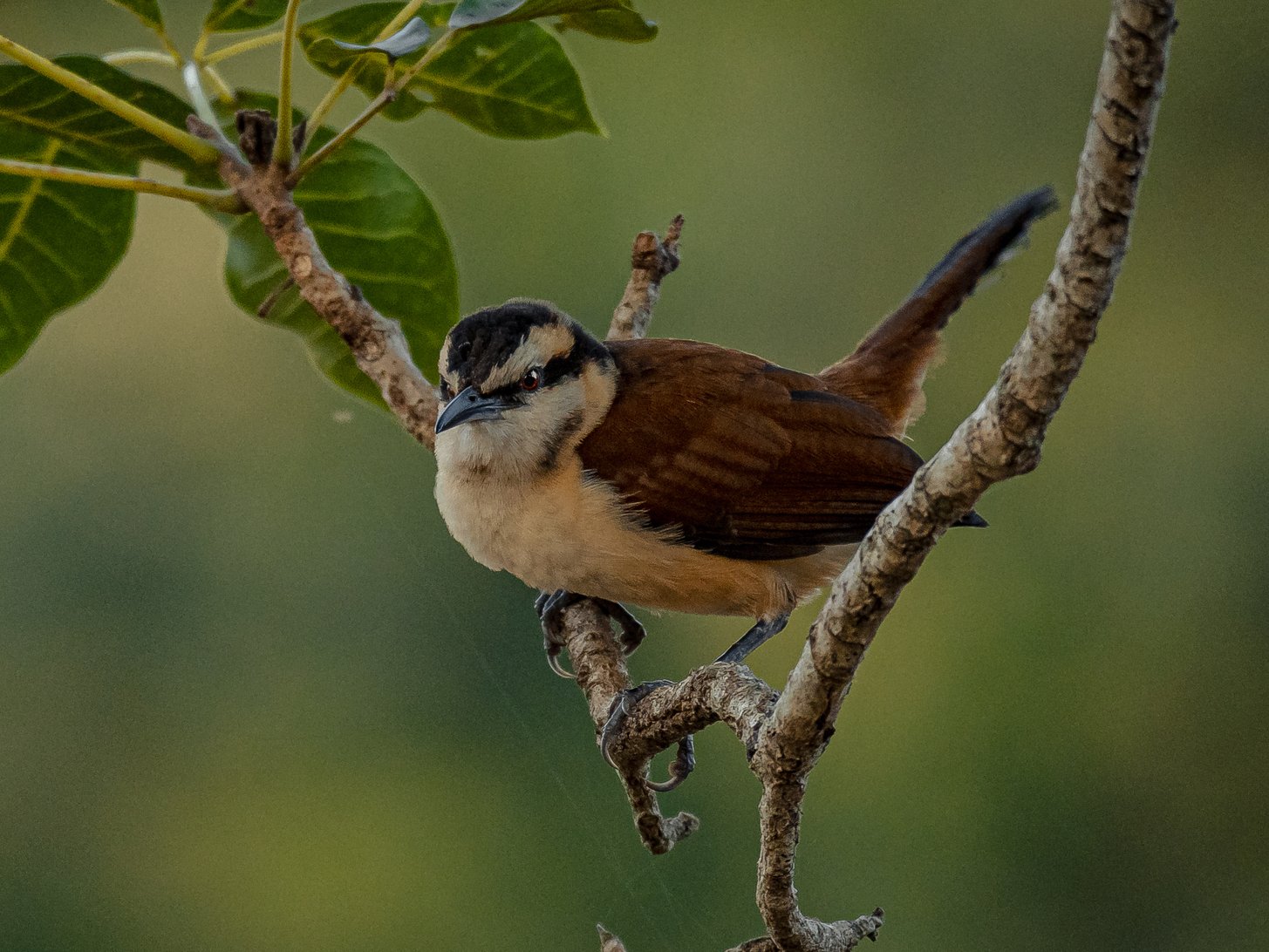
The Giant Wren is the largest wren of the guide area, with a plain rufous back, a black crown and white underparts. It lives in pairs or small groups on the Pacific coastal plain of Chiapas and has a small range.
Voice
Loud, rhythmic, musical duets of repeated, somewhat chuckling phrases, lower and fuller than in related species. Also harsh, rasping calls.
Recording: Manuel Grosselet — CC BY-NC-SA 4.0 · converted to mono · xeno-canto
Identification
20–22 cm. Crown and eyestripe blackish, with a broad white supercilium. Nape, back and scapulars plain rufous to chestnut. Wings and tail rufous with black bars. Throat and underparts white to dull whitish, flanks slightly warmer. Bill long and strong.
Confusion species
Russet-naped Wren Campylorhynchus humilis lives in the same part of Chiapas but is clearly smaller, with a browner crown and a duller brown back. Other wrens on the coastal plain are much smaller.
Habitat
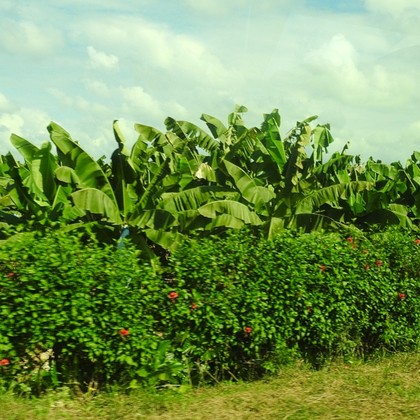
Semi-open lowland with scattered trees, orchards, pastures with trees, gallery forest and gardens around farms and villages, from sea level to about 300 m. Searches branches and vegetation for insects and other invertebrates. The domed nest is often placed in a tree or bush.
Where the bird is most at home, classified by the vegetation units of Mexico and Central America.




Range and movements
Pacific coastal plain of Chiapas, southern Mexico. Almost endemic to Mexico; possibly also just across the border in extreme south-western Guatemala.
- Resident
- dark = core range, pale = thinly spread
How and when to look
Search farmland with trees on the Pacific coastal plain of Chiapas; the loud duets carry a long way.
Conservation status
Not threatened. The range is small, but the species also lives in farmland and is locally common there.
Scientific name
Campylorhynchus chiapensis | Salvin & Godman, 1891
Salvin & Godman described the species in 1891 and placed it straight away in the genus where it still stands. The genus Campylorhynchus was introduced in 1824 by Spix. Campylorhynchus is Greek, from kampulos 'curved' and rhunkhos 'bill', after the slightly decurved bill. chiapensis refers to the Mexican state of Chiapas, where the type was collected. The specimen the first description was based on came from Tonalá, Chiapas, Mexico.