All species › Tubenoses › Petrels, shearwaters and diving petrels › Galapagos Shearwater
Position in the tree Birds Aves › Birds with a flexible palate Neognathae › All other modern birds Neoaves › Birds of the elements Elementaves › Tropicbirds and waterbirds Phaethoquornithes › Core waterbirds Aequornithes
Galapagos Shearwater | Puffinus subalaris
Galápagospijlstormvogel | Pardela de Galápagos
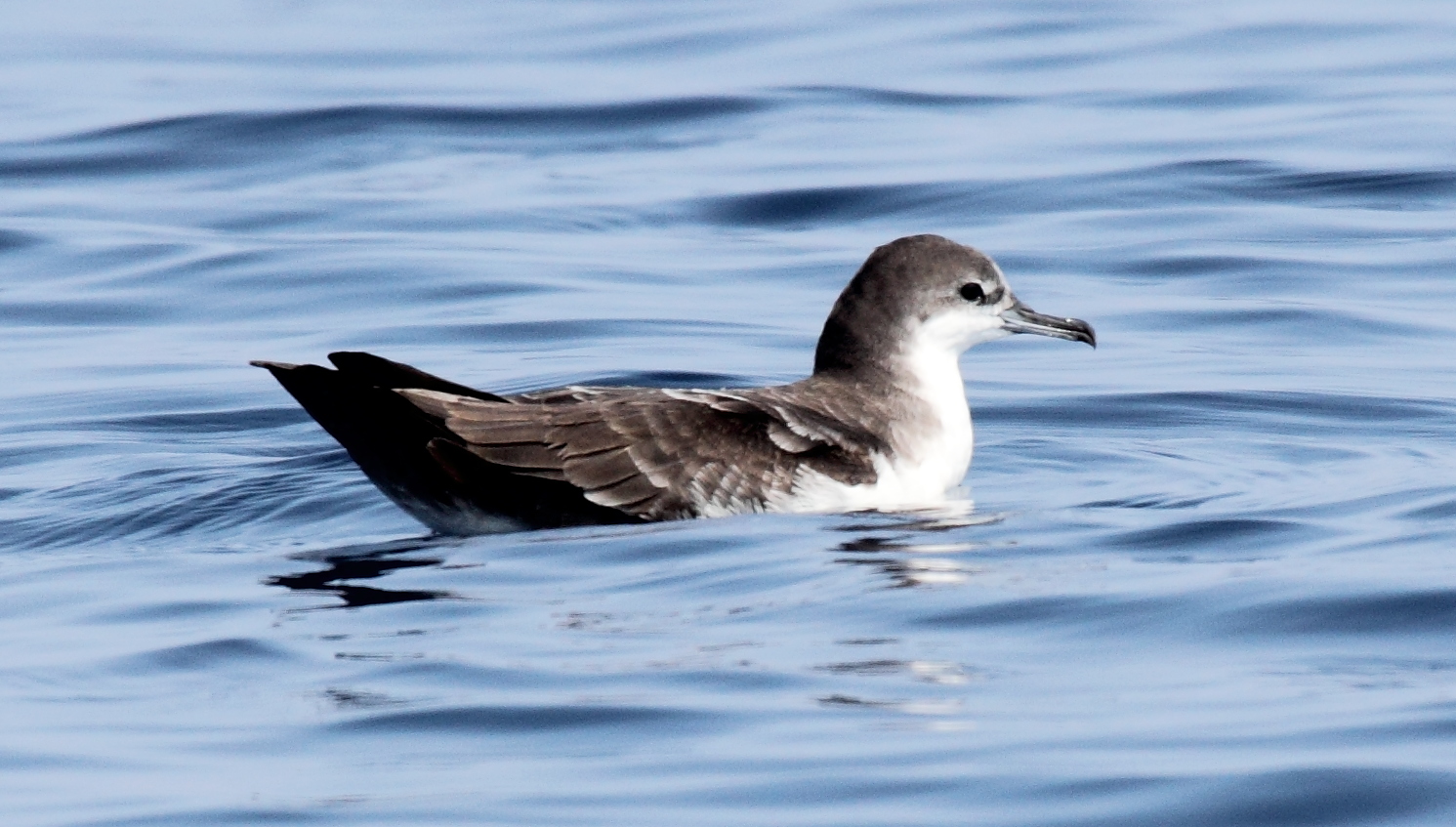
The Galapagos Shearwater is a small black-and-white shearwater that breeds only in the Galápagos Islands. It was long included in Audubon's Shearwater, a species group that has since been split into several species. Away from the colonies it ranges across the eastern tropical Pacific, and off the Pacific coast of Central America it is the commonest small shearwater.
Voice
Silent at sea. In the colonies at night twittering and cooing calls, from the nest cavities and in the air.
Recording: Richard Hoyer — CC BY-NC-SA 4.0 · converted to mono · xeno-canto
Identification
28–31 cm. A small, compact shearwater with short, fairly broad wings and a short tail. Upperparts, head to below the eye and tail blackish brown; underparts white. The underwing is white with broad dark margins, so the white often shows as a narrow central band. The undertail coverts are dark. Bill short, slender and dark; legs pink with a dark outer side. Flies low over the water with series of quick, fluttering beats and short glides. Sexes alike.
Confusion species
Townsend's Shearwater Puffinus auricularis is larger and blacker, with a white flank patch reaching onto the side of the rump; it occurs almost only off western Mexico. Black-vented Shearwater Puffinus opisthomelas is larger and browner, with a dingier head and neck side and more grey on the underwing. Manx Shearwater Puffinus puffinus, very rare on this coast, is larger, with white undertail coverts. The light morph of Wedge-tailed Shearwater Ardenna pacifica is much larger, with a long, wedge-shaped tail and a relaxed, floating flight.
Habitat
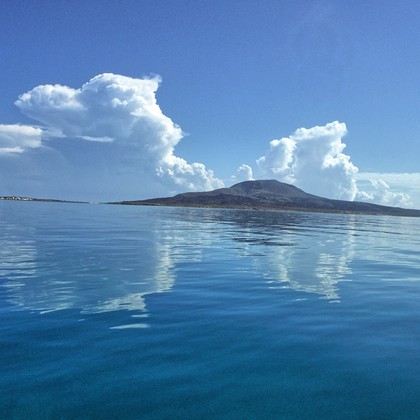
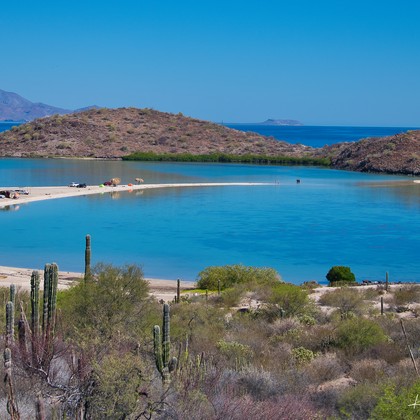
Warm open sea, both far offshore and over the continental shelf; sometimes right up to the coast and into large bays. Often feeds in flocks, together with boobies and terns over schools of tuna or dolphins, taking small fish and squid at the surface or in short dives. Breeds in rock crevices and burrows in the Galápagos Islands.
Where the bird is most at home, classified by the vegetation units of Mexico and Central America.
Range and movements
At sea off the Pacific coast of Panama, Costa Rica, Nicaragua, El Salvador and Guatemala, and further north off southern Mexico; most numerous off Costa Rica and Panama, including the Gulf of Panama and the Gulf of Nicoya. Scarcer north of Oaxaca, with scattered records north to off Jalisco and Nayarit. Absent from the Caribbean side. Outside the guide area it breeds in the Galápagos Islands and occurs at sea south to off Colombia, Ecuador and northern Peru.
- Resident
- Summer visitor (c. Apr–Sep)
- Winter visitor (c. Oct–Mar)
- Passage (Mar–Apr, Oct–Nov)
- dark = core range, pale = thinly spread
How and when to look
Seawatching from headlands and ferries and pelagic trips off Costa Rica and Panama offer the best chance; feeding flocks are often visible from afar thanks to the boobies and terns hunting above them. The small size, fluttering flight and dark undertail are good features.
Conservation status
Not threatened. The world population is estimated at tens of thousands of birds, but is poorly known. In the Galápagos Islands introduced rats and cats are a threat to the colonies.
Scientific name
Puffinus subalaris | Ridgway, 1897
Ridgway described the species in 1897 and placed it straight away in the genus where it still stands. The genus Puffinus was introduced in 1760 by Brisson. Puffinus comes from English puffin and its variants, the name for the cured nestling of the shearwater, once a delicacy. subalaris is Latin, from sub 'under' and alaris 'of the wing', after the underwing, darker than in its relatives. The specimen the first description was based on came from Dalrymple Rock off San Cristóbal (Chatham), Galápagos.