All species › Pigeons and doves › Doves and pigeons › Eurasian Collared-Dove
Position in the tree Birds Aves › Birds with a flexible palate Neognathae › All other modern birds Neoaves › Doves, turacos and allies Columbaves › Doves and sandgrouse Columbimorphae
Eurasian Collared-Dove | Streptopelia decaocto
Turkse tortel | Tórtola turca
The Eurasian Collared-Dove is an introduced species in the guide area: it does not occur here naturally. After escapes in the Bahamas in the 1970s it spread through Florida and much of North America, and from the 1990s also across Mexico. It now breeds throughout the guide area as far as Panama, almost always near villages, towns and farms.
Voice
A dull, three-part coo with the stress on the middle note, coo-COO-coo, often repeated at length from a roof, antenna or wire. In flight and on landing a hoarse, nasal khurrr.
Recording: Mats Olsson — CC BY-NC-SA 4.0 · shortened to the first 60 s, mono · xeno-canto
Identification
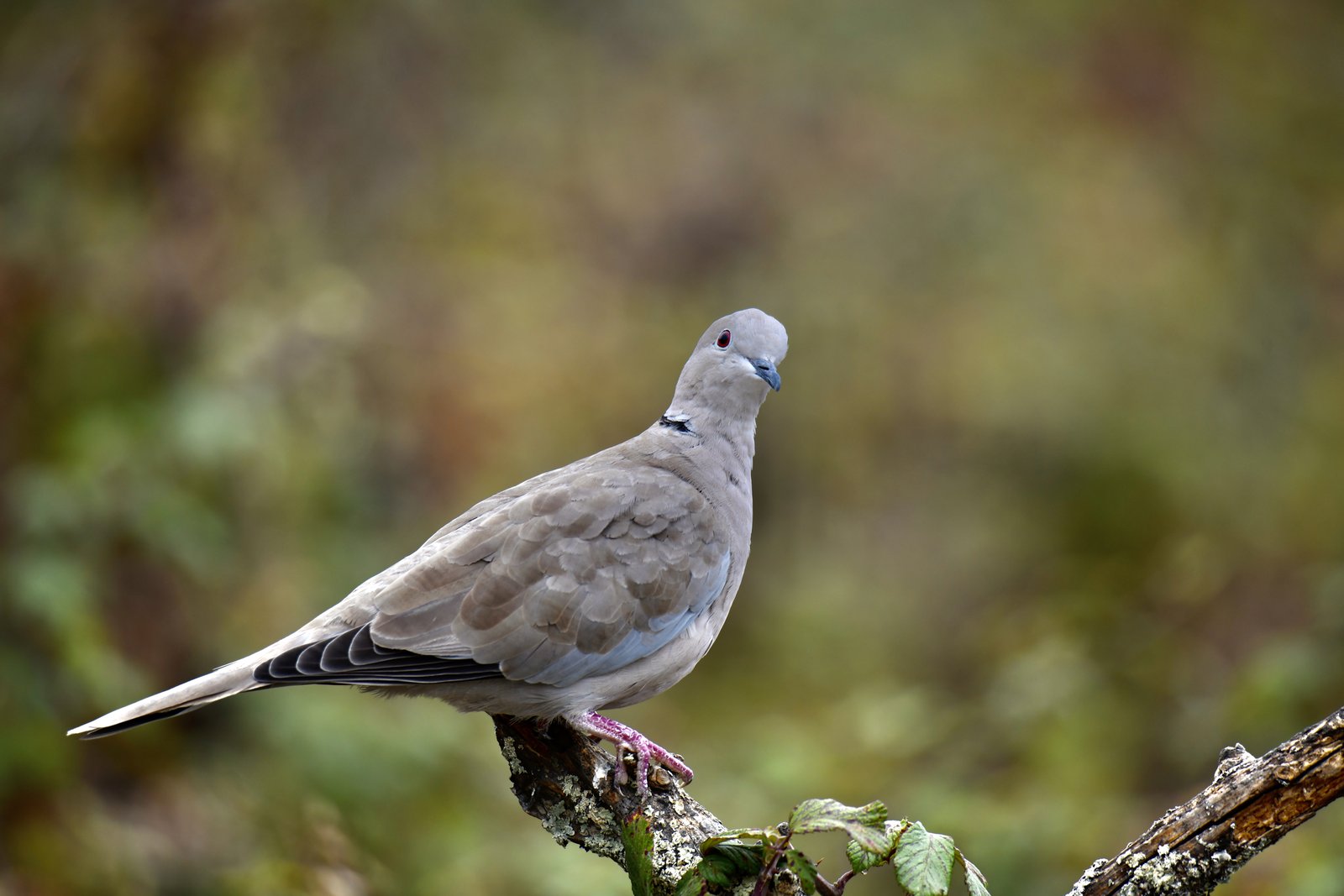
30–33 cm. A slim, pale sandy-grey dove with a long tail and a narrow black collar on the hindneck, edged white. The head and underparts are pale greyish-buff with a pink tinge, the upperparts slightly browner. The primaries are dark and contrast with the paler coverts. From below the tail is dark at the base with a broad white terminal band; the undertail coverts are grey. The eye is dark red and the legs pink. The sexes are alike; young birds lack the collar.
Confusion species
African Collared Dove Streptopelia roseogrisea, which turns up in the guide area only as an escaped cage bird, is smaller and paler, with white undertail coverts and less contrast in the wing. Mourning Dove Zenaida macroura is smaller and slimmer, with a pointed tail, black spots on the wing and no collar. White-winged Dove Zenaida asiatica has a broad white stripe on the wing. Rock Pigeon Columba livia is stockier and greyer, without a collar.
Habitat
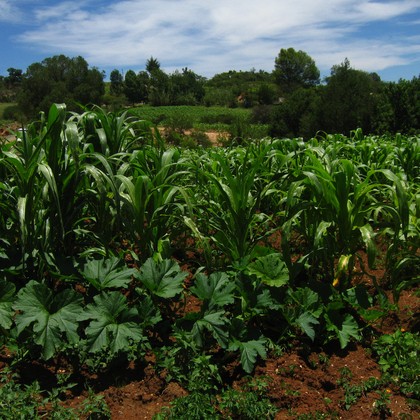
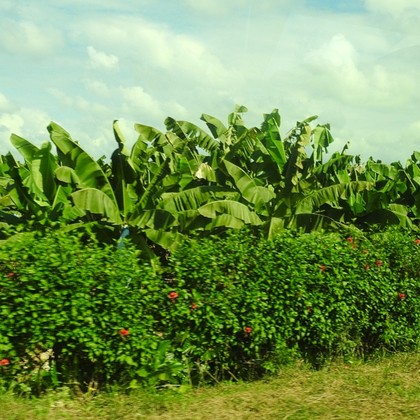
Villages, towns, gardens, parks, farmyards and farms, and the fields, grain stores and pastures with trees around them; also plantations and orchards. Absent from closed forest. Feeds on seeds and grain, often on the ground at silos, feedlots and markets. The nest is a flimsy platform of twigs in a tree, palm or on a building.
Where the bird is most at home, classified by the vegetation units of Mexico and Central America.


Range and movements
Established throughout Mexico, from Baja California and the north to the Yucatán Peninsula and Chiapas, and further south in Belize, Guatemala, El Salvador, Honduras, Nicaragua, Costa Rica and Panama; in Costa Rica and Panama mainly on the Pacific side and still local. Still expanding. Native to southern and south-western Asia; spread across Europe in the twentieth century and introduced to North America and the Caribbean, among other regions.
- Resident
- dark = core range, pale = thinly spread
How and when to look
In Mexico seen on almost every wire and roof in villages and around farms, often together with White-winged Dove. Further south found mainly in towns and villages in the dry Pacific lowlands.
Conservation status
Not globally threatened. In the guide area an introduced species that is spreading fast. Little is known about its effects on native doves.
Scientific name
Streptopelia decaocto | (Frivaldszky, 1838)
Frivaldszky described the species in 1838 as Columba decaocto; because it was later moved to another genus, the author and year stand in brackets. The genus Streptopelia was introduced in 1855 by Bonaparte. Streptopelia is Greek, from streptos 'collar, twisted chain' and peleia 'dove', after the dark neck collar of these doves. decaocto is Greek for 'eighteen', from deka 'ten' and oktō 'eight', a traditional rendering of the call; in a Greek tale a maid who earned only eighteen coins a year was turned into this dove. The specimen the first description was based on came from Turkey.