All species › Owls › Owls › Elf Owl
Position in the tree Birds Aves › Birds with a flexible palate Neognathae › All other modern birds Neoaves › Landbirds Telluraves › Raptors, owls, kingfishers and woodpeckers Afroaves › Hawks and owls Hieraves
Elf Owl | Micrathene whitneyi
Cactusuil | Tecolote enano
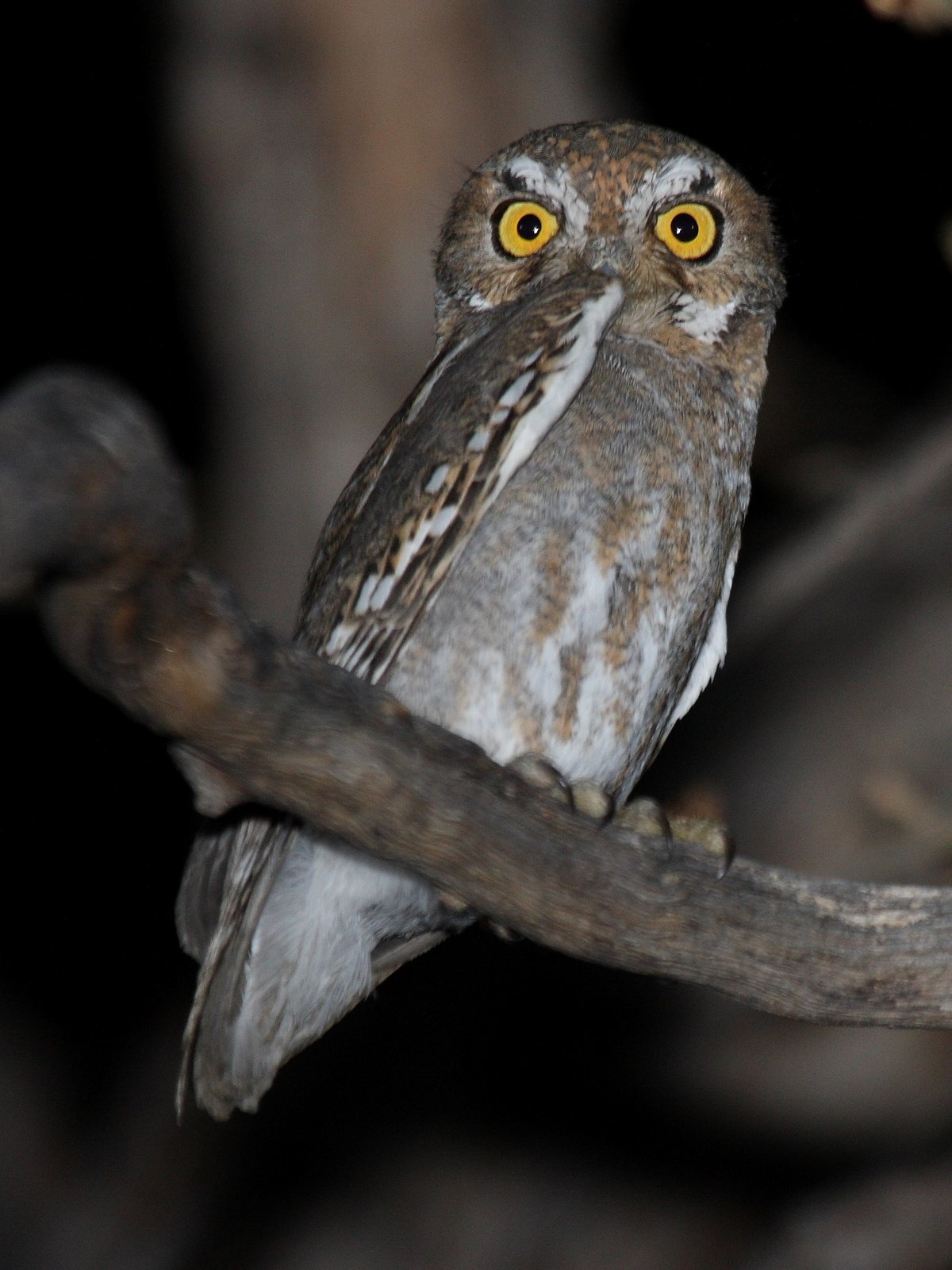
The Elf Owl is one of the smallest owls in the world, weighing about forty grams. It lives in deserts, thorn scrub and dry woodland of the southwestern United States and Mexico and nests in old woodpecker holes in columnar cacti and trees. In the north of the guide area it is a summer visitor; in Baja California Sur and central Mexico it occurs year-round. It is active only at night and feeds mainly on insects and scorpions.
Voice
The song is a high, rapid series of chattering notes, chew-chew-chew-chew, rising in volume in the middle and recalling the yelping of a puppy. Also a high, whistled peew. Heard mainly in the first hours after sunset, in the breeding season from March to June.
Recording: Paul Marvin — CC BY-NC-SA 4.0 · converted to mono · xeno-canto
Identification
12–14 cm, with a round head without ear tufts, yellow eyes and a short tail. The upperparts are grey-brown with small buff spots; white eyebrows run above the eyes and a row of white spots crosses the shoulder. The facial disc is rufous to grey. The underparts are greyish white with faint rufous streaks and spots. Male and female are alike.
Confusion species
Pygmy owls (Glaucidium), such as the Ferruginous Pygmy Owl Glaucidium brasilianum, have a longer tail and two dark spots on the nape that act as false eyes, and are also active by day. The Flammulated Owl Psiloscops flammeolus is larger, with dark eyes and small ear tufts, and lives in montane conifer forest. The Western Screech Owl Megascops kennicottii is much larger and has ear tufts.
Habitat
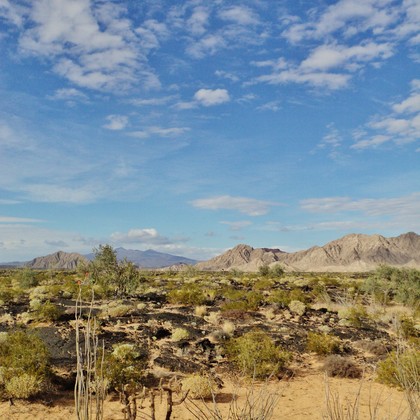
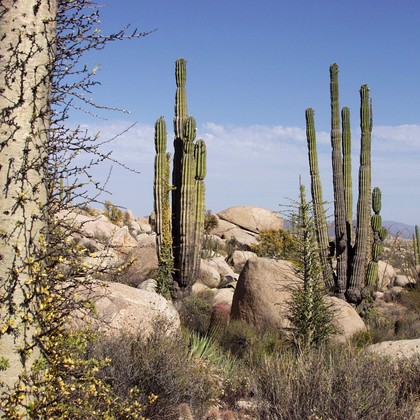
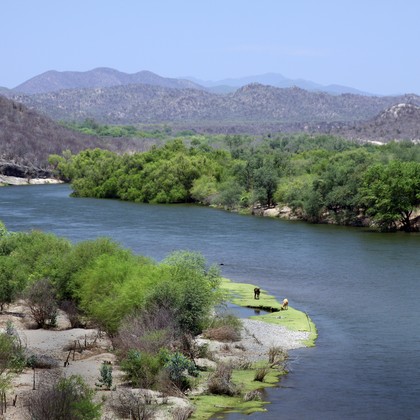
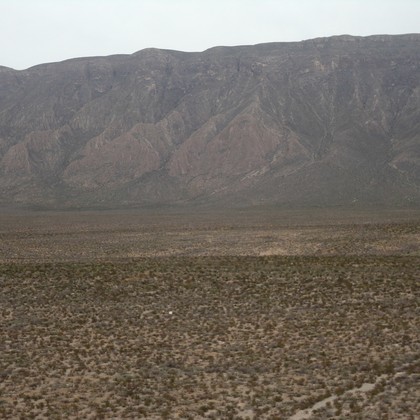
Desert with columnar cacti such as saguaro and cardón, thorn scrub, dry deciduous woodland and, in dry regions, riparian woodland with sycamores and oaks; in the mountains also oak and pine-oak woodland. It nests in abandoned woodpecker holes in columnar cacti, poles and trees. At night it hunts moths, beetles, crickets, spiders and scorpions from a perch or in flight, sometimes around lights.
Where the bird is most at home, classified by the vegetation units of Mexico and Central America.



Range and movements
A summer visitor in northern Mexico: in Sonora, northeastern Baja California, Chihuahua, Coahuila, Nuevo León and Tamaulipas, present there roughly from March to September. Resident year-round in southern Baja California Sur and in central Mexico, from Nayarit and Jalisco east to Puebla, Morelos and Oaxaca. Northern birds probably winter in western and central Mexico. A separate subspecies on Isla Socorro in the Revillagigedo Islands has not been reliably recorded since the 1930s. Outside the guide area it breeds in Arizona, New Mexico, southeastern California and southern Texas.
- Resident
- Summer visitor (c. Apr–Sep)
- Winter visitor (c. Oct–Mar)
- Passage (Mar–Apr, Oct–Nov)
- dark = core range, pale = thinly spread
How and when to look
In spring, from March to May, the song can be heard after sunset in cactus desert and thorn scrub in Sonora, for example around Álamos, and on the cactus plains and hills of Baja California Sur. By day it hides in a cavity and is almost never seen; at dusk its head sometimes appears in the entrance of a nest hole in a columnar cactus.
Conservation status
Not threatened. In the United States numbers have declined through the loss of riparian woodland and columnar cacti; in Mexico it is still locally common. The Isla Socorro subspecies is probably extinct.
Scientific name
Micrathene whitneyi | (Cooper, 1861)
Cooper described the species in 1861 as Athene whitneyi; because it was later moved to another genus, the author and year stand in brackets. The genus Micrathene was introduced in 1866 by Coues. Micrathene is Greek, from mikros 'small' and Athene, the owl genus named after the goddess whose bird was the owl: 'little owl'. whitneyi honours the American geologist Josiah Dwight Whitney (1819–1896), head of the Geological Survey of California. The specimen the first description was based on came from Fort Mojave, Arizona, USA.