All species › Waders, gulls and terns › Skimmers, noddies, terns and gulls › Elegant Tern
Position in the tree Birds Aves › Birds with a flexible palate Neognathae › All other modern birds Neoaves › Birds of the elements Elementaves › Cranes and waders Gruimorphae
Elegant Tern | Thalasseus elegans
Sierlijke stern | Charrán elegante
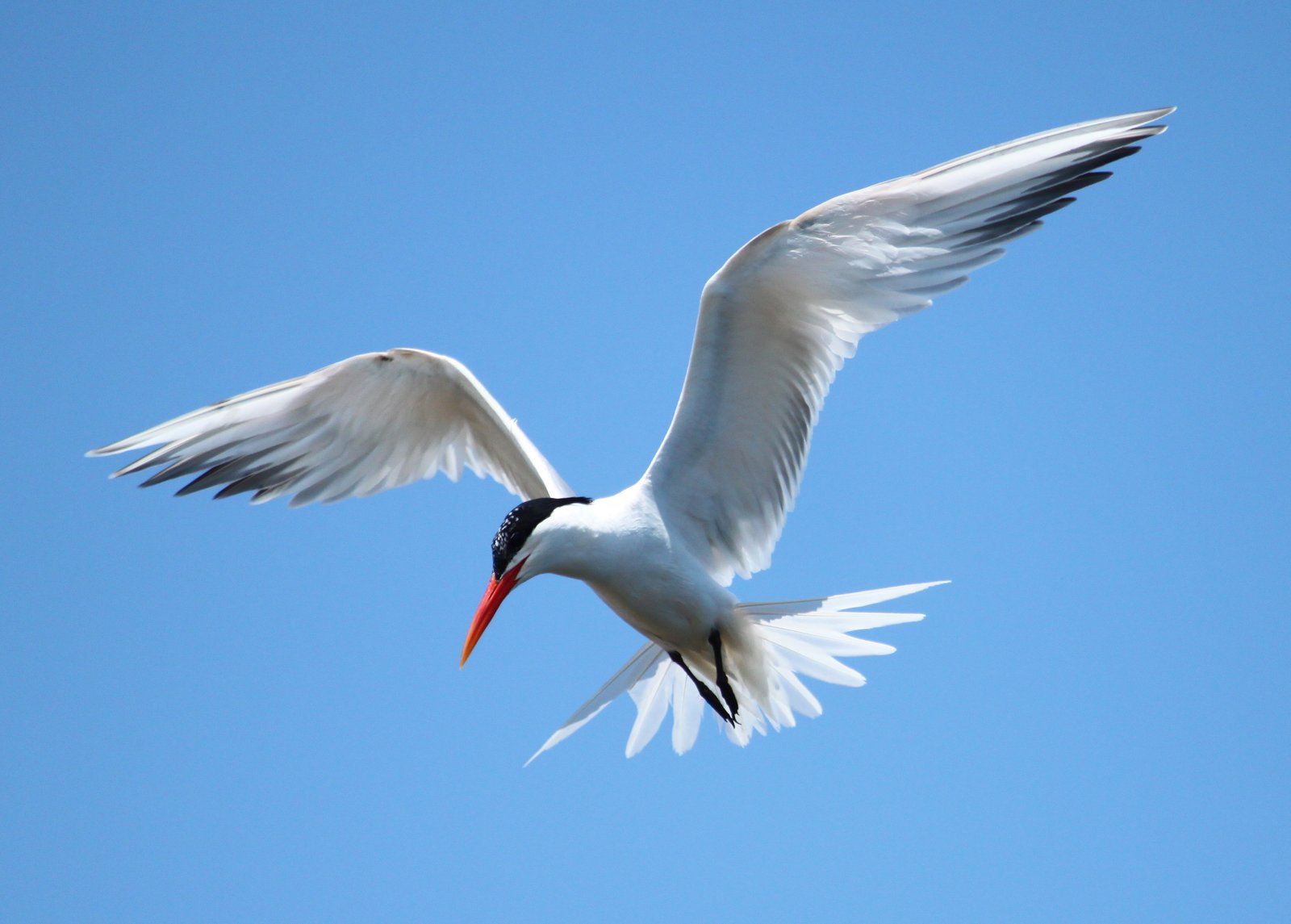
The Elegant Tern is a medium-sized crested tern of the Pacific coast, with a long, slightly drooping orange bill and a long, shaggy crest. Almost the entire world population breeds on a few islets, by far the largest colony being on Isla Rasa in the Gulf of California. After breeding, some birds move north to California and others south along the coast to Peru and Chile.
Voice
A rasping, grating kerreek or kar-reek, similar to the call of other crested terns but slightly higher than that of Royal Tern; at colonies a constant screeching.
Recording: Paul Marvin — CC BY-NC-SA 4.0 · shortened to the first 60 s, mono · xeno-canto
Identification
39–43 cm, slender, with long, narrow wings, a forked tail and a long, thin, slightly drooping bill, orange to yellow-orange and often paler towards the tip. In breeding plumage a black cap with a long, shaggy crest hanging over the nape; outside the breeding season the forehead is white, but the black of the hindcrown usually reaches around the eye. The upperparts are pale grey, the underparts white, in spring often with a pink flush. The legs are black. Juveniles have a yellowish bill and dark spots on the wings.
Confusion species
Royal Tern Thalasseus maximus is larger and heavier, with a thicker, straighter, deeper orange bill, a shorter crest and, in winter, a whiter forehead with the black not reaching the eye. Sandwich Tern Thalasseus sandvicensis has a black bill with a yellow tip. Caspian Tern Hydroprogne caspia is much larger, with a thick red bill and no crest.
Habitat
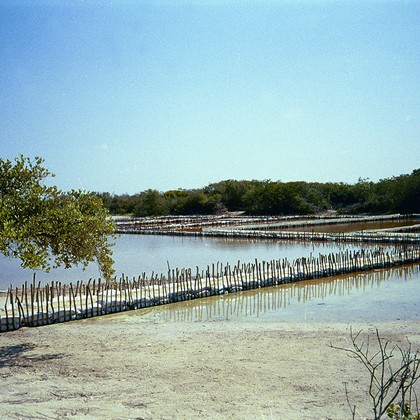
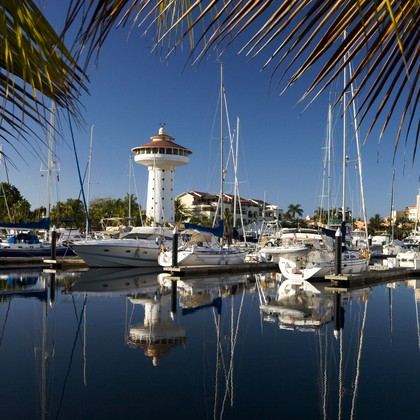
Coastal waters, bays, lagoons, estuaries and harbours. It roosts in flocks on beaches, sandbars, jetties and quays, often among Royal Terns. It fishes by plunge-diving, mainly for anchovies and sardines. It breeds in very dense colonies on bare islets, often together with Royal Terns and gulls.
Where the bird is most at home, classified by the vegetation units of Mexico and Central America.



Range and movements
Breeds mainly on Isla Rasa in the Gulf of California, and in smaller numbers on a few other islands in the gulf and in lagoons on the Pacific coast of Baja California. Outside the breeding season along the entire Pacific coast of Mexico and Central America to Panama, scarcer in the south; very rare on the Caribbean side. Outside the guide area the species also breeds in southern California and winters along the coast of South America to Peru and Chile.
- Resident
- Summer visitor (c. Apr–Sep)
- Winter visitor (c. Oct–Mar)
- Passage (Mar–Apr, Oct–Nov)
- dark = core range, pale = thinly spread
How and when to look
In the Gulf of California fishing birds can be seen along the coast and in the bays from spring into summer. Outside the breeding season, resting flocks of terns on beaches and jetties along the Pacific coast are the place to look for the long, drooping orange bill and the long crest.
Conservation status
Near Threatened. Because almost all birds breed on a few islets, the species is vulnerable to disturbance, introduced predators and fluctuations in anchovy and sardine stocks caused by El Niño. On Isla Rasa the colony has grown strongly since rats and mice were removed and the island has been guarded.
Scientific name
Thalasseus elegans | (Gambel, 1849)
Gambel described the species in 1849 as Sterna elegans; because it was later moved to another genus, the author and year stand in brackets. The genus Thalasseus was introduced in 1822 by Boie. Thalasseus derives from Ancient Greek thalassa 'sea'. elegans is Latin for 'elegant, fine'. The specimen the first description was based on came from Mazatlán, Mexico.