All species › Passerines › New World sparrows › Dark-eyed Junco
Position in the tree Birds Aves › Birds with a flexible palate Neognathae › All other modern birds Neoaves › Landbirds Telluraves › Falcons, parrots and passerines Australaves › Falcons and passerines Eufalconimorphae › Parrots and passerines Psittacopasserae
Dark-eyed Junco | Junco hyemalis
Grijze junco | Junco ojioscuro
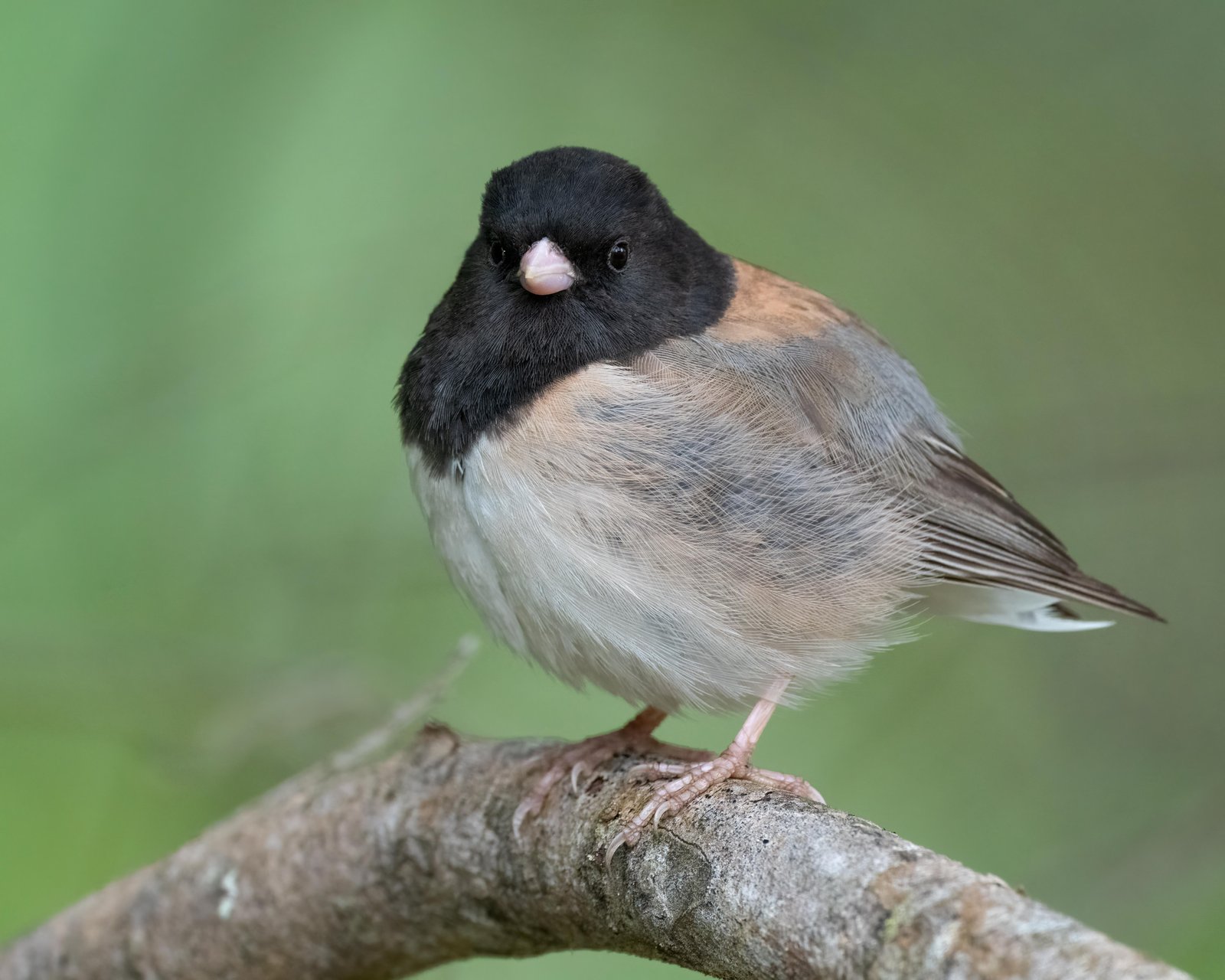
The Dark-eyed Junco is a sparrow with a dark head, a pink bill and white outer tail feathers that flash when it flies up. The species is widespread in North America and consists of several well-marked forms. In the guide area it breeds only in the high mountains of Baja California; elsewhere in northern Mexico it is a winter visitor.
Voice
The song is a monotonous, musical trill on one pitch. Calls: a dry, ticking tsik or smack and a high twittering in flight.
Recording: Ed Pandolfino — CC BY-NC-SA 4.0 · converted to mono · xeno-canto
Identification
14–16 cm. Bill pink, eyes dark. Belly white; outer tail feathers white, conspicuous in flight. Plumage varies greatly between forms. In Baja California a form with a dark grey head and breast and a greyish-brown back breeds. In winter there are also birds with a black hood, brown back and pinkish-brown flanks (Oregon group), uniformly slate-grey birds (Slate-coloured group) and birds with a grey head, dark lores and a rufous back (Grey-headed group). Females are duller and browner than males.
Confusion species
Yellow-eyed Junco Junco phaeonotus has a yellow eye, a two-toned bill and rufous edges to the wing feathers; the Grey-headed group of Dark-eyed Junco also has a rufous back, but dark eyes and an all-pink bill. Guadalupe Junco Junco insularis occurs only on Guadalupe Island and Baird's Junco Junco bairdi only in the Sierra de la Laguna in Baja California Sur.
Habitat
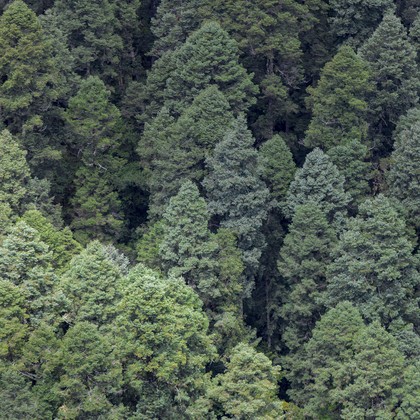
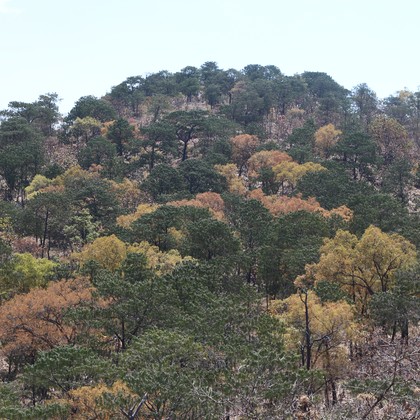
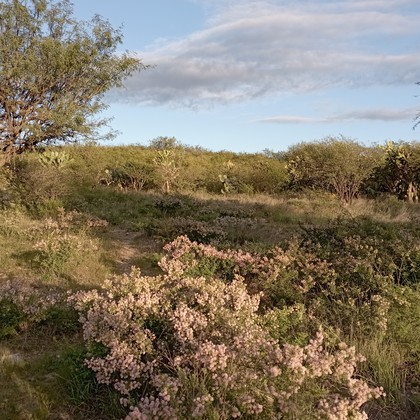
Breeds in open conifer forest of ponderosa and Jeffrey pine in the high mountains. In winter in open woodland, forest edges, scrub, grassland with scattered trees and sometimes near farms and gardens, usually in small flocks on the ground. It eats seeds and, in the breeding season, many insects.
Where the bird is most at home, classified by the vegetation units of Mexico and Central America.

Range and movements
Breeds from Alaska and Canada to the mountains of the western and eastern United States. In the guide area it breeds only in the Sierra Juárez and the Sierra San Pedro Mártir in northern Baja California. Winters in northern Mexico, mainly in Sonora, Chihuahua, Coahuila and Nuevo León, more rarely further south.
- Resident
- Winter visitor (c. Oct–Mar)
- Passage (Mar–Apr, Oct–Nov)
- dark = core range, pale = thinly spread
How and when to look
Common year-round in the national park in the Sierra San Pedro Mártir. In winter in northern Mexico in small flocks along forest edges and in clearings, often with other sparrows.
Conservation status
Not threatened (LC). One of the most numerous birds in North America; locally common in the guide area.
Scientific name
Junco hyemalis | (Linnaeus, 1758)
Linnaeus described the species in 1758 as Fringilla hyemalis; because it was later moved to another genus, the author and year stand in brackets. The genus Junco was introduced in 1831 by Wagler. Junco comes from Latin iuncus meaning 'rush'. hyemalis is Latin for 'of the winter'. The specimen the first description was based on came from South Carolina.