All species › Waterfowl › Ducks, swans and geese › Common Goldeneye
Position in the tree Birds Aves › Birds with a flexible palate Neognathae › Fowl Galloanserae
Common Goldeneye | Bucephala clangula
Brilduiker | Porrón osculado
The Common Goldeneye is a diving duck of the boreal forests around the North Pole. The guide area lies at the southern edge of the North American winter range: in north-western Mexico the species is a scarce winter visitor on reservoirs, rivers and in sheltered coastal waters.
Voice
Largely silent, but in flight the wings make a loud, high, ringing whistle that gives the species away even unseen. In display the male gives a sharp, nasal tsee-tseek, the female a low, purring grrr.
Recording: Stanislas Wroza — CC BY-NC-SA 4.0 · shortened to the first 60 s, mono · xeno-canto
Identification
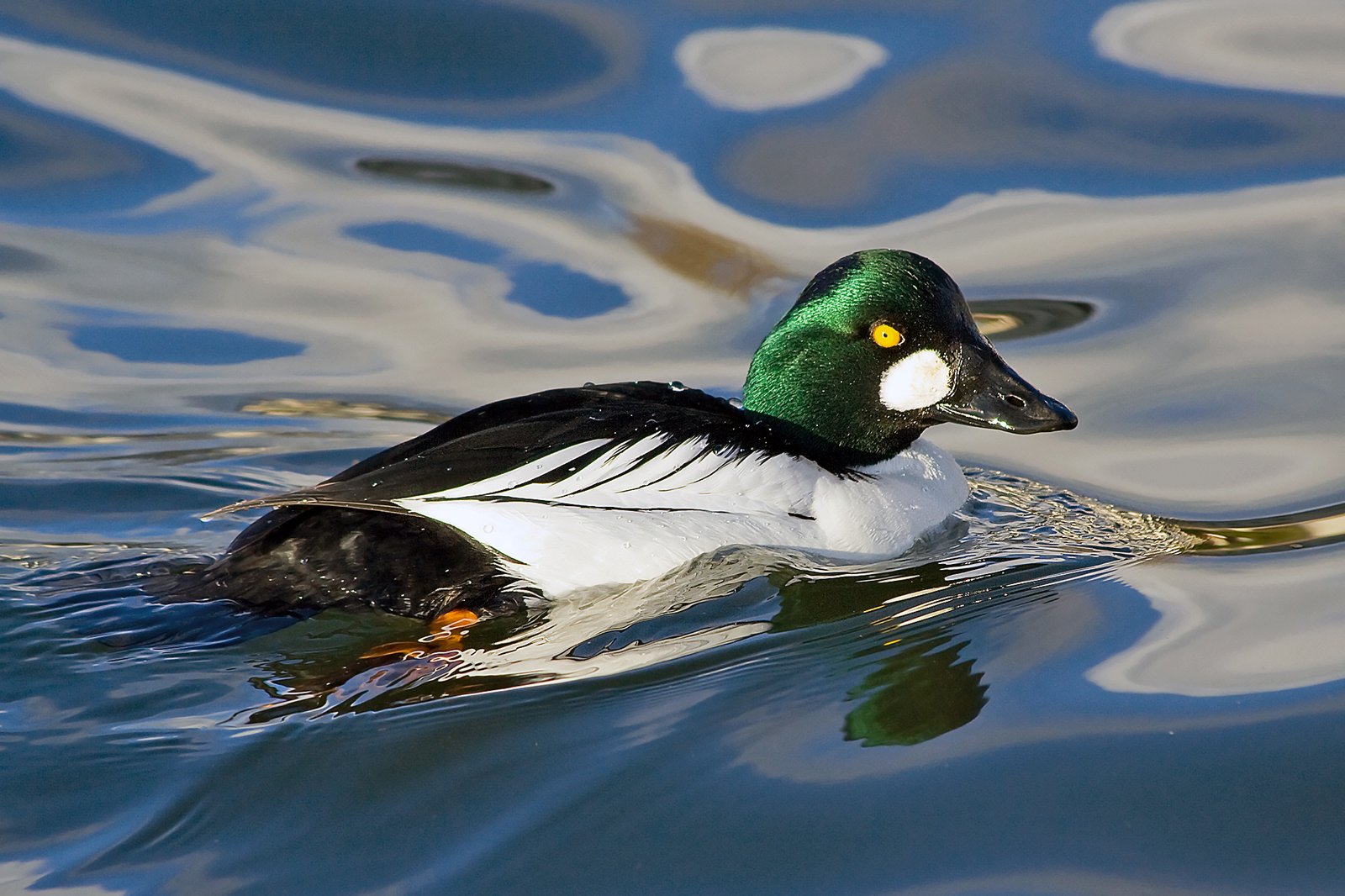
40–51 cm. Compact, with a large, triangular head peaked on the crown, a short neck, a short dark bill and a yellow eye. The male is white on the breast and flanks and black on the back, with a green-glossed black head and a round white spot between eye and bill; black and white stripes on the scapulars. The female has a chocolate-brown head, a narrow white collar and a grey body; the bill is dark, often with a yellow tip. Both sexes show a large white patch on the inner wing in flight.
Confusion species
Bufflehead Bucephala albeola is much smaller; the male has a large white patch on the rear of the head, the female a white cheek patch. The female Red-breasted Merganser Mergus serrator is longer and slimmer, with a ragged crest and a thin red bill. Lesser Scaup Aythya affinis has a grey back and black breast in the male and a white blaze at the bill base in the female.
Habitat
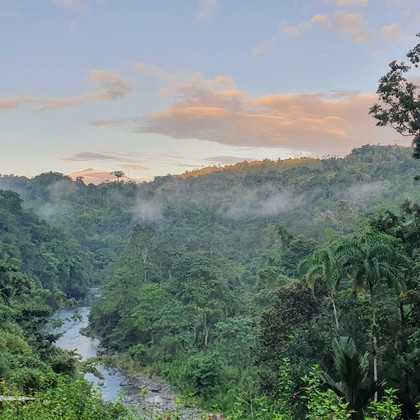
Reservoirs, large rivers, estuaries, sheltered bays and lagoons. It dives for crustaceans, insect larvae, molluscs and small fish.
Where the bird is most at home, classified by the vegetation units of Mexico and Central America.



Range and movements
Winters in small numbers in north-western Mexico: in Baja California, including the Colorado delta, south along Baja California Sur, in Sonora and on reservoirs in Chihuahua, with a few records in Coahuila. Breeds in the boreal forests of Alaska, Canada and northern Eurasia, and in North America winters mainly in the United States.
- Resident
- Winter visitor (c. Oct–Mar)
- dark = core range, pale = thinly spread
How and when to look
The Colorado delta and reservoirs in Sonora and Chihuahua; the ringing wing whistle often gives away a passing Common Goldeneye before its silhouette does.
Conservation status
Not threatened globally. The North American population is roughly stable. In the guide area a scarce winter visitor at the southern edge of the range.
Scientific name
Bucephala clangula | (Linnaeus, 1758)
Linnaeus described the species in 1758 as Anas Clangula; because it was later moved to another genus, the author and year stand in brackets. The genus Bucephala was introduced in 1858 by Baird. Bucephala is Greek, from boukephalos 'bull-headed', from bous 'bull' and kephalē 'head', after the strikingly bulbous head. clangula derives from Latin clangere 'to resound', after the sound the bird makes. The specimen the first description was based on came from Sweden.