All species › Cranes, rails and allies › Rails, gallinules and coots › Common Gallinule
Position in the tree Birds Aves › Birds with a flexible palate Neognathae › All other modern birds Neoaves › Birds of the elements Elementaves › Cranes and waders Gruimorphae
Common Gallinule | Gallinula galeata
Amerikaans waterhoen | Gallineta frente roja
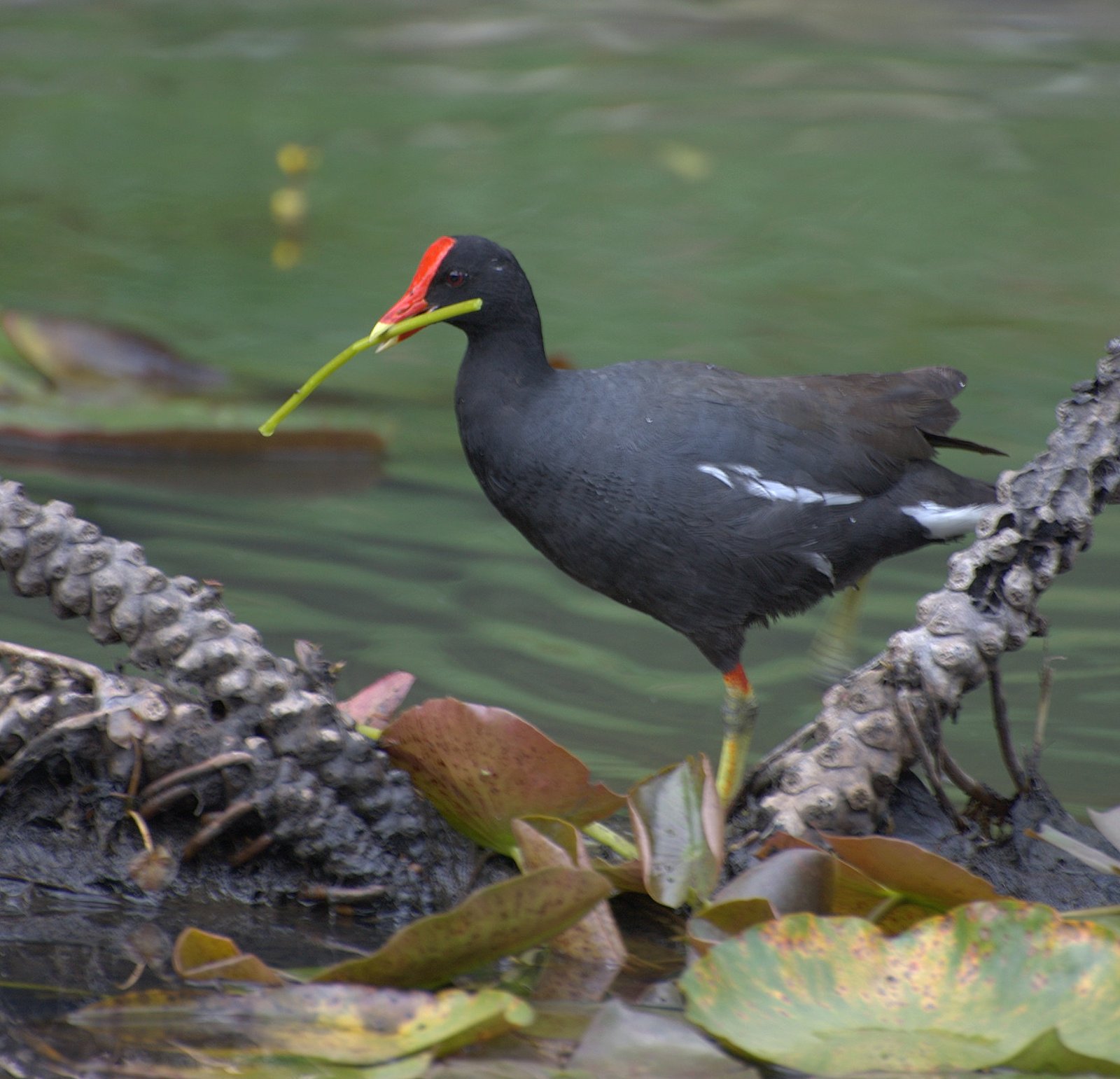
Common Gallinule is a dark, chicken-like waterbird with a red frontal shield and a red, yellow-tipped bill, which both swims and walks through waterside vegetation. It was long included in the Common Moorhen of the Old World, but since 2011 has been treated as a separate species, mainly on the basis of differences in voice and DNA. In the guide area it is a common resident from Mexico to Panama.
Voice
A varied repertoire of cackling, clucking and hiccuping sounds; typical is a series that speeds up and slows down, kek-kek-kek-keh-keh-kaa-kaa, reminiscent of laughter. Also a sudden, loud krruk and soft ticking contact calls. Higher-pitched and more cackling than the Common Moorhen of the Old World.
Recording: Emily Ritter — CC0 · converted to mono · xeno-canto
Identification
32–35 cm. Slate-grey to blackish, with a dark brown back and wings. The red frontal shield is broad at the top and fairly squarely cut off; the bill is red with a yellow tip. A narrow white line runs along the flank. The undertail coverts are white at the sides with a black centre, conspicuous as the bird constantly flicks its tail. The legs are yellow-green, with long unwebbed toes and a red ‘garter’ above the joint. Young birds are grey-brown with a pale throat, a white flank line and a dull, dark bill without a shield. Nods its head rhythmically while swimming.
Confusion species
American Coot Fulica americana is stockier and uniformly slate-grey, with a white bill, no white flank line, and lobed toes. Purple Gallinule Porphyrio martinica is purple-blue and green, with a pale blue frontal shield and yellow legs; young Purple Gallinules are buffier than young Common Gallinules and lack the white flank line. Northern Jacana Jacana spinosa has a yellow frontal shield, a chestnut body and yellow-green flight feathers in flight.
Habitat
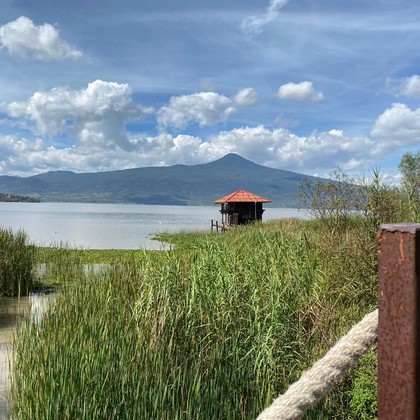
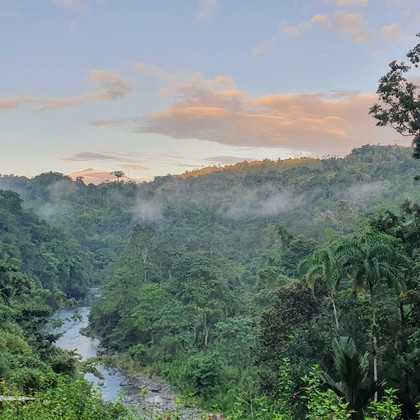
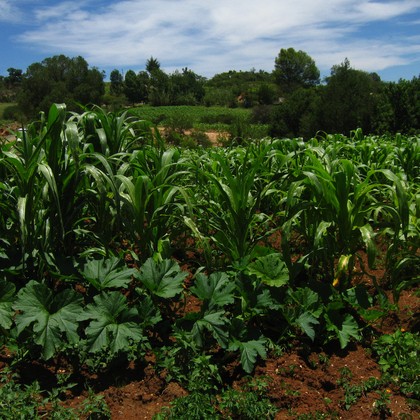
Freshwater marshes, lakes, ponds, lagoons and slow rivers fringed with reed, cattail or floating plants; also rice fields, ditches, reservoirs and park ponds. From sea level up to the plateau. Eats aquatic plants, seeds, insects, snails and other small aquatic life, swimming, dabbling or walking over floating vegetation. The nest is a cup of plant material in the waterside vegetation, sometimes floating; the parents are helped by young from an earlier brood.
Where the bird is most at home, classified by the vegetation units of Mexico and Central America.

Range and movements
Resident in almost the whole guide area, from Baja California and Sonora to Panama, both in the lowlands of both coasts and in the highlands; absent only where suitable water is lacking, as in the driest parts of the north. In northern Mexico it is joined in winter by birds from the north. Outside the guide area from eastern Canada and the United States through the Caribbean to South America; in southern South America and on Hawaii represented by separate subspecies.
- Resident
- dark = core range, pale = thinly spread
How and when to look
Almost anywhere on fresh water with waterside vegetation, including town parks; in Panama, for example, along Gatún Lake and the Panama Canal, in Costa Rica at Palo Verde, in Mexico at Xochimilco and in the lagoons of Veracruz and Tabasco. The tail-flicking and head-nodding are good features even at a distance.
Conservation status
Not threatened. The species is widespread and common and adapts well to artificial waters such as reservoirs, rice fields and ponds.
Scientific name
Gallinula galeata | (Lichtenstein, 1818) (GBIF: Gallinula chloropus)
Lichtenstein described the species in 1818 as Crex galeata; because it was later moved to another genus, the author and year stand in brackets. The genus Gallinula was introduced in 1760 by Brisson. Gallinula is Latin for 'little hen', a diminutive of gallina 'hen'. galeata is Latin for 'helmeted', after the red frontal shield. The specimen the first description was based on came from Brazil (or possibly Paraguay).