All species › Passerines › New World sparrows › Cinnamon-tailed Sparrow
Position in the tree Birds Aves › Birds with a flexible palate Neognathae › All other modern birds Neoaves › Landbirds Telluraves › Falcons, parrots and passerines Australaves › Falcons and passerines Eufalconimorphae › Parrots and passerines Psittacopasserae
Cinnamon-tailed Sparrow | Peucaea sumichrasti
Kaneelstaartgors | Zacatonero istmeño
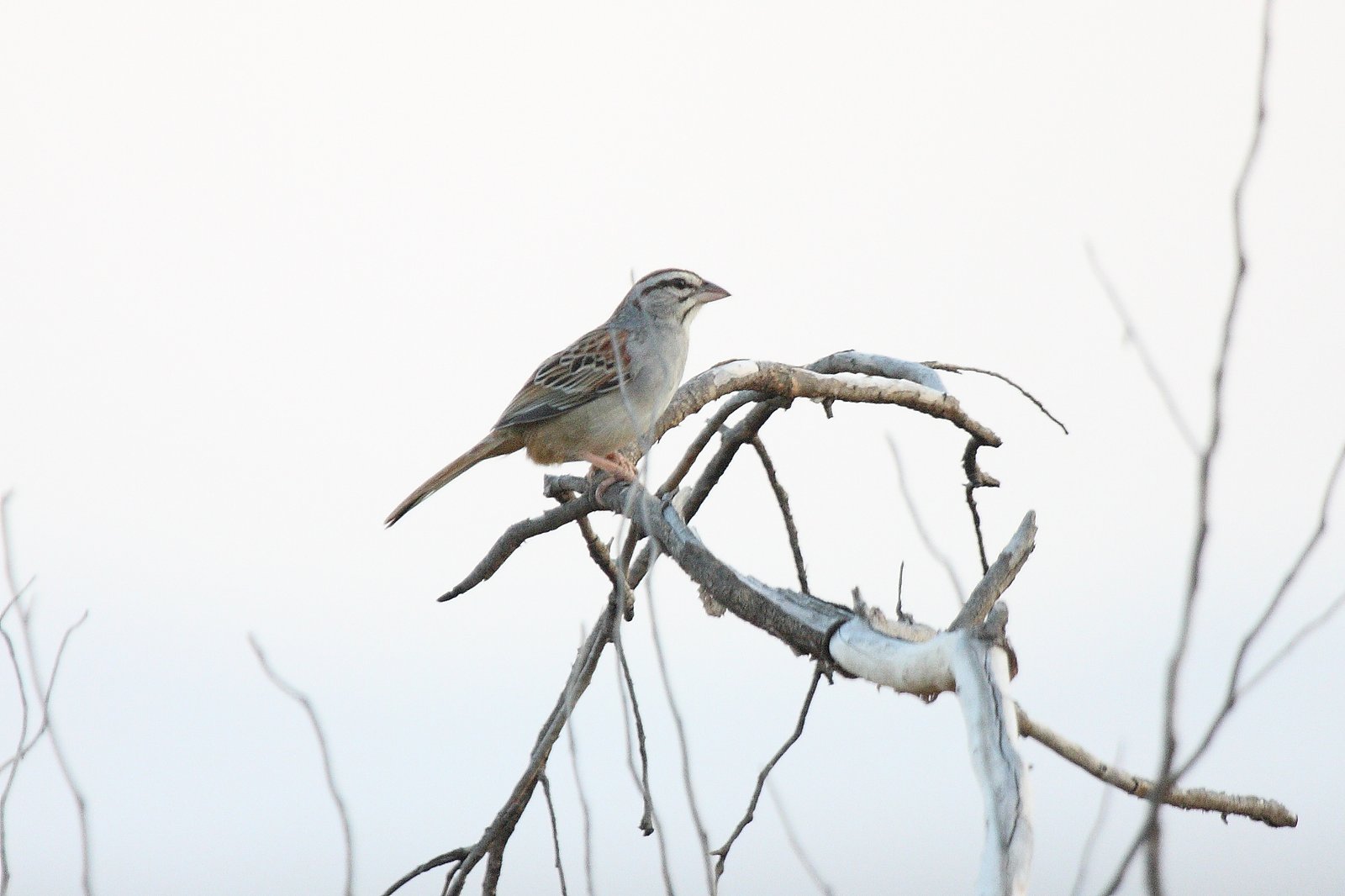
The Cinnamon-tailed Sparrow is a fairly large, streaked sparrow with a cinnamon-rufous tail. It is endemic to the Pacific side of the Isthmus of Tehuantepec in Oaxaca and has one of the smallest ranges of any sparrow in the guide area.
Voice
The song begins with a few separate, dry ticks that accelerate into a stuttering trill. Pairs sometimes sing together. The call is a dry, hard chip.
Recording: Manuel Grosselet — CC BY-NC-SA 4.0 · shortened to the first 60 s, mono · xeno-canto
Identification
16–17 cm. Head greyish brown with fine dark streaks on the crown, a pale supercilium, a dark stripe behind the eye and a distinct black malar stripe. Back brown with black and rufous streaks; lesser wing coverts rufous. Tail fairly long, rounded and cinnamon-rufous. Throat white, breast and flanks greyish beige, belly whitish. Bill fairly heavy and conical, upper mandible dark. The sexes are alike.
Confusion species
Botteri's Sparrow Peucaea botterii, which occurs locally in the same area, is smaller, with a greyish-brown tail lacking cinnamon tones and a less distinct malar stripe. Stripe-headed Sparrow Peucaea ruficauda has a black-and-white head with a black ear patch and a grey breast. Rusty Sparrow Aimophila rufescens has a rufous crown and a black malar stripe and lives in pine-oak forest at higher altitudes.
Habitat
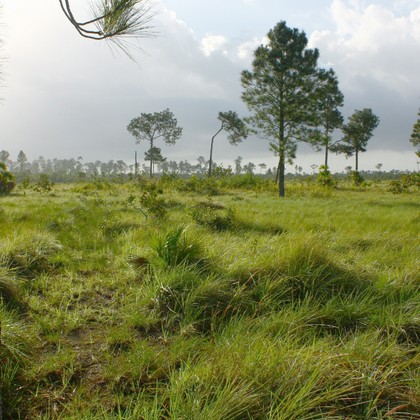
Dry thornscrub and open dry forest with small grassy areas, scattered bushes and cacti, also overgrown pastures, from sea level to about 800 m. It forages on the ground for seeds and insects and sings from a bush or post.
Where the bird is most at home, classified by the vegetation units of Mexico and Central America.


Range and movements
Endemic to south-eastern Oaxaca in Mexico: the Pacific lowlands of the Isthmus of Tehuantepec, around Juchitán, Tehuantepec and Salina Cruz, possibly with an adjacent part of extreme western Chiapas.
- Resident
- dark = core range, pale = thinly spread
How and when to look
Best found in the dry scrub and grasslands around Juchitán and La Ventosa, especially in the rainy season, when the birds are singing.
Conservation status
Near Threatened (NT). The small range is threatened by the conversion of thornscrub to pasture and farmland, by fires and by the construction of wind farms and roads on the isthmus.
Scientific name
Peucaea sumichrasti | (Lawrence, 1871)
Lawrence described the species in 1871 as Haemophila sumichrasti; because it was later moved to another genus, the author and year stand in brackets. The genus Peucaea was introduced in 1839 by Audubon. Peucaea is Greek, from peukē 'pine tree'; Audubon called the type species the 'Pinewood-Finch', after the pine woods it inhabits. sumichrasti honours the Swiss naturalist François Sumichrast (1828–1882), who collected for many years in Mexico, including the Isthmus of Tehuantepec. The specimen the first description was based on came from Juchitán, Oaxaca, Mexico.