All species › Passerines › Wrens › Canyon Wren
Position in the tree Birds Aves › Birds with a flexible palate Neognathae › All other modern birds Neoaves › Landbirds Telluraves › Falcons, parrots and passerines Australaves › Falcons and passerines Eufalconimorphae › Parrots and passerines Psittacopasserae
Canyon Wren | Catherpes mexicanus
Kloofwinterkoning | Chivirín barranqueño
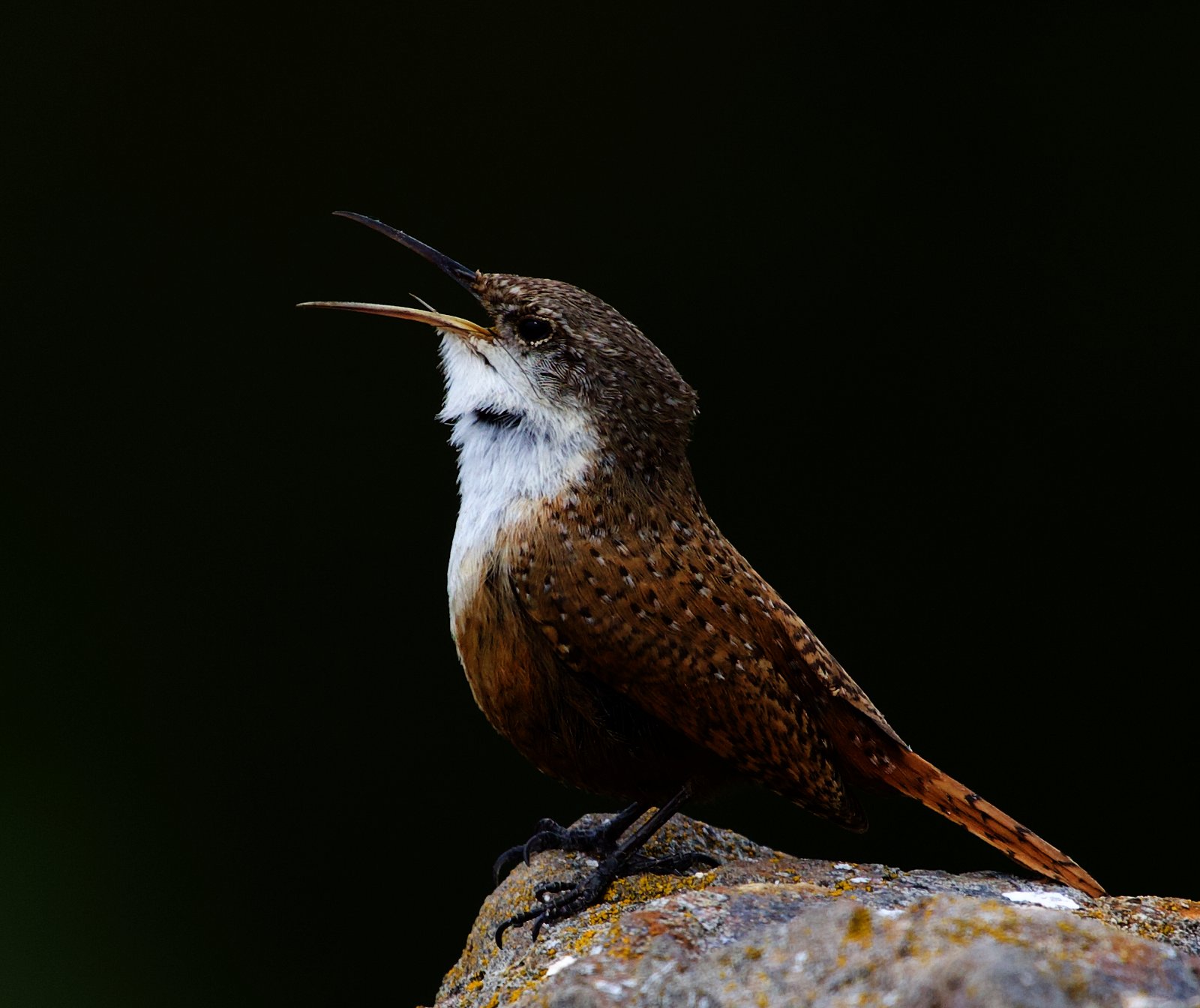
The Canyon Wren is a rufous wren with a bright white throat and a very long, thin bill that lives on steep rock faces. Its song, a descending series of clear whistles, rings through canyons. In the guide area it occurs over much of Mexico.
Voice
The song is a distinctive series of clear, liquid whistles that starts rapidly, gradually falls in pitch and slows down, sometimes ending with a few rasping notes. The call is a buzzy jeet.
Recording: Richard E. Webster — CC BY-NC-SA 4.0 · shortened to the first 60 s, mono · xeno-canto
Identification
12–15 cm. Throat and breast bright white, sharply set off from the rufous belly and flanks. Head grey-brown, back and wings rufous with fine pale and dark speckles. Tail rufous with narrow black bars. Bill very long, thin and slightly decurved. The head is flat, allowing the bird to creep deep into rock crevices.
Confusion species
Rock Wren Salpinctes obsoletus is greyer, with a finely streaked, dull white breast and buff flanks instead of a white throat and rufous belly. Bewick's Wren Thryomanes bewickii has a white supercilium and greyish-white underparts.
Habitat
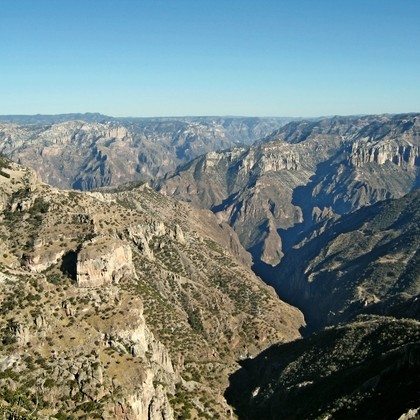
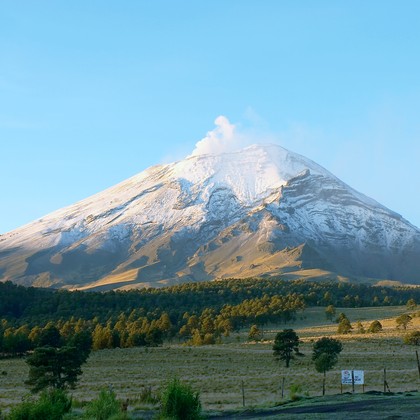
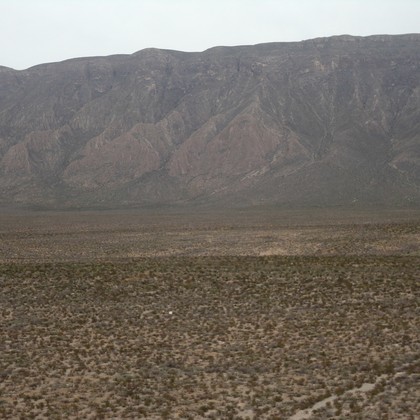
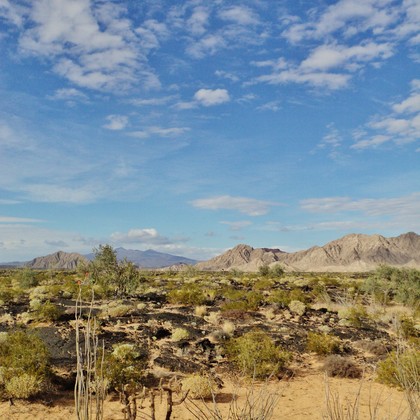
Steep rock faces, cliffs and canyons, also rocky riverbanks, and in Mexico regularly old stone buildings and ruins; from the lowlands high into the mountains. It probes crevices for insects and spiders.
Where the bird is most at home, classified by the vegetation units of Mexico and Central America.

Range and movements
Baja California and northern and central Mexico, south to southern Mexico. Outside the guide area in the western United States and extreme southern Canada.
- Resident
- dark = core range, pale = thinly spread
How and when to look
In rocky canyons, listen first for the descending song and then scan the rock faces; the white throat is visible from afar.
Conservation status
Not threatened. Widespread in suitable rocky terrain.
Scientific name
Catherpes mexicanus | (Swainson, 1829)
Swainson described the species in 1829 as Thryothorus mexicanus; because it was later moved to another genus, the author and year stand in brackets. The genus Catherpes was introduced in 1858 by Baird. Catherpes is Greek, from katherpēs 'creeper' (from katherpō 'to creep up on'), after its creeping over rock faces. mexicanus refers to Mexico, where the type was collected. The specimen the first description was based on came from Real del Monte, Hidalgo, Mexico.