All species › Passerines › New World sparrows › California Towhee
Position in the tree Birds Aves › Birds with a flexible palate Neognathae › All other modern birds Neoaves › Landbirds Telluraves › Falcons, parrots and passerines Australaves › Falcons and passerines Eufalconimorphae › Parrots and passerines Psittacopasserae
California Towhee | Melozone crissalis
Californische towie | Toquí californiano
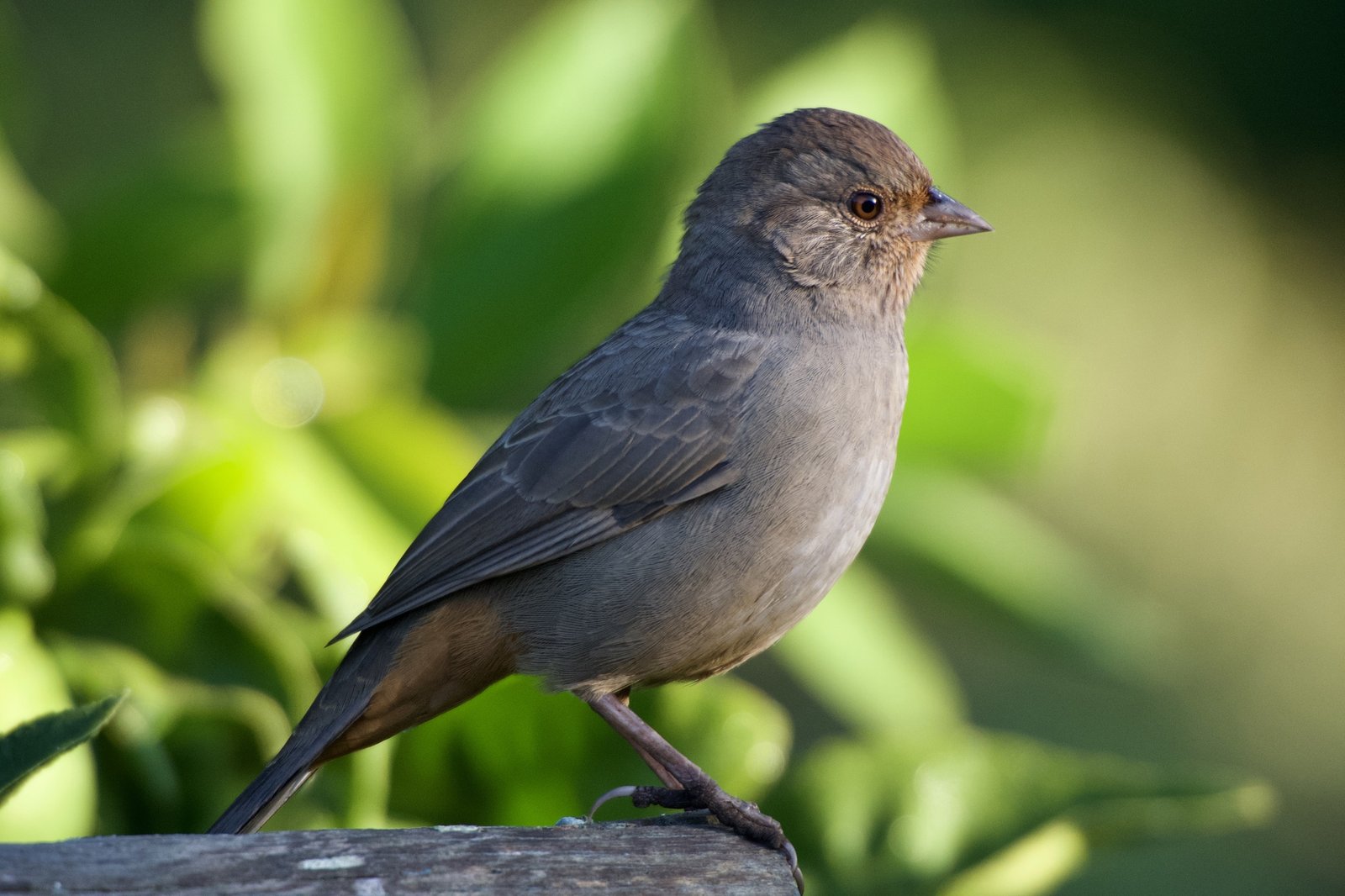
The California Towhee is a large, plain grey-brown sparrow with rufous undertail coverts that spends much time on the ground in scrub and gardens. It lives along the Pacific coast of North America, from Oregon to the tip of Baja California. In the guide area it is confined to the Baja California peninsula.
Voice
The call is a sharp, metallic chink. The song is a series of such notes that speeds up; pairs give an excited, squealing duet when they meet.
Recording: Ed Pandolfino — CC BY-NC-SA 4.0 · converted to mono · xeno-canto
Identification
21–25 cm. Plain grey-brown, the crown barely warmer in tone. Throat buff, bordered by a necklace of fine dark streaks. Breast and flanks grey-brown, centre of belly slightly paler, without an obvious breast spot. Undertail coverts rufous to cinnamon. Tail long and dark brown. Bill conical and grey. The sexes are alike; birds in southern Baja California are paler.
Confusion species
Abert's Towhee Melozone aberti (north-eastern Baja California) is more cinnamon-brown, with a black face around the base of the bill, and lives in riparian vegetation in the desert. Canyon Towhee Melozone fusca does not occur on the peninsula; it has a rufous crown and a dark breast spot. Spotted Towhee Pipilo maculatus has a black head, rufous flanks and white spots on the wings.
Habitat
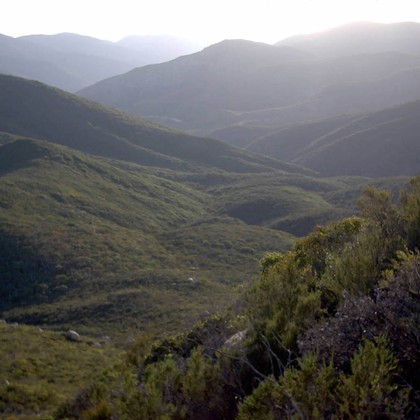
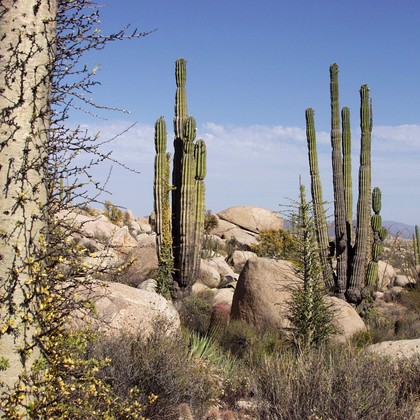
Chaparral, coastal sage scrub, desert scrub, open oak woodland, riparian vegetation and the edges of dense shrubs; also gardens, parks and farmyards, from sea level into the mountains. It searches the ground for seeds and insects and is often tame.
Where the bird is most at home, classified by the vegetation units of Mexico and Central America.



Range and movements
Pacific coast of North America, from south-western Oregon through California. In the guide area throughout the Baja California peninsula, in both Baja California and Baja California Sur, to the southern tip; absent from the desert along the Gulf of California in the north-east.
- Resident
- dark = core range, pale = thinly spread
How and when to look
In northern Baja California common in gardens and on scrubby slopes around Ensenada; in the south in the mountains and valleys of the Cape region. It often walks along roads and yards.
Conservation status
Not threatened (LC). Common and well adapted to gardens; some isolated populations in southern Baja California are small.
Scientific name
Melozone crissalis | (Vigors, 1839)
Vigors described the species in 1839 as Fringilla crissalis; because it was later moved to another genus, the author and year stand in brackets. The genus Melozone was introduced in 1850 by Reichenbach. Melozone is Greek, from mēlon 'cheek' and zōnē 'girdle, band', after the patterned cheeks of the type species. crissalis is Modern Latin for 'of the undertail coverts' (crissum), after the rufous undertail. The specimen the first description was based on came from Monterey, California.