All species › Passerines › New World sparrows › Black-chinned Sparrow
Position in the tree Birds Aves › Birds with a flexible palate Neognathae › All other modern birds Neoaves › Landbirds Telluraves › Falcons, parrots and passerines Australaves › Falcons and passerines Eufalconimorphae › Parrots and passerines Psittacopasserae
Black-chinned Sparrow | Spizella atrogularis
Zwartkingors | Gorrión barba negra
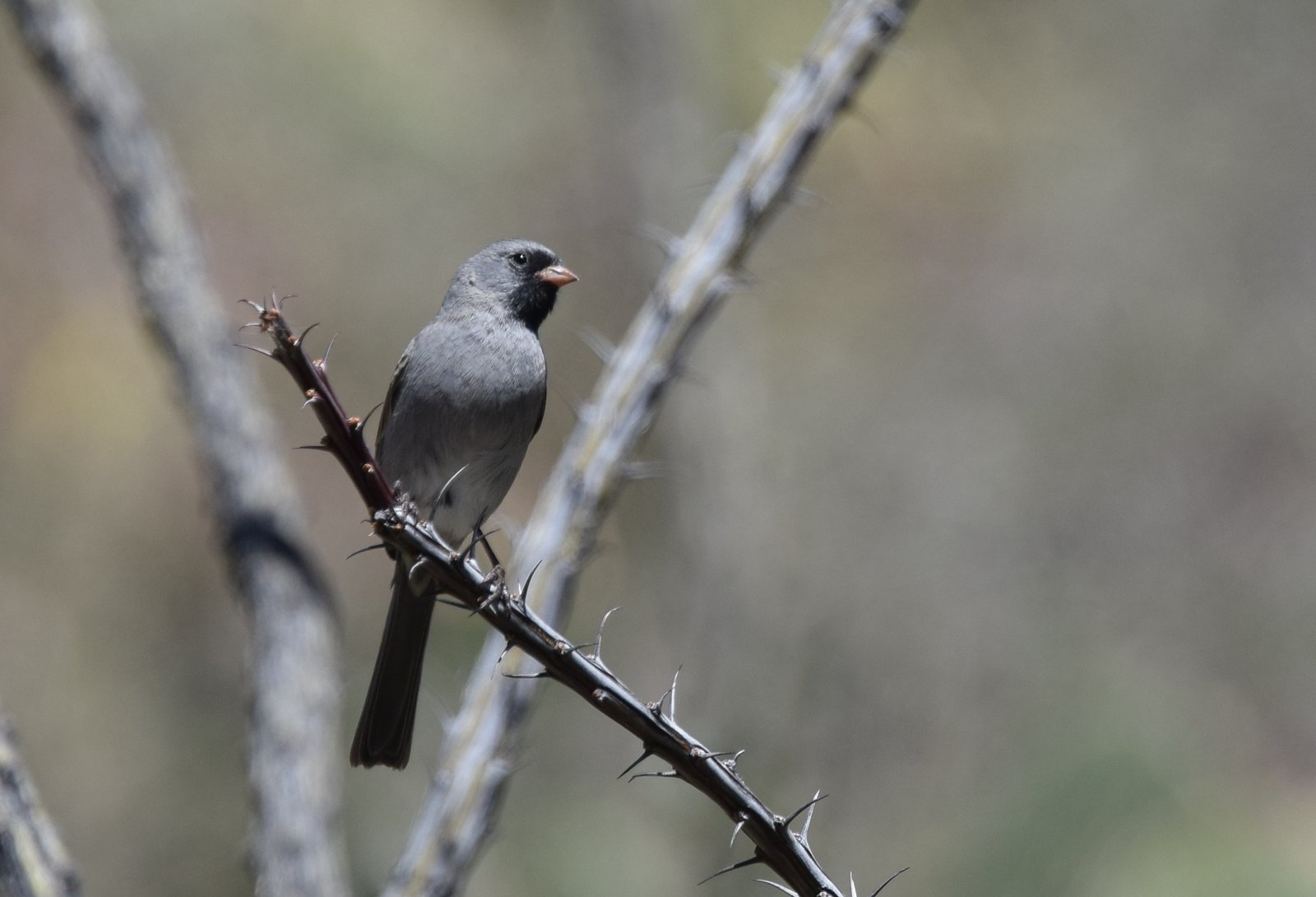
The Black-chinned Sparrow is a grey sparrow with a pink bill and a rusty, streaked back. The male has a black face around the bill. The species lives in dry, dense scrub on mountain slopes, from the south-western United States to southern Mexico.
Voice
The song begins with a few slow, high, clear whistles and then accelerates into a trill, like a bouncing ball: swee swee swee-swi-swiswiswrrr. The call is a high, thin tsit.
Recording: Omar Suárez García — CC BY-NC-SA 4.0 · converted to mono · xeno-canto
Identification
13–14 cm. Slim, with a long, narrow tail. Head, nape and underparts plain grey, belly whiter. Back rusty brown with black streaks, wings brown. Bill pink. Breeding male with a black chin, throat and lores around the bill; female and non-breeding birds with little or no black. Juveniles are faintly streaked on the breast.
Confusion species
The combination of grey head and underparts, pink bill and rusty back distinguishes it from similar species. Dark-eyed Junco Junco hyemalis and Yellow-eyed Junco Junco phaeonotus also have a grey head and often a rusty back, but white outer tail feathers and an unstreaked back. Field Sparrow Spizella pusilla also has a pink bill, but a rufous crown, a white eye-ring and a buff breast.
Habitat
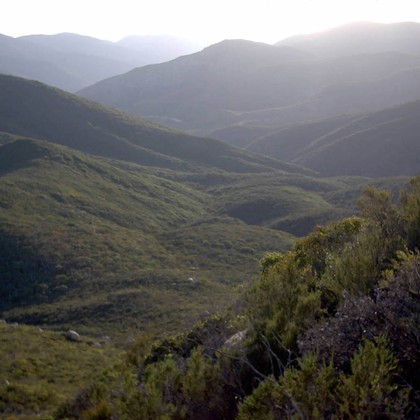
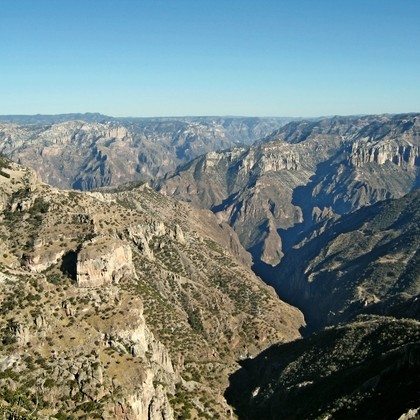
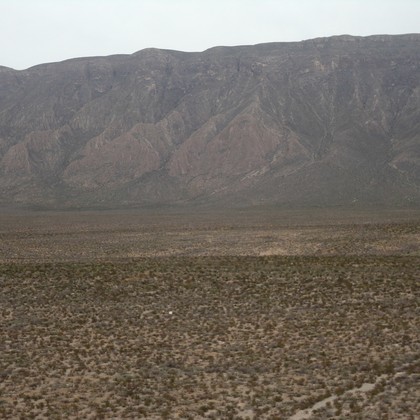
Dry, dense scrub on steep slopes: chaparral, coastal sage scrub, shrubby oak and pine-oak woodland and montane scrub above the semi-desert, mostly between 600 and 2500 m. It forages on the ground and low in shrubs for seeds and insects. It is secretive, but males sing from exposed branches in spring and summer.
Where the bird is most at home, classified by the vegetation units of Mexico and Central America.


Range and movements
Breeds in the south-western United States, from California to western Texas, and in the highlands of Mexico: in northern Baja California, along the Sierra Madre Occidental and Oriental and on the central plateau, south to Guerrero, Puebla and Oaxaca. Californian and other northern breeders move to north-western and northern Mexico in winter; the Mexican populations are largely resident.
- Resident
- Summer visitor (c. Apr–Sep)
- Winter visitor (c. Oct–Mar)
- dark = core range, pale = thinly spread
How and when to look
In spring and early summer the accelerating song on scrubby slopes is the best clue; afterwards the species is seldom seen and usually stays low in the scrub.
Conservation status
Not threatened (LC). Locally fairly common, but declining in North America. Large wildfires, urbanisation and the loss of scrub are the main threats.
Scientific name
Spizella atrogularis | (Cabanis, 1851)
Cabanis described the species in 1851 as Spinites atrogularis; because it was later moved to another genus, the author and year stand in brackets. The genus Spizella was introduced in 1831 by Bonaparte. Spizella is a diminutive of the Greek spiza 'finch': 'little finch'. atrogularis is Latin, from ater 'black' and gula 'throat', after the male's black chin and throat. The specimen the first description was based on came from Mexico (not specified).