All species › Waders, gulls and terns › Plovers and lapwings › American Golden-Plover
Position in the tree Birds Aves › Birds with a flexible palate Neognathae › All other modern birds Neoaves › Birds of the elements Elementaves › Cranes and waders Gruimorphae
American Golden-Plover | Pluvialis dominica
Amerikaanse goudplevier | Chorlito dorado americano
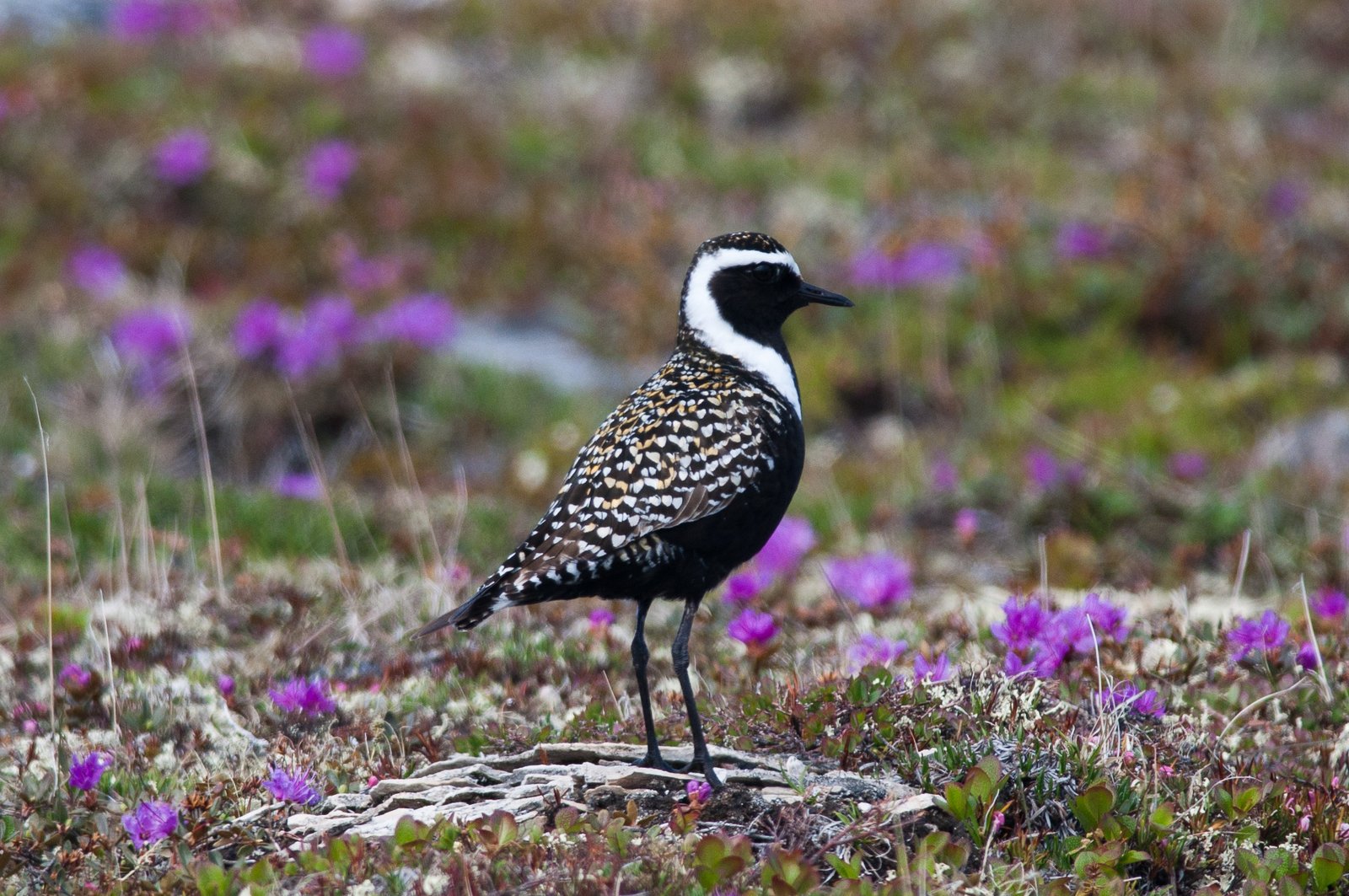
The American Golden-Plover is a slender plover of open grassland that breeds on the tundra of Alaska and Arctic Canada and winters on the pampas of South America. On spring migration flocks pass through Mexico and Central America, often inland over pastures, fields and rice paddies rather than along the coast. In autumn most birds fly over the Atlantic Ocean and the species is scarcer in the guide area.
Voice
A clear, two-syllable queedle or klee-oo, stressed on the first syllable; also a short queep. Flocks often call on take-off.
Recording: Doug Hynes — CC BY-SA 4.0 · converted to mono · xeno-canto
Identification
24–28 cm. Smaller and slimmer than the Black-bellied Plover, with a small rounded head, a short, thin bill and long wings that project well beyond the tail at rest; usually four or five primary tips extend beyond the tertials. In non-breeding plumage grey-brown with fine golden or pale spots on the upperparts, a prominent pale supercilium, a dark crown and a greyish mottled breast. Birds on spring migration often already show part of the breeding plumage: black from face to undertail coverts, with a broad white band from the forehead down the side of the neck to the shoulder, and golden-and-black spangled upperparts. In flight a faint wing bar, a dark rump and a uniformly grey underwing.
Confusion species
Black-bellied Plover Pluvialis squatarola is larger and bulkier, with a heavier bill, a white rump and black axillaries. Pacific Golden-Plover Pluvialis fulva, a vagrant in the guide area, is slightly smaller, with longer legs, a shorter primary projection and often a warmer golden tone; in breeding plumage it shows white on the flanks and undertail. Upland Sandpiper Bartramia longicauda, which rests on the same pastures, has a long neck, a small head with large eyes and a longer tail.
Habitat
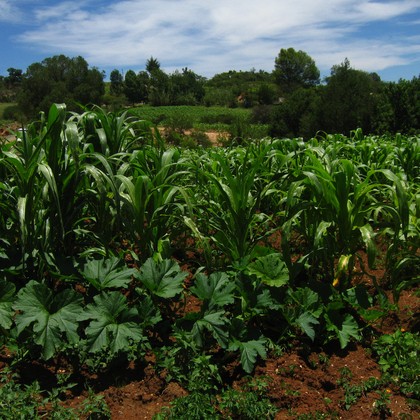
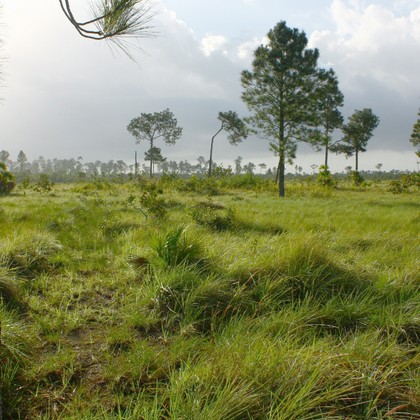
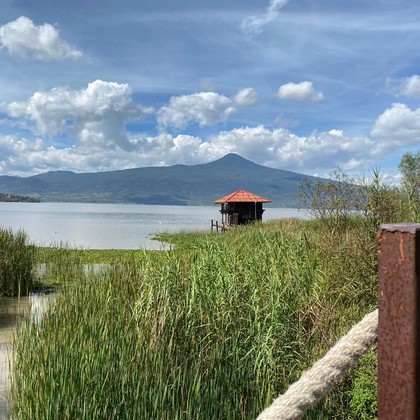
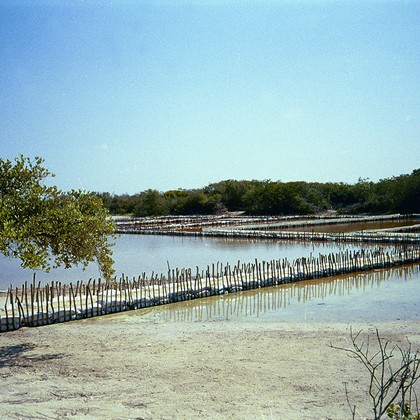
Short grassland, freshly ploughed or burnt fields, pastures, natural savannas and rice fields, also dried-out margins of lakes and lagoons; less often on coastal mudflats. It feeds on insects and other invertebrates, in the plover style of running, stopping and pecking. Resting flocks often stand close together in open terrain.
Where the bird is most at home, classified by the vegetation units of Mexico and Central America.

Range and movements
In spring a passage migrant through almost the whole guide area, most frequent in the Gulf lowlands of Mexico, from Tamaulipas and Veracruz to the Yucatán Peninsula, and in the Pacific lowlands of Oaxaca and Chiapas; also on the plateau of central Mexico. In Central America scattered in Belize, Honduras, Nicaragua, Costa Rica and Panama. In autumn mainly in southern Central America, especially Panama; rare in winter. Beyond the guide area it breeds in Alaska and Arctic Canada and winters on the grasslands of Argentina, Uruguay and southern Brazil.
- Passage (Mar–Apr, Oct–Nov)
- dark = core range, pale = thinly spread
How and when to look
In March and April freshly ploughed fields, closely grazed pastures and wet rice fields in the lowlands of Veracruz, Tabasco and Yucatán are the places to find flocks, and in Panama the pastures and rice fields of the Pacific lowlands. After rain or in strong winds migrating flocks sometimes also drop onto sports fields and airfields.
Conservation status
Not threatened globally, but numbers have never fully recovered from the market hunting of around 1900 and, according to counts in North America, are declining further. In the guide area resting sites on pastures and fields are scattered; there is no evidence of a trend.
Scientific name
Pluvialis dominica | (Müller, 1776)
Müller described the species in 1776 as Charadrius Dominicius; because it was later moved to another genus, the author and year stand in brackets. The genus Pluvialis was introduced in 1760 by Brisson. Pluvialis is Latin for 'relating to rain', from pluvia 'rain', from the old belief that these plovers flocked when rain was imminent. dominica refers to Santo Domingo, the island now called Hispaniola, in the West Indies. The specimen the first description was based on came from Hispaniola.