All species › Passerines › Thrushes › Yellow-legged Thrush
Yellow-legged Thrush | Turdus flavipes
Geelpootlijster | Zorzal azulado
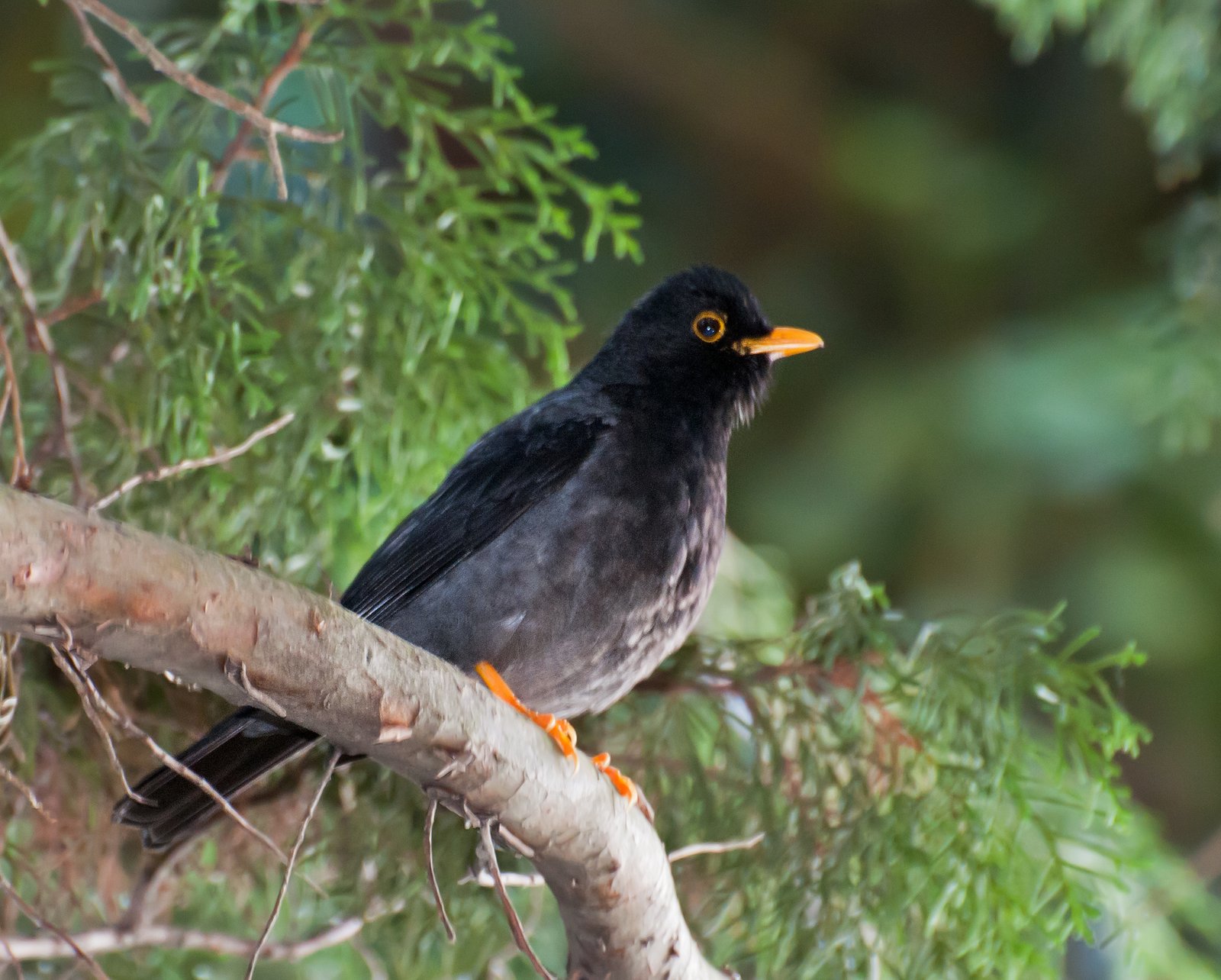
The Yellow-legged Thrush is a medium-sized thrush of humid forest with marked differences between the sexes: the male is black and slate grey, the female brown. Within the area of this guide it lives only on Trinidad and Tobago, each with its own subspecies. It spends more time in the trees than most other thrushes here and often visits fruiting trees.
Voice
The song consists of short series of two to eight notes at intervals of about a second, loud and energetic but often rather squeaky; often given from the canopy. The call is a short tsrip.
Recording: João Capurucho — CC BY-NC-SA 4.0 · converted to mono · xeno-canto
Identification
20–23 cm. The male has black head, breast, wings and tail and slate-grey back, rump, flanks and belly; bill, eye-ring and legs are yellow. The female is warm dark brown above and paler, more orange-brown below, with a lightly streaked throat, a yellowish eye-ring, a dull bill and yellow legs. On Tobago (subspecies xanthoscelus) males are darker than on Trinidad (melanopleura). Juveniles are brown with pale spots above and dark spots below.
Confusion species
The male has no similar species in this area. The female resembles Cocoa Thrush Turdus fumigatus (Trinidad only), which is more rufous, without a yellow eye-ring and with grey-brown legs. Spectacled Thrush Turdus nudigenis is greyer brown, with a broad bare yellow eye-ring and grey legs. White-necked Thrush Turdus albicollis has a streaked throat with a white half-collar below it and a grey breast.
Habitat
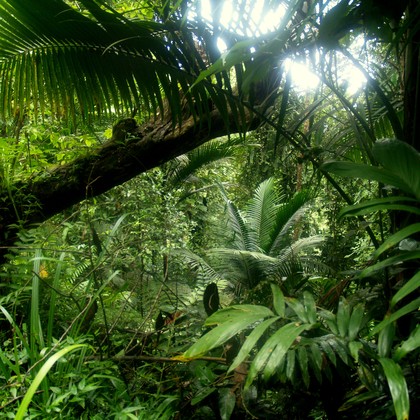
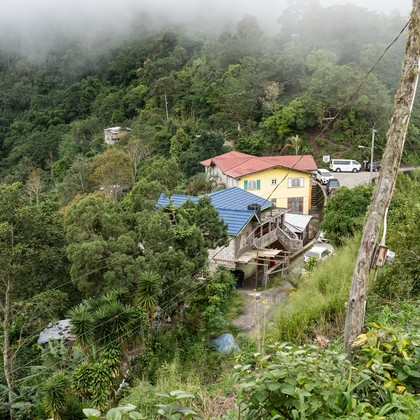
The interior, edges and clearings of humid primary and secondary forest, also overgrown and shaded coffee and cacao plantations. On the mainland mainly at middle elevations, on the islands also lower down. It eats fruit and berries in trees and shrubs and also searches the ground for insects.
Where the bird is most at home, classified by the vegetation types of the Caribbean.


Range and movements
On Trinidad mainly in the forests of the Northern Range, on Tobago in the forests of the Main Ridge. Outside the area in the mountains of north-eastern Colombia and northern Venezuela, in the tepui region of Venezuela, Guyana and Brazil, and in south-eastern Brazil to Paraguay and north-eastern Argentina.
- Resident
- dark = core range, pale = thinly spread
How and when to look
On Tobago along the trails of the Main Ridge forest, such as Gilpin Trace; on Trinidad in the forests of the Northern Range. Singing males often perch high and can be tracked down by their repeated short phrases; fruiting trees also attract females and young birds.
Conservation status
Least Concern. The species has a large range. Forest is lost locally to logging and clearance, but the species also uses secondary forest and shaded plantations.
Scientific name
Turdus flavipes | Vieillot, 1818
Vieillot described the species in 1818 and placed it straight away in the genus where it still stands. The genus Turdus was introduced in 1758 by Linnaeus. Turdus is the ordinary Latin word for 'thrush'. flavipes is Latin, from flavus 'yellow' and pes 'foot', after the yellow legs. The specimen the first description was based on came from Rio de Janeiro, Brazil.