All species › Passerines › Tyrant flycatchers › Yellow-bellied Elaenia
Yellow-bellied Elaenia | Elaenia flavogaster
Geelbuikelenia | Elenia vientre amarillo
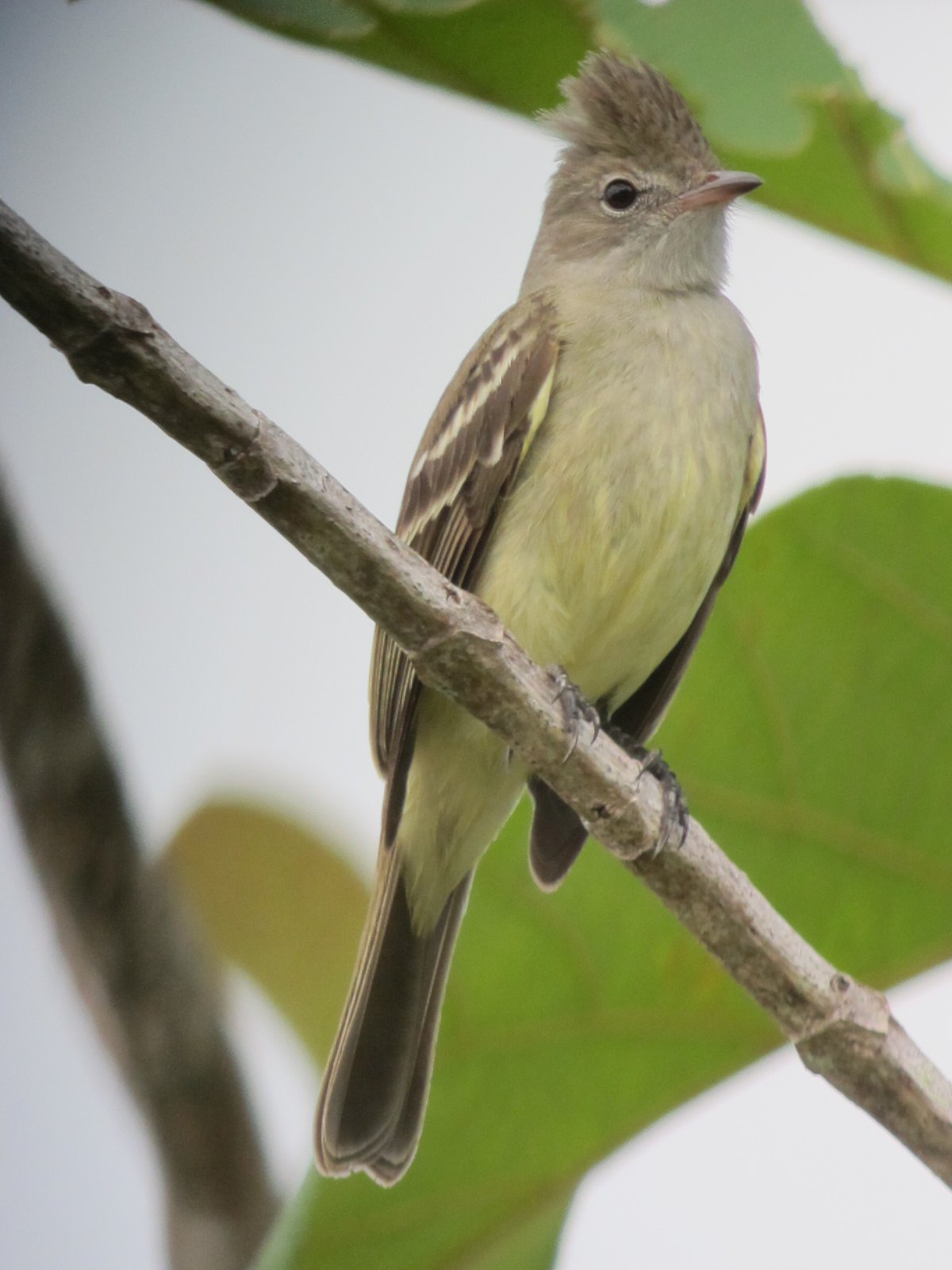
The Yellow-bellied Elaenia is one of the commonest tyrant flycatchers of gardens and open country in Trinidad and Tobago and the southern Lesser Antilles. With its bushy, often parted crest and hoarse calls it is a familiar sight around houses, along roads and in parks. The region holds the nominate form flavogaster.
Voice
Noisy. Calls include a hoarse breeer, first rising then falling, and a repeated, burry wreek-kreeup. The dawn song is a repeated trr-dyeeuw or we-do, we-do, often as a duet.
Recording: JAYRSON ARAUJO DE OLIVEIRA — CC BY-NC-SA 4.0 · converted to mono · xeno-canto
Identification
15–17 cm, with a bushy crest that often parts in the middle to show a white crown stripe, giving the head a double-crested, angular shape. Crown and upperparts are brownish olive. The wings are dark with two distinct white wing bars and yellowish-white edges to the flight feathers. The throat is pale grey, the breast olive-grey, the belly yellow to pale yellow. A pale eye-ring is faint. The sexes are alike; juveniles have a smaller crest without white.
Confusion species
Caribbean Elaenia Elaenia martinica, alongside this species on Grenada and St Vincent, has a smaller, flatter crest and a greyer, less yellow belly. Small-billed Elaenia Elaenia parvirostris and Lesser Elaenia Elaenia chiriquensis, both in Trinidad, are smaller and rounder-headed with hardly any crest; Small-billed shows a distinct white eye-ring. Forest Elaenia Myiopagis gaimardii is smaller and greener and lives in the forest canopy.
Habitat
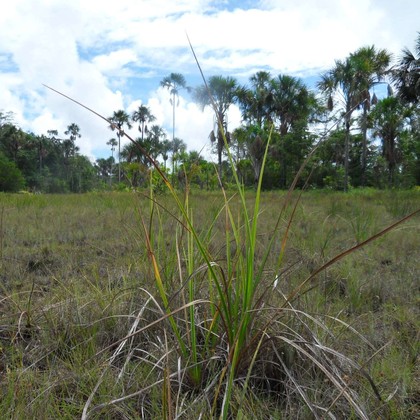
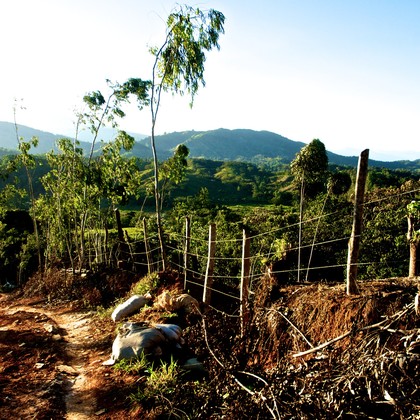
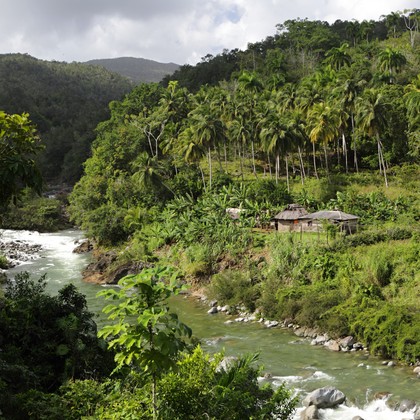
Savanna, scrub, semi-open woodland and secondary growth, open country with scattered trees, pasture with tree lines, plantations, parks and gardens, even in towns. It avoids closed forest. It eats insects and many berries and small fruits, plucked from twigs or taken while fluttering. The nest is a cup of moss and grass, decorated outside with lichen and bark, in the fork of a branch.
Where the bird is most at home, classified by the vegetation types of the Caribbean.



Range and movements
Resident in Trinidad and Tobago, Grenada, the Grenadines and St Vincent, common on all of them. A few records from Martinique and a single one from Guadeloupe concern vagrants. Outside the region from southern Mexico through Central America and much of South America to northern Argentina.
- Resident
- dark = core range, pale = thinly spread
How and when to look
Found almost anywhere in settled areas on Trinidad, Tobago and Grenada, for example in hotel gardens and parks. The parted crest and hoarse call are distinctive; birds sing most early in the morning.
Conservation status
Not threatened. A common species that benefits from forest clearance and the creation of open, partly wooded landscapes.
Scientific name
Elaenia flavogaster | (Thunberg, 1822)
Thunberg described the species in 1822 as P[ipra] flavogaster; because it was later moved to another genus, the author and year stand in brackets. The genus Elaenia was introduced in 1836 by Sundevall. Elaenia comes from Greek elaineos 'oily, olive-coloured', after the olive-green plumage. flavogaster combines Latin flavus 'yellow' with Greek gastēr 'belly', after the yellow belly. The specimen the first description was based on came from probably Rio de Janeiro, Brazil.