All species › Passerines › Thrushes › White-chinned Thrush
White-chinned Thrush | Turdus aurantius
Witkinlijster | Zorzal gorjiblanco
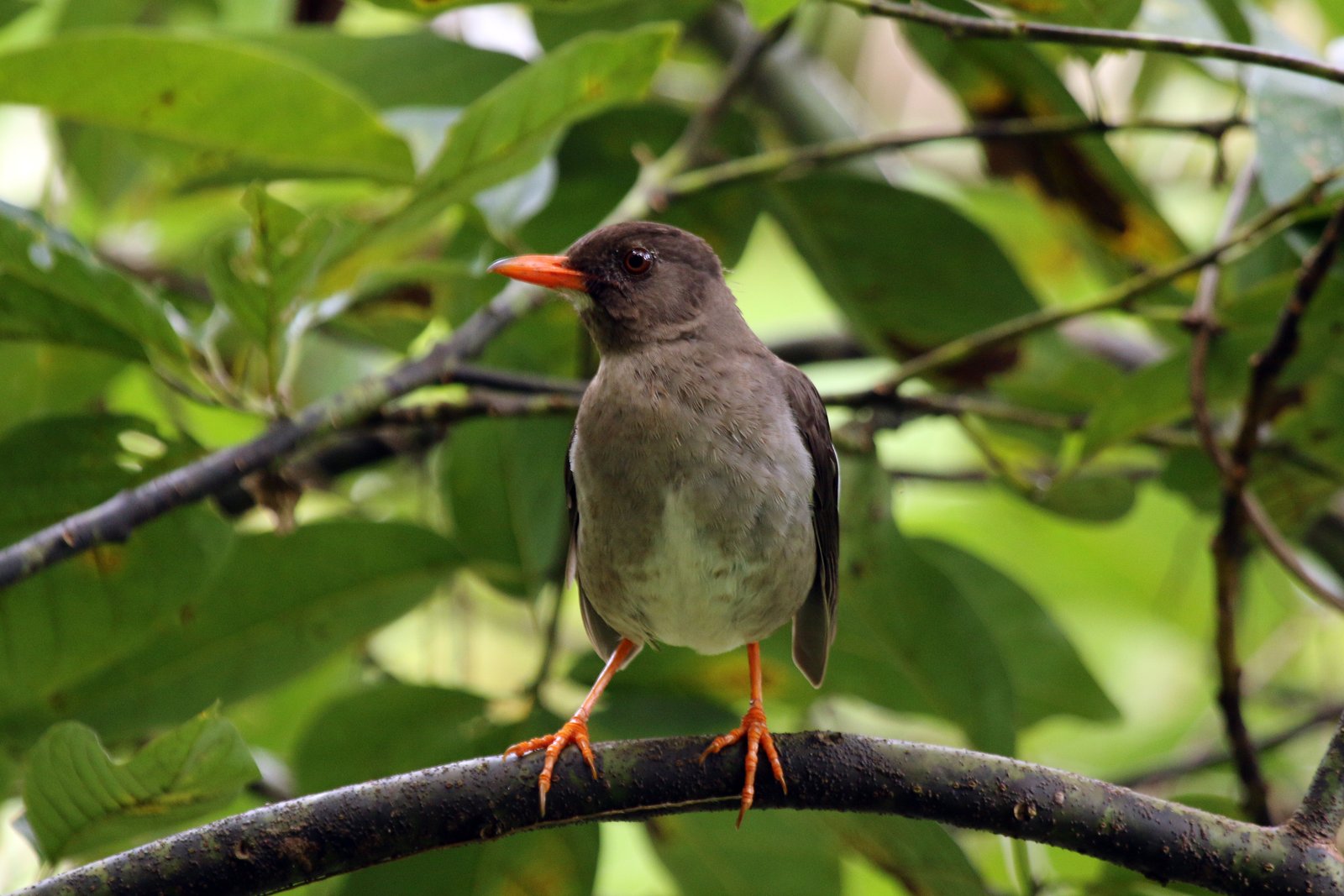
The White-chinned Thrush is one of Jamaica's two endemic thrushes and one of the best known birds of gardens and woodland edge there. It moves over lawns and roads in quick hops, then stops upright and raises its tail. In Jamaica it is called hopping dick.
Voice
The song consists of repeated, rather monotonous whistled phrases with pauses, often at dusk. Calls include a sharp, high chick, a dry p'p'p' and a series rendered as chick-me-chick, the source of its second local name.
Recording: Bobby Wilcox — CC BY-NC-SA 4.0 · converted to mono · xeno-canto
Identification
24–26.5 cm, a large, long-tailed thrush. Crown, face and nape are blackish, the rest of the upperparts dark slate grey. Two broad white edges to the innermost greater coverts form a small white wing patch. The underparts are mid-grey, with a white chin and a paler belly. Bill and legs are orange, the iris brown. The sexes are alike. Juveniles are browner, with pale spotting on the upperparts and a spotted breast.
Confusion species
White-eyed Thrush Turdus jamaicensis has a rufous-brown head, a white iris, a dark bill and a white band across the upper breast, and lives more secretively in forest. Rufous-throated Solitaire Myadestes genibarbis is smaller and slimmer, with a short bill and an orange-rufous throat. American Robin Turdus migratorius has a red-orange breast and is a vagrant in Jamaica.
Habitat
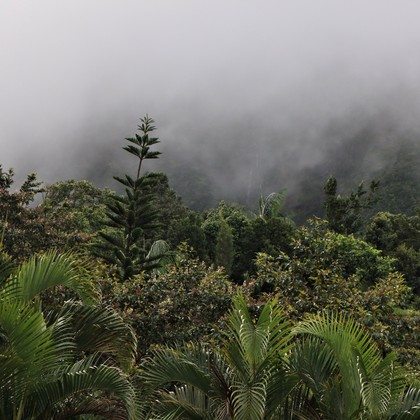
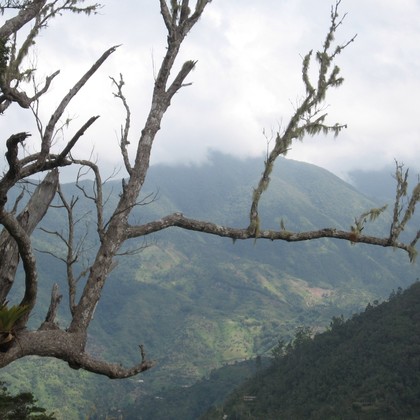
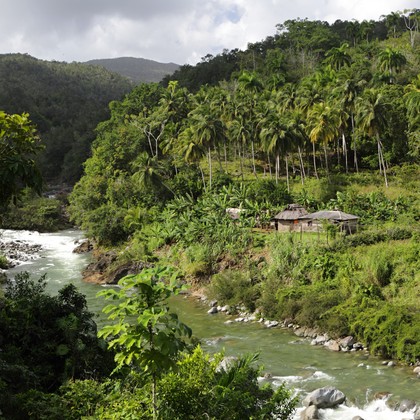
Almost all wooded and semi-open country in Jamaica, from the lowlands into the mountains: moist forest, montane rainforest, the limestone forest of the Cockpit Country, coffee plantations, orchards, parks and gardens. It feeds on the ground, mainly on earthworms, insects and other invertebrates, and also takes fruit. It breeds from May to August, often raising two broods; the nest is a cup of grass and moss in a tree or among epiphytes.
Where the bird is most at home, classified by the vegetation types of the Caribbean.



Range and movements
Only in Jamaica, across the whole island wherever there are trees, most numerous in the hills and mountains. The species does not occur outside Jamaica.
- Resident
- dark = core range, pale = thinly spread
How and when to look
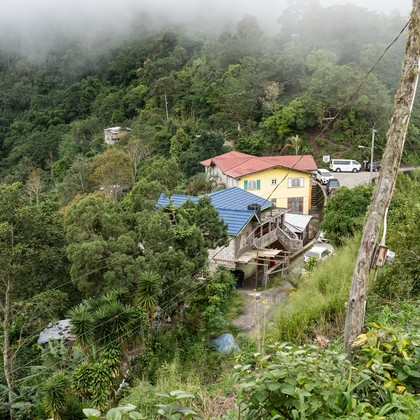
Regularly seen in Jamaica along mountain roads, for example in the Blue Mountains and at Hardwar Gap, and in gardens and parks in Kingston. At dawn and dusk birds forage on open ground beside the road.
Conservation status
Not threatened. The species is common and adapts well to human-modified landscapes, including plantations and gardens.
Scientific name
Turdus aurantius | Gmelin, 1789
Gmelin described the species in 1789 and placed it straight away in the genus where it still stands. The genus Turdus was introduced in 1758 by Linnaeus. Turdus is the ordinary Latin word for 'thrush'. aurantius is New Latin for 'orange', after the orange bill and legs. The specimen the first description was based on came from the mountains of Jamaica.