All species › Birds of prey › Hawks, eagles and kites › Swallow-tailed Kite
Swallow-tailed Kite | Elanoides forficatus
Zwaluwstaartwouw | Elanio tijereta
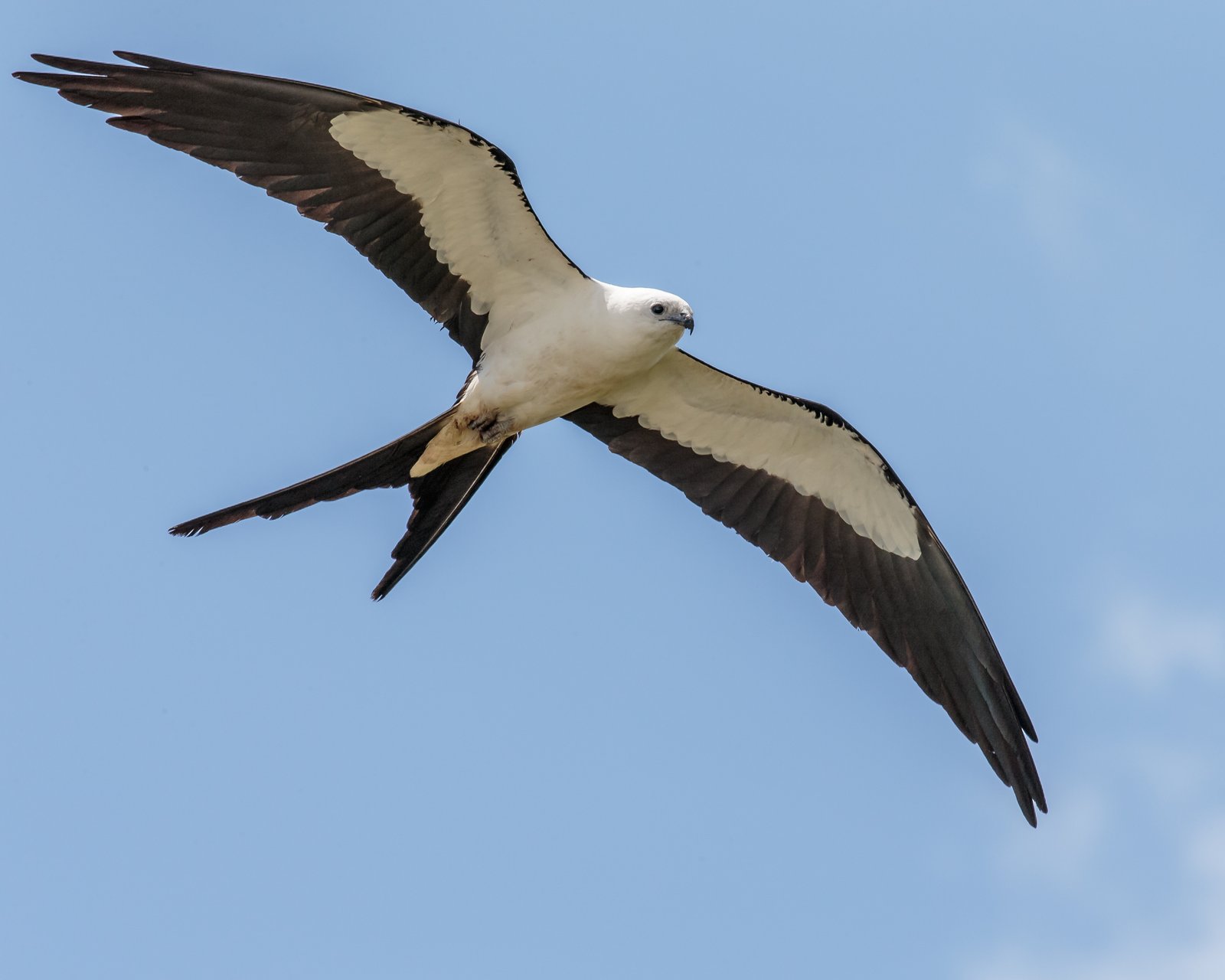
The Swallow-tailed Kite is a black-and-white kite with a deeply forked tail that spends almost all day on the wing, even eating and drinking in flight. There are two populations: the northern one breeds in the south-eastern United States and migrates to South America, part of it passing over western Cuba, and a southern one that lives in Central and South America. In the Caribbean the species is seen mainly on passage.
Voice
Usually silent. At the nest and in groups a high, whistled klee-klee-klee or pee-pee-pee.
Recording: José María Loaiza B. — CC BY-NC-SA 4.0 · converted to mono · xeno-canto
Identification
50–68 cm, with long, narrow wings and a very long, deeply forked black tail. Head, neck and underparts are bright white, the back, upperwings and tail glossy blue-black. From below the white underwing coverts contrast with the black flight feathers. Bill and legs are dark. The sexes are alike. Juveniles are duller, with fine dark streaks on head and breast, narrow white tips to the flight feathers and a shorter, less deeply forked tail.
Confusion species
Little confusion is possible. Mississippi Kite Ictinia mississippiensis and, on Trinidad, Plumbeous Kite Ictinia plumbea are also pointed-winged but are grey, with a square or slightly notched tail. Frigatebirds such as Magnificent Frigatebird Fregata magnificens also have a forked tail, but are much larger, mainly black and have angled wings.
Habitat
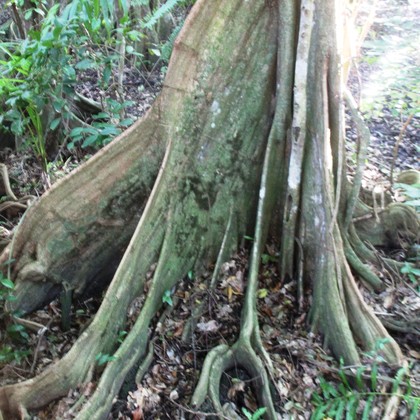
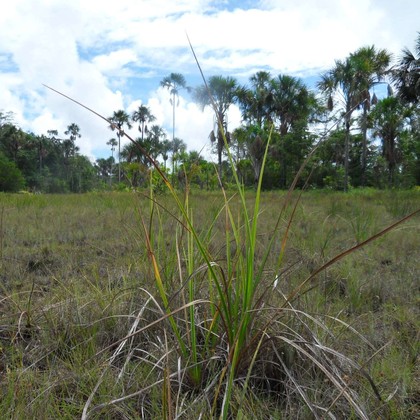
Migrants fly over almost any landscape and roost in forest; in the breeding range humid forest, swamp forest and forest edges along rivers. It hunts in gliding flight for large insects such as dragonflies and grasshoppers, and plucks lizards, tree frogs and nestlings from the treetops; insects are caught with the feet and eaten in flight. It drinks by skimming low over water.
Where the bird is most at home, classified by the vegetation types of the Caribbean.



Range and movements
Regular passage migrant over Cuba, especially in the west, and over the Cayman Islands, San Andrés and, in smaller numbers, the Bahamas; on Trinidad in forested areas, mainly from February to August, rarely on Tobago. Scattered reports from Jamaica, Hispaniola, Puerto Rico, the ABC Islands and the Lesser Antilles are of vagrants. Outside the region the northern population breeds from South Carolina to Florida and Texas; the southern population lives from Mexico to northern Argentina.
- Resident
- Summer visitor (c. Oct–Mar)
- Winter visitor (c. Apr–Sep)
- Passage (Mar–Apr, Oct–Nov)
- dark = core range, pale = thinly spread
How and when to look
Best in spring and late summer in western Cuba, especially on the Guanahacabibes Peninsula and in Pinar del Río province, where migrants sometimes pass in groups. On Trinidad in the dry season over the forests of the Northern Range. The silhouette with the long forked tail is recognisable even at great distance.
Conservation status
Not threatened. In the United States the breeding range shrank greatly during the twentieth century with the loss of swamp forest; the species is legally protected locally there. In the Caribbean the main risk is the loss of forest in which migrants roost.
Scientific name
Elanoides forficatus | (Linnaeus, 1758)
Linnaeus described the species in 1758 as Falco forficatus; because it was later moved to another genus, the author and year stand in brackets. The genus Elanoides was introduced in 1818 by Vieillot. Elanoides means 'resembling Elanus', from Greek elanos 'kite' and -oidēs 'resembling'. forficatus is Latin for 'scissor-shaped', from forfex 'scissors', after the deeply forked tail. The specimen the first description was based on came from Carolina, USA (after Catesby).