All species › Passerines › Tanagers › Streaked Saltator
Streaked Saltator | Saltator striatipectus
Gestreepte saltator | Saltador listado
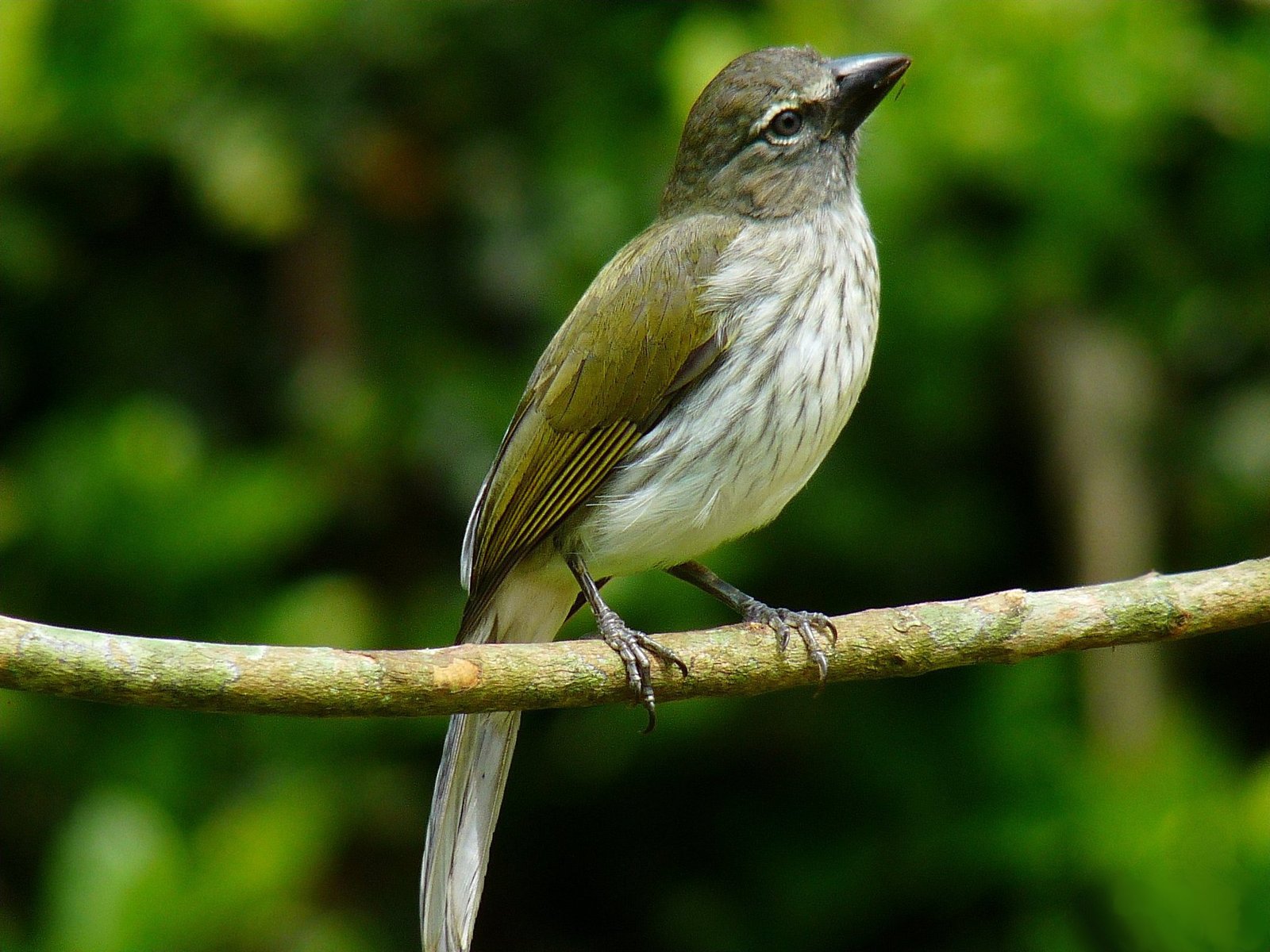
The Streaked Saltator is a medium-sized, olive-green tanager with a streaked breast, known in the region only from Chacachacare, one of the Bocas islands between Trinidad and Venezuela. It is absent from mainland Trinidad and from Tobago. The species was formerly lumped with Lesser Antillean Saltator Saltator albicollis of the Lesser Antilles.
Voice
The song consists of short, loud series of whistled notes; there are also short, sharp calls. Recordings from Chacachacare are scarce.
Recording: Scott Olmstead — CC BY-NC-SA 4.0 · converted to mono · xeno-canto
Identification
18–20 cm, with a heavy, blackish bill, sometimes yellow-tipped, and a yellow gape. The crown is grey-green, the back and wing coverts greener; the flight feathers are blackish with broad olive-green edges and the rump is greyish. A whitish eyebrow and a broken pale eye-ring stand out on the face. The throat is whitish, the breast off-white with diffuse dark streaks. The sexes are alike. Juveniles are duller, with less green on the upperparts.
Confusion species
Olive-grey Saltator Saltator olivascens is larger, dark grey above, with an unstreaked grey breast, cinnamon undertail and a sharp black malar stripe beside the white throat. Lesser Antillean Saltator Saltator albicollis closely resembles Streaked Saltator but occurs only in the Lesser Antilles; the ranges do not overlap.
Habitat
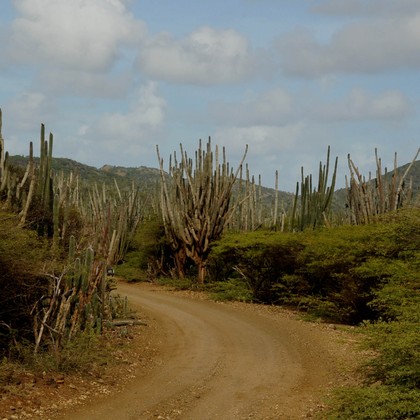
Dry deciduous forest, second growth, scrub, wooded gardens and abandoned farmland. On Chacachacare in the dry forest and scrub that covers the abandoned island. On the mainland from sea level to about 1500 m. It eats fruit, leaves and insects, often in the middle layer of the scrub.
Where the bird is most at home, classified by the vegetation types of the Caribbean.

Range and movements
In the region only on Chacachacare, in the Bocas between Trinidad and the Paria Peninsula; elsewhere in Trinidad and Tobago the species is absent. The birds belong to the subspecies perstriatus, which also lives from north-eastern Colombia to the mountains of northern Venezuela. Other subspecies range from Costa Rica and Panama to western Ecuador and Peru.
- Resident
- dark = core range, pale = thinly spread
How and when to look
Chacachacare can be reached by boat from Chaguaramas. Even there the birds are usually first noticed by their song from the scrub; the olive-green back and streaked breast then separate them from a Tropical Mockingbird or other grey birds.
Conservation status
Not threatened. The species is widespread on the mainland. The small population on Chacachacare is vulnerable because of its small size, but the island is uninhabited and its vegetation is under little pressure.
Scientific name
Saltator striatipectus | de Lafresnaye, 1847
De Lafresnaye described the species in 1847 and placed it straight away in the genus where it still stands. The genus Saltator was introduced in 1816 by Vieillot. Saltator is Latin for 'dancer, leaper', after the birds' hopping movements. striatipectus is Latin, from striatus 'striped' and pectus 'breast', after the streaked breast. The specimen the first description was based on came from Cali, Colombia.