All species › Passerines › Ovenbirds and woodcreepers › Straight-billed Woodcreeper
Straight-billed Woodcreeper | Dendroplex picus
Priemsnavelmuisspecht | Trepatroncos piquirrecto
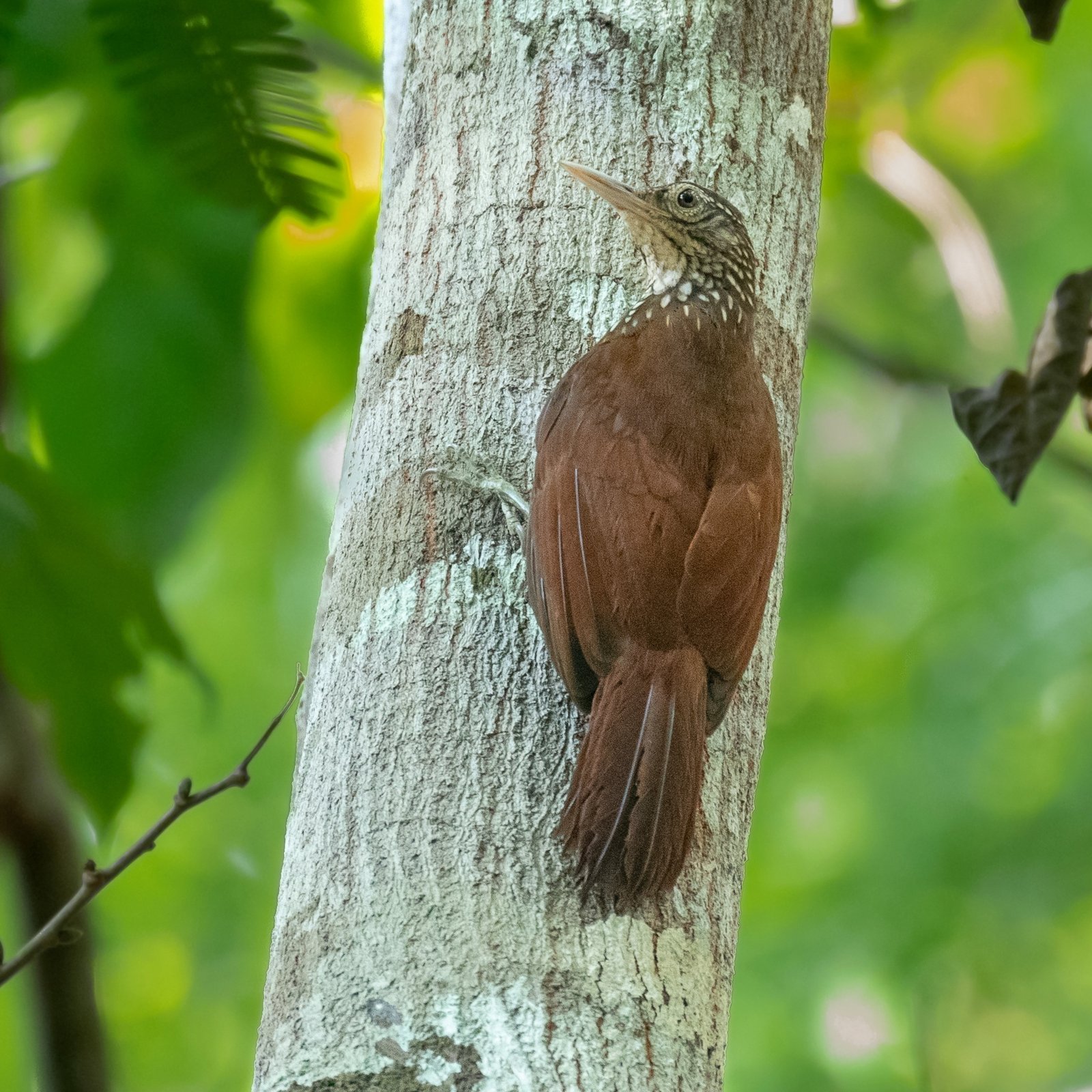
The Straight-billed Woodcreeper is a woodcreeper of open and semi-open country which in the Caribbean occurs only on Trinidad, where it is the woodcreeper of the mangroves and coastal lowlands. It is recognised by its straight, pale, dagger-shaped bill, with a slightly upturned lower mandible.
Voice
A fast, descending series of whistles or a trill, heard mainly around sunrise and sunset; also short calls such as dit and chip.
Recording: JAYRSON ARAUJO DE OLIVEIRA — CC BY-NC-SA 4.0 · converted to mono · xeno-canto
Identification
19–21 cm, slender, with a long stiff tail. The bill is straight, fairly short and dagger-shaped, pale pinkish to horn-coloured, with a slightly upturned lower mandible. Head and nape are brown with buffy-white streaks and a pale supercilium; the upper back is rufous-brown with fine pale streaks. Throat and upper breast are whitish and scaly, the rest of the underparts rufous-brown with pale streaks. Lower back, wings and tail are chestnut. The sexes are alike.
Confusion species
Streak-headed Woodcreeper Lepidocolaptes souleyetii is smaller, with a thin, clearly curved pale bill and less prominent back streaking, and lives mainly along forest edges and in gardens. Cocoa Woodcreeper Xiphorhynchus susurrans is larger, with a longer, curved dark bill and teardrop spots on the breast, and keeps mainly to forest. Plain-brown Woodcreeper Dendrocincla fuliginosa is plain brown without streaks and has a dark bill.
Habitat
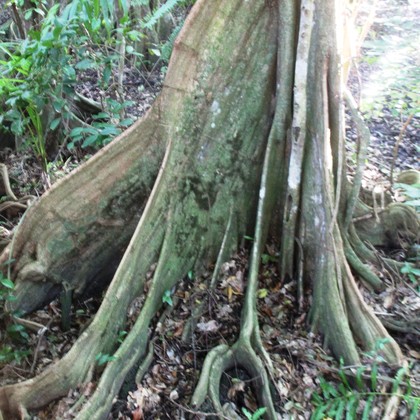
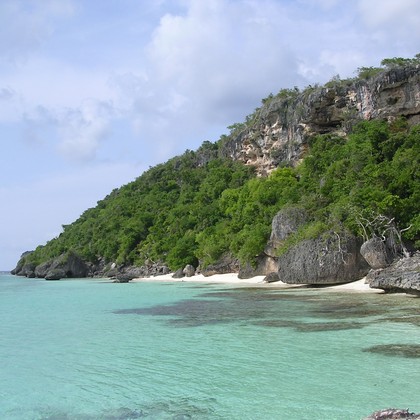
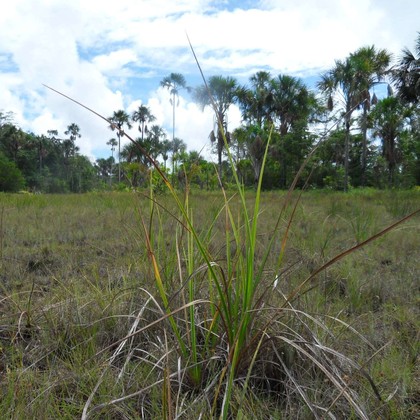
Mangroves, swamp forest, coastal woodland, savanna with scattered trees, forest edge, coconut plantations and other semi-open lowland country with trees. It forages alone or in pairs, hitching up trunks and branches and gleaning arthropods and other invertebrates from the bark; it sometimes probes dead wood and termite nests. It nests in a natural cavity or old woodpecker hole in a tree, dead stump or termite nest.
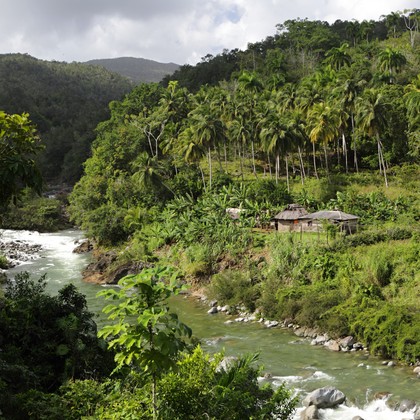
Where the bird is most at home, classified by the vegetation types of the Caribbean.

Range and movements
In the Caribbean only on Trinidad, mainly along the coast and in the mangrove and swamp areas of the west and east coasts; absent from Tobago. Outside the region in Panama and in northern and eastern South America, east of the Andes to Bolivia and Brazil.
- Resident
- dark = core range, pale = thinly spread
How and when to look
On Trinidad in the mangroves of the Caroni Swamp and along the edges of the Nariva Swamp, where birds are often seen low on trunks from a boat or an embankment. The pale, straight bill shows well even at a distance.
Conservation status
Not threatened. The species has a very large range and tolerates semi-open country. On Trinidad it depends on coastal mangroves and swamp forest.
Scientific name
Dendroplex picus | (Gmelin, 1788) (GBIF: Xiphorhynchus picus)
Gmelin described the species in 1788 as Oriolus Picus; because it was later moved to another genus, the author and year stand in brackets. The genus Dendroplex was introduced in 1827 by Swainson. Dendroplex is Greek, from dendron 'tree' and plēssō 'to strike': 'tree-striker'. picus is the Latin word for 'woodpecker', after its woodpecker-like habits. The specimen the first description was based on came from Cayenne, French Guiana.