All species › Passerines › Wrens › St. Vincent Wren
St. Vincent Wren | Troglodytes musicus
Sint-Vincentwinterkoning | Chivirín de San Vicente
St. Vincent Wren is one of the four house wrens of the Lesser Antilles split from Northern House Wren Troglodytes aedon in 2024. Of the four, its song is the most distinctive, which also explains its scientific name musicus.
Voice
The song is melodious and varied, with clear, whistled notes and trills, and sounds different from that of the other house wrens. The call is a buzzy, rasping dzhrr.
No recording with a suitable Creative Commons licence is available for this species yet.
Identification
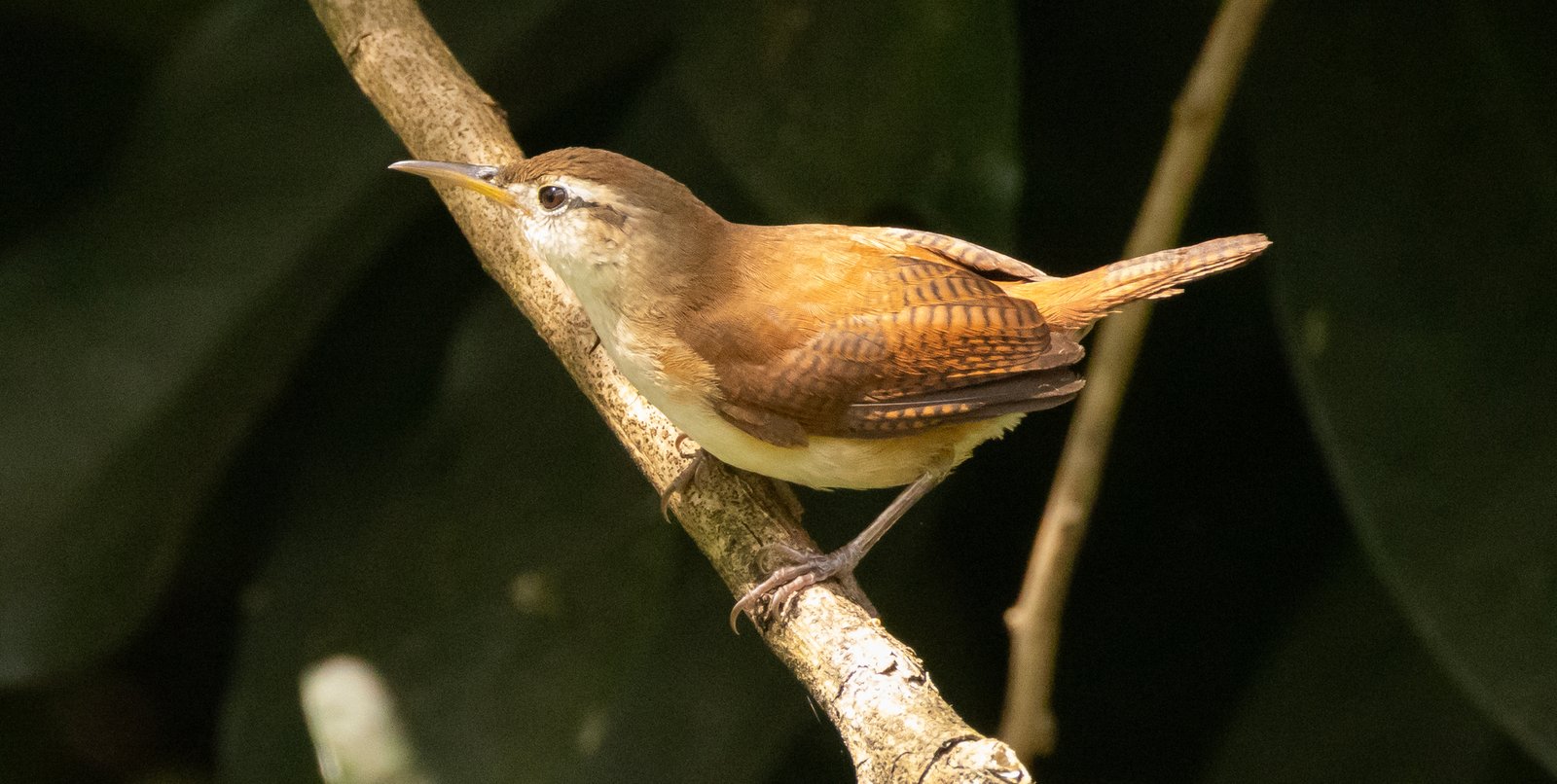
11–13 cm, small, with a short, often cocked tail and a thin, slightly curved bill; the wings are relatively long. The upperparts are rufous-brown; wings and tail finely barred dark. A distinct pale supercilium. The underparts are whitish to pale buff, with dark speckling on the breast sides, flanks and undertail. The plumage thus combines rufous-brown upperparts with much white and buff below. The sexes are alike.
Confusion species
The only wren on Saint Vincent. Brown Trembler Cinclocerthia ruficauda also cocks its tail, but is much larger, with a long, curved bill. Female Lesser Antillean Bullfinch Loxigilla noctis is brown, but has a short conical bill and an unbarred tail. Grenada Wren on Grenada is darker rufous, less white below, and lacks a distinct supercilium.
Habitat
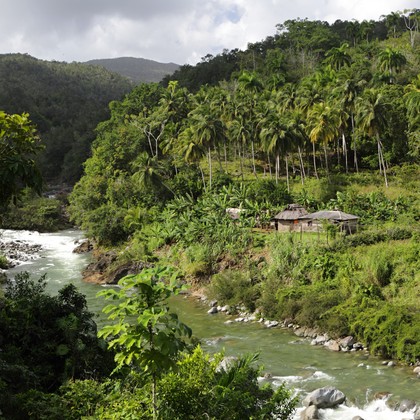
From built-up areas, gardens and farmland to brushy woodland and montane rainforest. It forages low in vegetation and among dead wood for insects and spiders. It nests in cavities in trees and buildings.
Where the bird is most at home, classified by the vegetation types of the Caribbean.




Range and movements
Only on the main island of Saint Vincent. No populations are known from the Grenadines. It does not occur outside Saint Vincent.
- Resident
- dark = core range, pale = thinly spread
How and when to look
Found in gardens and farmland, and along forest trails in the interior, for example the Vermont Nature Trails, also home to St. Vincent Amazon. The song is the best clue.
Conservation status
Not yet assessed by IUCN (NE), as the species was only split in 2024. Its range is limited to a single island of about 345 km², but it uses a wide range of habitats, including human-modified ones. Little is known about numbers and trend.
Scientific name
Troglodytes musicus | (Lawrence, 1878)
Lawrence described the species in 1878 as Thryothorus musicus; because it was later moved to another genus, the author and year stand in brackets. The genus Troglodytes was introduced in 1809 by Vieillot. Troglodytes is Greek, from troglē 'hole, crevice' and dyein 'to creep into': 'cave-dweller', after the habit of disappearing into crevices and holes while foraging. musicus is Latin for 'musical', after the clear, varied song. The specimen the first description was based on came from Saint Vincent, Lesser Antilles.