All species › Parrots › Parrots › St. Vincent Amazon
St. Vincent Amazon | Amazona guildingii
Sint-Vincentamazone | Amazona de San Vicente
The St. Vincent Amazon is a large, multicoloured amazon that lives only on the main island of St. Vincent. It is the national bird of St. Vincent and the Grenadines. After a steep decline in the twentieth century the population has slowly grown thanks to forest protection and a ban on hunting and trapping.
Voice
Very varied: loud, bugling calls, a honking kwaa-kwaa recalling a goose, yapping cries and screeches, plus bubbling sounds, whistles and trills. Pairs and flocks call mostly in flight.
Recording: Suhei Castro — CC BY-NC 4.0 · Converted to mp3, mono, full length · iNaturalist
Identification
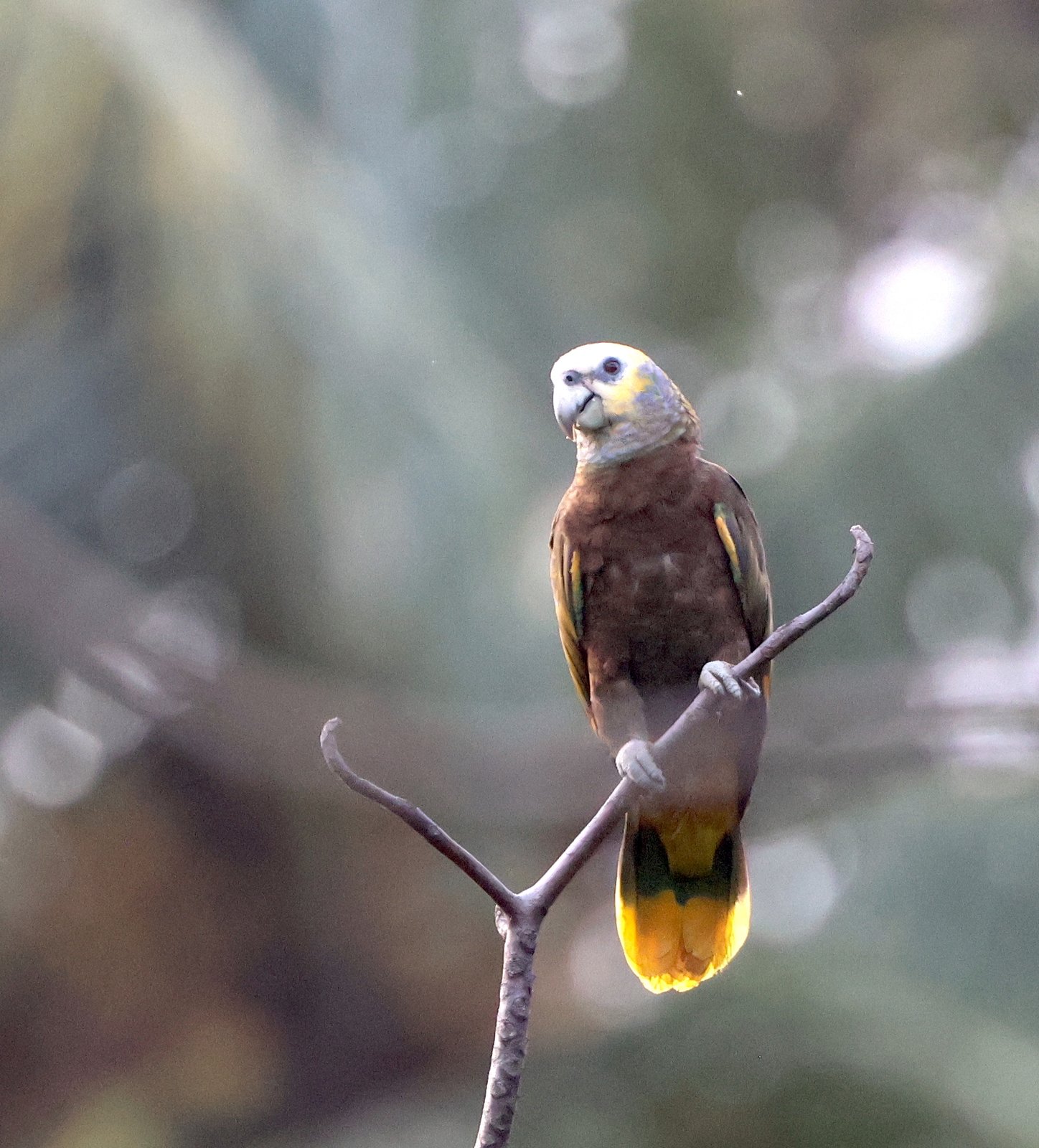
40–46 cm, large, with a broad, fairly long tail. Plumage varies greatly. In the common brown morph the forehead and forecrown are whitish to creamy yellow, the head and face grade into yellow-orange with blue-violet on cheeks and hindneck, and the back and underparts are golden-brown to bronze. The primaries are orange-yellow at the base and dark blue-black further out, the secondaries blue and green. The tail has an orange base, a broad blue band and a yellow tip. A less common green morph has green instead of bronze on the body. The bill is pale horn. The sexes are alike.
Confusion species
No other native amazon lives on St. Vincent, and the pale face and bronze body are distinctive on this island. St. Lucia Amazon Amazona versicolor of neighbouring Saint Lucia has a blue head and a red breast band and is green. Escaped cage amazons of other species are green with different head colours.
Habitat
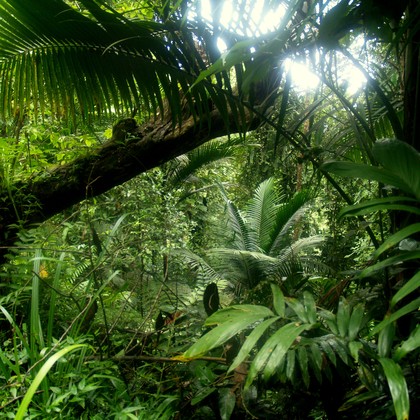
Mature moist forest in the mountains and on the mid-level slopes, between about 125 and 1000 metres, preferring the lower parts where the largest nest trees grow. It eats fruit, seeds, nuts and flowers. Breeds from February to June in cavities of large old trees.
Where the bird is most at home, classified by the vegetation types of the Caribbean.


Range and movements
Endemic to St. Vincent, the main island of St. Vincent and the Grenadines. The birds live in the forested mountains of the interior, especially in the valleys on the western side of the central ridge, such as the Buccament Valley. It does not occur in the Grenadines.
- Resident
- dark = core range, pale = thinly spread
How and when to look
The Vermont Nature Trail in the Buccament Valley has a lookout where the birds fly over the forest early in the morning and late in the afternoon. In good light the golden-brown body shows well in flight; they are often heard before they are seen.
Conservation status
Vulnerable. In the twentieth century the species declined through hunting for food, trapping for the cage-bird trade and forest loss to logging, banana cultivation and charcoal burning. Protection has led to a slow increase; the number of mature birds is estimated at 250 to 1000. Hurricanes, volcanic eruptions and further forest degradation remain threats.
Scientific name
Amazona guildingii | (Vigors, 1837)
Vigors described the species in 1837 as Psittacus Guildingii; because it was later moved to another genus, the author and year stand in brackets. The genus Amazona was introduced in 1830 by Lesson. Amazona comes from 'Amazone', the French name Buffon gave to various tropical American parrots because they came from the Amazon region. guildingii honours the Reverend Lansdown Guilding (1797–1831), naturalist on St Vincent. The specimen the first description was based on came from St Vincent.