All species › Passerines › New World warblers › St. Lucia Warbler
St. Lucia Warbler | Setophaga delicata
Sint-Luciazanger | Reinita de Santa Lucía
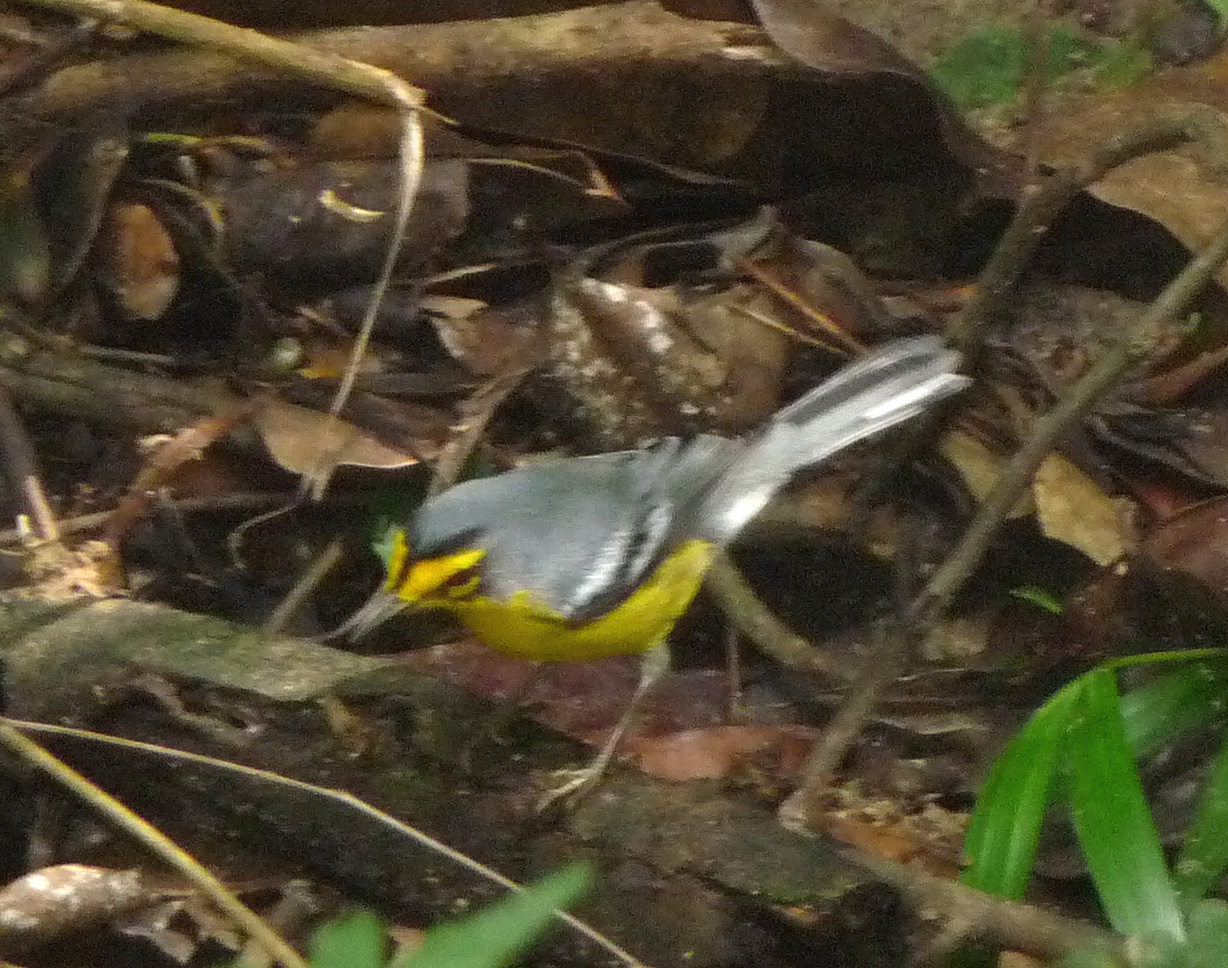
The St. Lucia Warbler is a grey and yellow wood-warbler found only on Saint Lucia. It was described in 1883 as a subspecies of Adelaide's Warbler Setophaga adelaidae and only recognised as a separate species in the 2010s, together with Barbuda Warbler. On the island it is common and found in almost every forest type.
Voice
The song is a rapid series of whistled notes, trill-like, that often ends in two characteristic final notes. The call is a loud chip.
Recording: Alex Jones — CC BY-NC-SA 4.0 · converted to mono · xeno-canto
Identification
About 12.5 cm. The upperparts are blue-grey, the throat and breast bright yellow, the belly whitish. A yellow supercilium runs from the bill to the eye, and below the eye there is a yellow crescent edged in black. The crown is bordered with black at the sides. The wing shows two white wing bars and the outer tail feathers have white spots. Females have a less distinct black crown border and less white in the tail.
Confusion species
No other warbler on Saint Lucia shows this pattern. Mangrove Warbler Setophaga petechia is wholly yellow, without a grey back. Bananaquit Coereba flaveola has a dark back, a white supercilium and a curved bill. Northern Parula Setophaga americana, a rare winter visitor, has a green mantle patch and white eye-crescents with no yellow supercilium.
Habitat
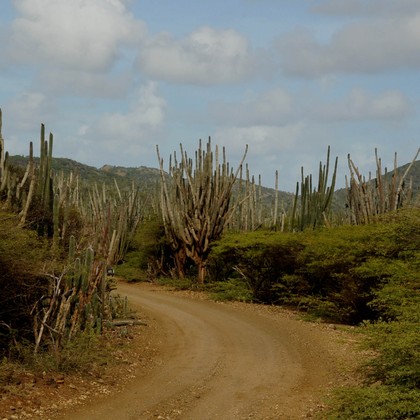
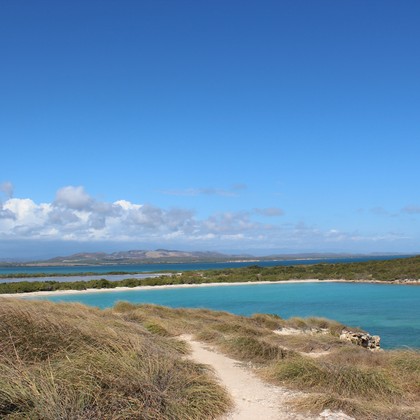
Every forest type on the island, from montane rainforest to dry lowland forest and coastal scrub, as well as well-wooded gardens. It forages actively in the lower and middle canopy for insects and often joins mixed flocks.
Where the bird is most at home, classified by the vegetation types of the Caribbean.




Range and movements
Only on Saint Lucia, throughout the island wherever there is forest or scrub. The species does not occur off the island.
- Resident
- dark = core range, pale = thinly spread
How and when to look
Found along forest trails in the interior, as in the rainforest reserve around the Barre de l'Isle and on the Des Cartiers Trail, but also in dry coastal scrub. The song can be heard all year.
Conservation status
Not threatened. The species is common on Saint Lucia and tolerates secondary forest and gardens, although its range remains small.
Scientific name
Setophaga delicata | (Ridgway, 1883)
Ridgway described the species in 1883 as Dendroeca adelaidae delicata; because it was later moved to another genus, the author and year stand in brackets. The genus Setophaga was introduced in 1827 by Swainson. Setophaga is Greek, from sēs, sētos 'moth' and -phagos '-eating': 'moth-eater'. delicata is Latin for 'dainty, delicate'. The specimen the first description was based on came from Saint Lucia.