All species › Waders, gulls and terns › Sandpipers and snipes › Spotted Sandpiper
Spotted Sandpiper | Actitis macularius
Amerikaanse oeverloper | Andarríos maculado
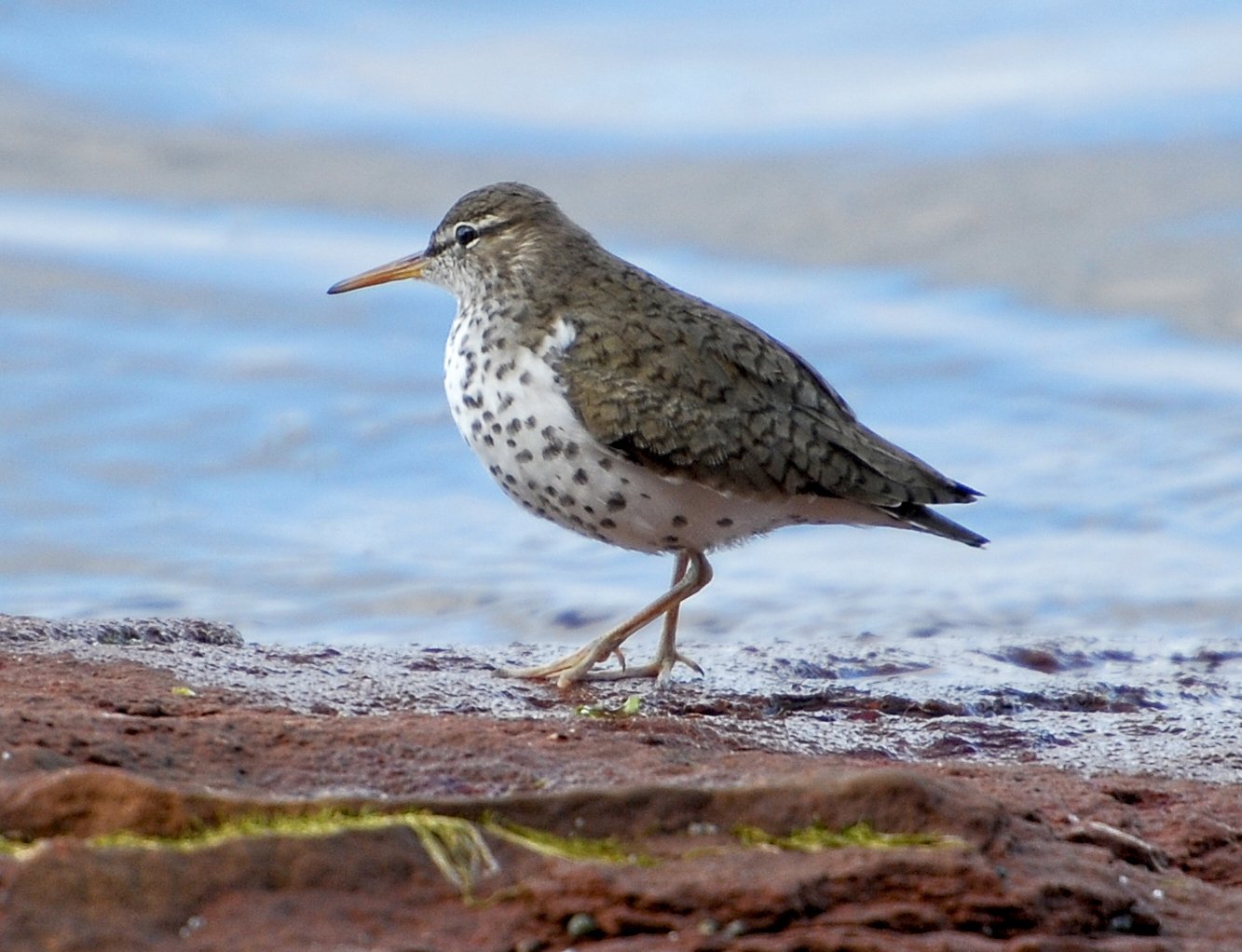
The Spotted Sandpiper is the most widespread small wader along rivers, ponds and rocky shores in the Caribbean. It is recognised by its constant teetering of the rear body and its low flight on stiff, flickering wingbeats. Sex roles are reversed: the female defends the territory and often mates with several males, which incubate the eggs and tend the young.
Voice
A clear, descending peet-weet or a series of weet-weet-weet notes, usually given on take-off; also a soft peet from the ground.
Recording: Manuel Grosselet — CC BY-NC-SA 4.0 · converted to mono · xeno-canto
Identification
18–20 cm, compact, with a fairly long tail and short yellowish or flesh-coloured legs. In winter, the plumage most often seen in the region, it is plain grey-brown above and white below, with a grey-brown patch on the breast side and a white wedge reaching up in front of the wing. A pale supercilium and dark eye-stripe; the bill is dark with a paler base. Breeding plumage appears in spring: round black spots on the underparts, fine dark barring above and an orange bill with a dark tip. Juveniles show fine pale barring on the wing coverts. In flight a short white wing bar.
Confusion species
Solitary Sandpiper Tringa solitaria is longer-legged and darker, with a white eye-ring, spotted upperparts, no wing bar and a dark rump; it bobs its head rather than its rear. Peeps such as Least Sandpiper Calidris minutilla do not teeter and feed in small groups. The combination of teetering, breast patch and flight action is diagnostic.
Habitat
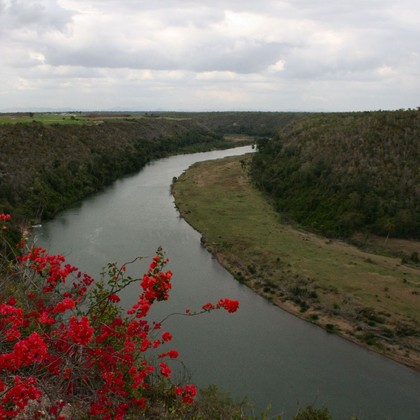
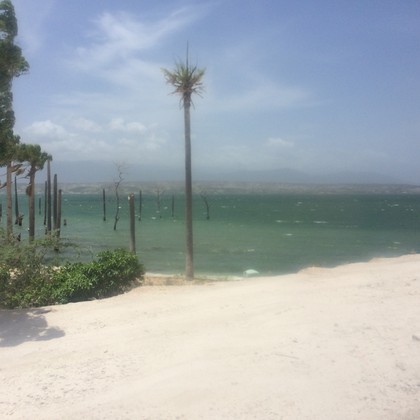
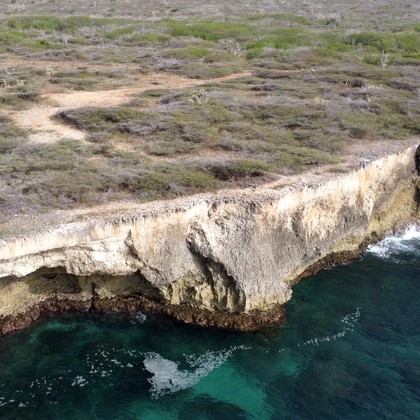
Almost any shoreline: rivers and streams well into the mountains, ponds, reservoirs, ditches and rice fields, but also rocky coasts, harbour walls, mangroves and the edges of salt ponds. It feeds alone or spread out, picking insects and small crustaceans from stones and the waterline, and in winter often defends its own stretch of shore.
Where the bird is most at home, classified by the vegetation types of the Caribbean.



Range and movements
Winter visitor and passage migrant throughout the region: the Bahamas, the Turks and Caicos Islands, the Greater Antilles, the Cayman Islands, the Virgin Islands, all of the Lesser Antilles, the ABC Islands, San Andrés and Trinidad and Tobago, common on most islands. The first birds arrive in July and August and the last leave in May; a few non-breeding birds remain through the summer. There are no known breeding records in the region. Outside the region it breeds across much of Canada and the United States and winters from the southern United States to northern Argentina.
- Resident
- Summer visitor (c. Oct–Mar)
- Winter visitor (c. Apr–Sep)
- Passage (Mar–Apr, Oct–Nov)
- dark = core range, pale = thinly spread
How and when to look
A teetering wader that flies off low over the water calling weet-weet is almost always this species. Rocky stream banks, harbour quays and the edges of hotel ponds are reliable places.
Conservation status
Not threatened. The species is widespread and adapts to man-made shorelines. A slow decline has been recorded in North America.
Scientific name
Actitis macularius | (Linnaeus, 1766)
Linnaeus described the species in 1766 as Tringa macularia; because it was later moved to another genus, the author and year stand in brackets. The genus Actitis was introduced in 1811 by Illiger. Actitis is Greek, from aktitēs, 'coast-dweller', from aktē, 'coast'. macularius is Latin for 'spotted', after the black spots on the underparts in breeding plumage. The specimen the first description was based on came from Pennsylvania.