All species › Passerines › Wrens › Southern House Wren
Southern House Wren | Troglodytes musculus
Zuidelijke huiswinterkoning | Ratona común
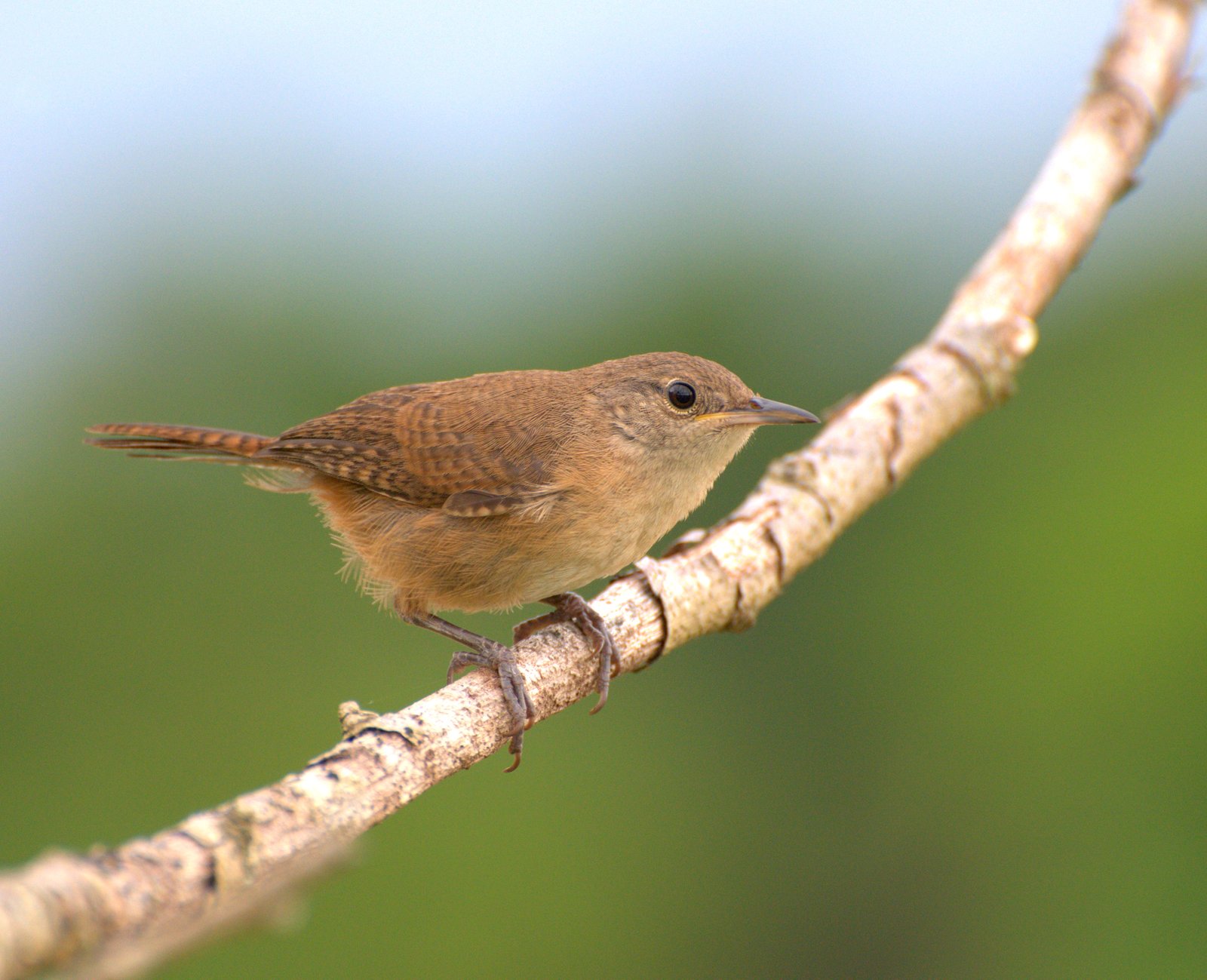
Southern House Wren is one of the commonest and most familiar birds of Trinidad and Tobago, living in and around houses, gardens and villages and singing throughout the year. It was long treated as a subspecies of Northern House Wren Troglodytes aedon and has been split on the basis of genetic differences, song and structure.
Voice
The song is a rapid, bubbling series of trills and clear notes, often repeated and heard year-round from roofs, fences and low bushes. Calls are a rasping chrr and a harsh, rattling chatter when alarmed.
Recording: Ned Bohman — CC BY-NC-SA 4.0 · converted to mono · xeno-canto
Identification
11–13 cm, small, with a thin, slightly curved bill and a short tail often held cocked. The upperparts are warm brown, more rufous on rump and tail; wings and tail are finely barred black. A narrow, faint buff supercilium. The underparts are pale buff to ochre, warmest on the flanks and undertail. The sexes are alike. Tobago birds are slightly larger and more robust than those of Trinidad.
Confusion species
Rufous-breasted Wren Pheugopedius rutilus is larger, with a black-and-white speckled face, a white supercilium and a rufous breast, and lives in forest rather than around houses. Trilling Gnatwren Ramphocaenus melanurus has a much longer, straight bill and a long, slender tail. Northern House Wren Troglodytes aedon is hardly separable in the field, but does not occur on Trinidad and Tobago.
Habitat
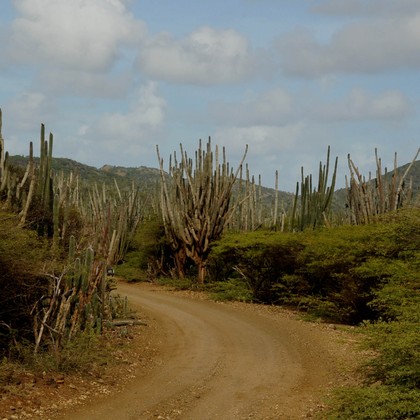
Almost anywhere people live: gardens, yards, villages and suburbs, fields and pastures with hedges, plantations, scrub and forest edges, from the coast into the hills; absent from closed forest. It forages low in vegetation, in wall crevices and under eaves for insects and spiders. It nests in all kinds of cavities, such as holes in walls and posts, under roof tiles, in tree holes and in nest boxes, which it fills with twigs.
Where the bird is most at home, classified by the vegetation types of the Caribbean.





Range and movements
In the Caribbean only on Trinidad and Tobago, where it is common on both islands. The house wrens of Dominica, Saint Lucia, Saint Vincent and Grenada were formerly placed in this species or in Northern House Wren, but are now treated as four separate endemic species; they have disappeared from Guadeloupe and Martinique. Outside the region from southern Mexico through Central America and across almost all of South America to Tierra del Fuego.
- Resident
- dark = core range, pale = thinly spread
How and when to look
Almost any garden or yard on Trinidad and Tobago, including hotel grounds and Port of Spain. The song gives the bird away first; it then often sits in fairly open view on a roof edge or fence.
Conservation status
Not threatened. The species has a very large range and benefits from human settlement and open, cultivated land.
Scientific name
Troglodytes musculus | Naumann, 1823
Naumann described the species in 1823 and placed it straight away in the genus where it still stands. The genus Troglodytes was introduced in 1809 by Vieillot. Troglodytes is Greek, from troglē 'hole, crevice' and dyein 'to creep into': 'cave-dweller', after the habit of disappearing into crevices and holes while foraging. musculus is Latin for 'little mouse', a diminutive of mus 'mouse', after the small, brown, mouse-like bird. The specimen the first description was based on came from Bahia, Brazil.