All species › Birds of prey › Hawks, eagles and kites › Snail Kite
Snail Kite | Rostrhamus sociabilis
Slakkenwouw | Gavilán caracolero
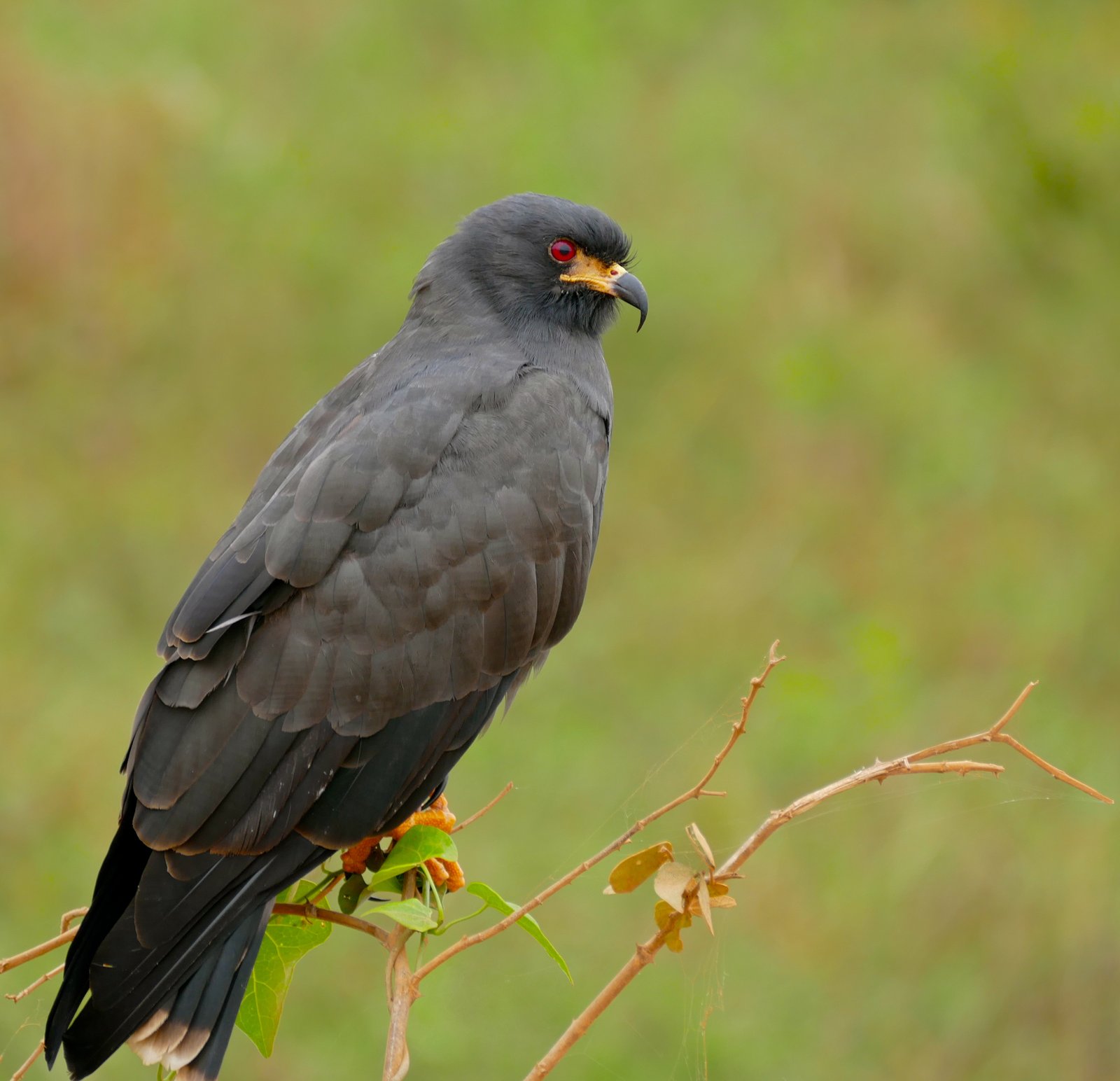
The Snail Kite is a specialised raptor of freshwater marshes that feeds almost exclusively on apple snails of the genus Pomacea. With its slender, strongly hooked bill it cuts the muscle that holds the snail in its shell. In Cuba it is locally common, and is known there as gavilán caracolero.
Voice
A dry, rasping cackle ka-ka-ka-ka and a bleating kreeeh, mainly near the nest and at communal roosts.
Recording: Jacob Wijpkema — CC BY-NC-SA 4.0 · shortened to the first 60 s, mono · xeno-canto
Identification
36–48 cm, with broad, rounded wings and a square tail. The male is slate grey to blackish, with a white tail base and undertail coverts and a dark terminal band. The bill is black and strongly hooked; cere, lores and legs are orange-red, the eye red. The female is dark brown above, with a pale face, a dark eye stripe and pale, heavily brown-streaked underparts; she also shows the white tail base, and her legs are yellow to orange. Juveniles resemble females, with a streaked crown and a brown eye. Flies low and slowly over marshes with deep, loose wingbeats, head angled downwards.
Confusion species
Northern Harrier Circus cyaneus and Long-winged Harrier Circus buffoni also have a white rump, but slimmer wings, a longer tail and a small, barely hooked bill. Cuban Kite Chondrohierax wilsonii and Hook-billed Kite Chondrohierax uncinatus also eat snails, but live in forest and have a banded tail without a white base. Crane Hawk Geranospiza caerulescens lacks the hooked bill and white tail base.
Habitat
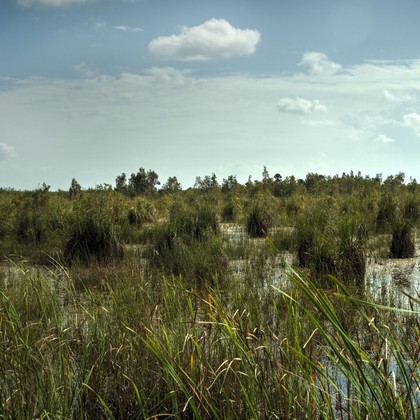
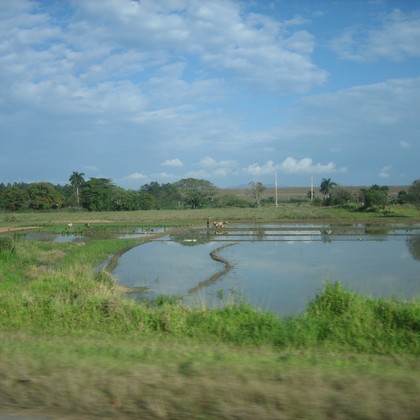
Open freshwater marshes with shallow water and floating or emergent vegetation, lake margins, rice fields and canals. It searches in flight or from a low perch for snails crawling just below the surface, seizes them with one foot and eats them at a regular post, beneath which piles of empty shells accumulate. It often nests in loose groups in shrubs or low trees in the marsh, and sometimes roosts communally.
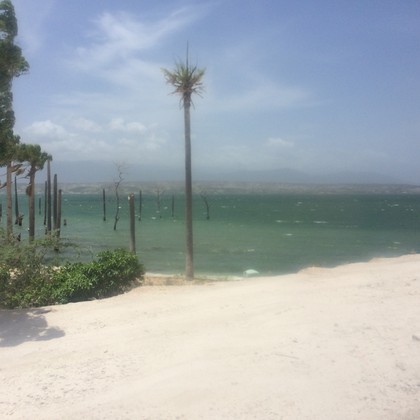
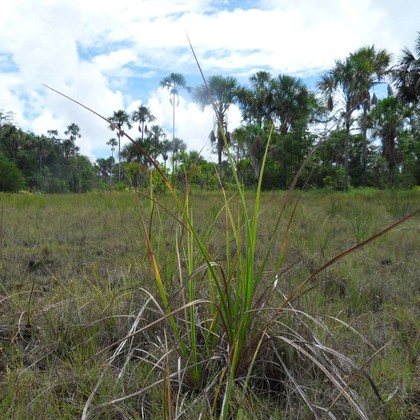
Where the bird is most at home, classified by the vegetation types of the Caribbean.
Range and movements
In Cuba, including the Isla de la Juventud, mainly in the large marshes such as the Ciénaga de Zapata and in rice-growing areas. In Trinidad a local resident of freshwater marshes, especially Nariva Swamp. Between 2020 and 2023 birds stayed for extended periods on Barbados and Grenada; elsewhere a rare vagrant, including to the ABC Islands. Outside the region in Florida, Mexico, Central and South America to Argentina.
- Resident
- Summer visitor (c. Oct–Mar)
- Winter visitor (c. Apr–Sep)
- Passage (Mar–Apr, Oct–Nov)
- dark = core range, pale = thinly spread
How and when to look
In Cuba in the Ciénaga de Zapata and along rice fields and canals in the lowlands, where birds often perch on posts or bushes over the water. Piles of empty apple-snail shells under a perch betray its presence. In Trinidad at Nariva Swamp.
Conservation status
Not threatened. The species depends on water levels: drainage of marshes and long droughts reduce the supply of apple snails. Rice fields and canals provide alternative habitat locally.
Scientific name
Rostrhamus sociabilis | (Vieillot, 1817)
Vieillot described the species in 1817 as Herpetotheres sociabilis; because it was later moved to another genus, the author and year stand in brackets. The genus Rostrhamus was introduced in 1830 by Lesson. Rostrhamus is Latin, from rostrum 'bill' and hamus 'hook', after the strongly hooked bill used to extract snails from their shells. sociabilis is Latin for 'sociable', after its habit of foraging, roosting and sometimes nesting in groups. The specimen the first description was based on came from Corrientes, Argentina.