All species › Passerines › Tyrant flycatchers › Sad Flycatcher
Sad Flycatcher | Myiarchus barbirostris
Jamaicatiran | Copetón triste
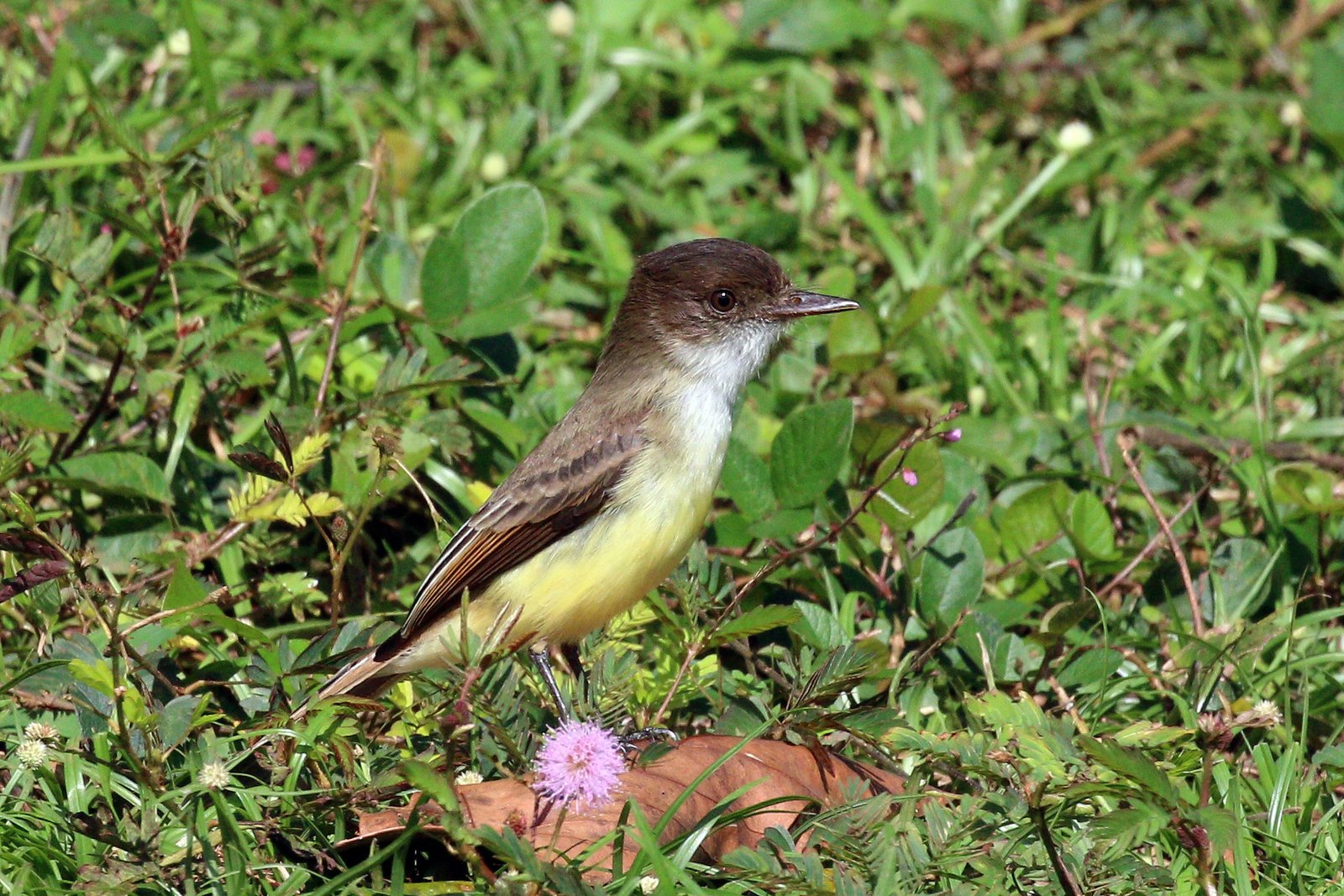
The Sad Flycatcher is the smallest member of the genus Myiarchus and occurs only in Jamaica. It is a forest bird that sallies after insects from a perch in the middle storey. Jamaica holds two other Myiarchus species, from which it differs in size, colour and voice.
Voice
An emphatic pip, pip-pip and sometimes a rising pip-pip-piree.
Recording: Ross Gallardy — CC BY-NC-SA 4.0 · converted to mono · xeno-canto
Identification
16–17 cm, with a short crest. The crown is dark smoky brown and contrasts with the olive, slightly rufous-tinged upperparts. Throat and upper breast are greyish, the rest of the underparts lemon yellow. Wings and tail are dark with narrow pale edgings. Bill and legs are black. The sexes are alike.
Confusion species
Rufous-tailed Flycatcher Myiarchus validus is clearly larger, with much rufous in the wings and tail. Stolid Flycatcher Myiarchus stolidus is larger and paler, with paler, less yellow underparts and white edges to the flight feathers. Jamaican Pewee Contopus pallidus lacks the yellow belly and the crest and perches upright on a lookout.
Habitat
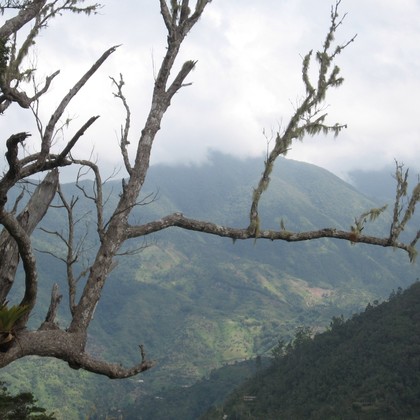
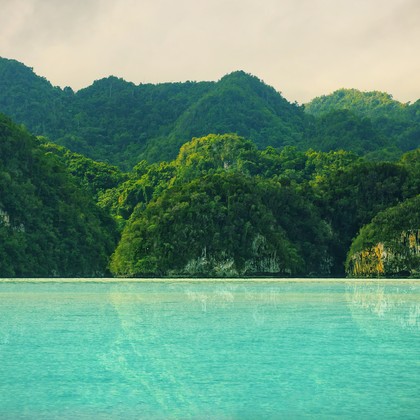
Mainly evergreen forest and woodland, in both lowlands and mountains, from sea level to about 2000 m; to a lesser extent dry lowland forest and open forest at high elevations, and it largely avoids mangroves. It hunts small insects from a perch 3–9 m up and often returns to the same branch. It breeds from April to June in a cavity, such as an old woodpecker hole, laying three or four eggs.
Where the bird is most at home, classified by the vegetation types of the Caribbean.



Range and movements
Only in Jamaica, throughout the island wherever there is forest. Outside the breeding season birds concentrate at middle elevations. It does not occur outside Jamaica.
- Resident
- dark = core range, pale = thinly spread
How and when to look
Almost any forested area in Jamaica, such as the Blue Mountains, the John Crow Mountains and Cockpit Country. The short pip is often the first clue; the dark cap, small size and lemon-yellow belly separate it from the island's other two Myiarchus species.
Conservation status
Not threatened. The species is widespread in Jamaica's forests, but depends on forest and is therefore sensitive to deforestation.
Scientific name
Myiarchus barbirostris | (Swainson, 1827)
Swainson described the species in 1827 as Tyrannula barbirostris; because it was later moved to another genus, the author and year stand in brackets. The genus Myiarchus was introduced in 1844 by Cabanis. Myiarchus is Greek, from muia 'fly' and arkhos 'ruler': 'fly-ruler'. barbirostris is Latin, from barba 'beard' and rostrum 'bill', after the bristles at the base of the bill. The specimen the first description was based on came from Jamaica (originally given in error as 'Mexico').