All species › Passerines › Thrushes › Rufous-throated Solitaire
Rufous-throated Solitaire | Myadestes genibarbis
Roodkeelsolitaire | Solitario gorjirrufo
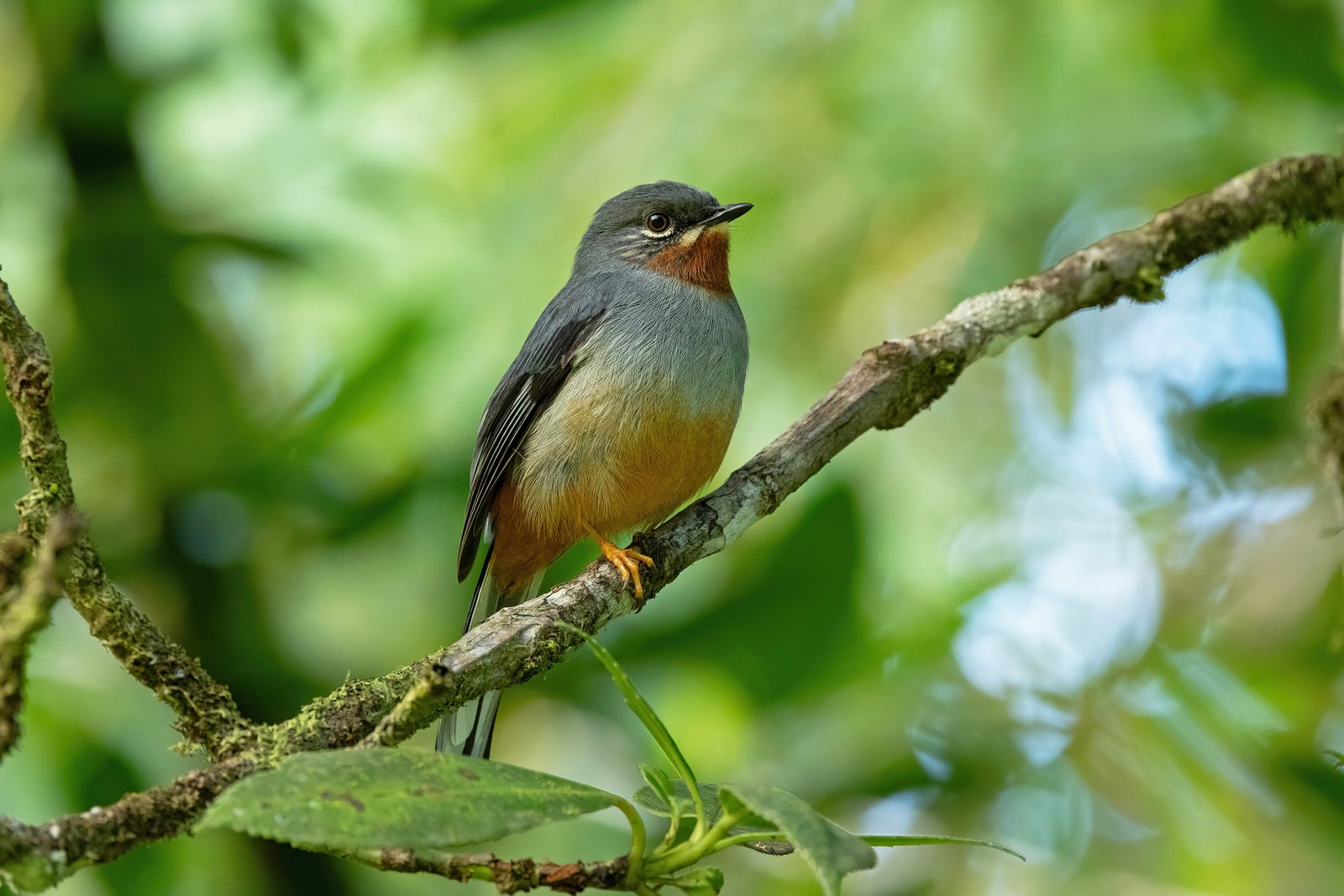
The Rufous-throated Solitaire is a grey thrush with a rufous throat found in the humid mountain forests of the Greater and Lesser Antilles. It is heard far more often than seen: its long whistles carry through the whole forest. On Dominica and Saint Lucia it is called siffleur montagne. Each island has its own subspecies.
Voice
The song consists of long, slow, pure whistles at varying pitches, interspersed with rapid double notes, with a tin-whistle quality. It is strongly ventriloquial and heard mainly at dawn and in mist. The call is a single long note, like a distant car horn.
Recording: Garrett Yocklin — CC BY-NC-SA 4.0 · converted to mono · xeno-canto
Identification
19–21 cm, slim, with a short black bill, a fairly long tail and yellow legs. Crown and upperparts slate grey, blackish in the birds on Saint Vincent. A white crescent below the eye with a dark malar stripe beneath it; the cheek is flecked rufous. The chin is whitish, the throat chestnut, the breast mid-grey and the lower belly and undertail ochre to rufous. The outer tail feathers are white and show in flight. The sexes are alike. Juveniles are browner and heavily spotted buff.
Confusion species
No other forest thrush combines grey upperparts, a rufous throat and white tail sides. Lesser Antillean Pewee Contopus latirostris perches just as upright but is smaller, with a pale bill base and uniform ochre underparts. Forest Thrush Turdus lherminieri is larger and brown, with a yellow bill and a scaled breast. On Hispaniola, La Selle Thrush Turdus swalesi is larger and darker, with an orange-red lower breast and belly.
Habitat
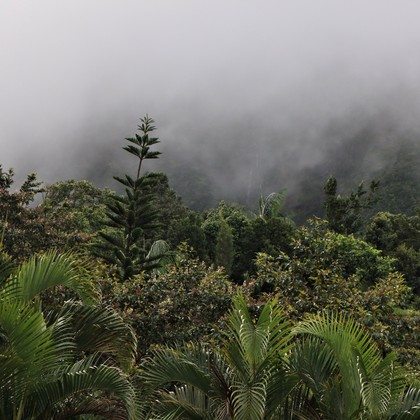
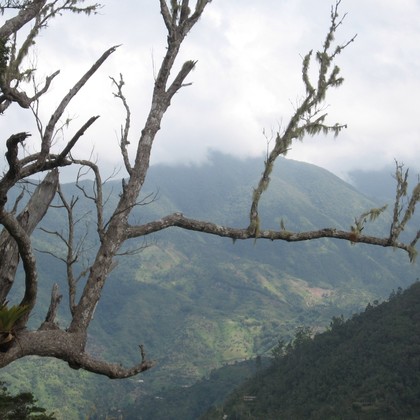
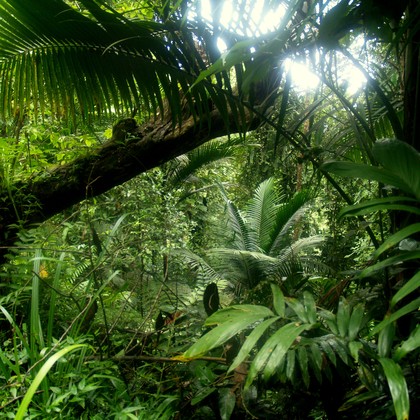
Dense, humid evergreen forest from the lowlands to cloud forest, up to about 1800 m, favouring montane forest and wooded ravines along streams; on Jamaica also wet limestone forest. It eats mainly fruit and berries and catches insects in short sallies from a shaded branch in the middle storey. The nest is a cup of moss and rootlets in a cavity, on a branch against a trunk or among epiphytes.
Where the bird is most at home, classified by the vegetation types of the Caribbean.


Range and movements
Resident on Jamaica (mainly the Blue Mountains, John Crow Mountains and Cockpit Country), Hispaniola (Massif de la Hotte and Massif de la Selle in Haiti, Sierra de Bahoruco and Cordillera Central in the Dominican Republic), Dominica, Martinique, Saint Lucia and Saint Vincent. Absent from Guadeloupe and the other islands. The species does not occur outside the Caribbean.
- Resident
- dark = core range, pale = thinly spread
How and when to look
Best early in the morning in montane forest, for example in the Blue Mountains of Jamaica, the Sierra de Bahoruco in the Dominican Republic or the Syndicate area on Dominica. The song gives the species away, but the bird often sits still; a careful search of the middle storey near the source of the sound helps.
Conservation status
Not threatened. The population is thought to be decreasing through deforestation in the lowlands and lower mountain zones, especially on Hispaniola. Hurricanes can severely damage the forest on the smaller islands for a time.
Scientific name
Myadestes genibarbis | Swainson, 1838
Swainson described the species in 1838 and placed it straight away in the genus where it still stands. He introduced the genus Myadestes in that same work. Myadestes is Greek, from muia 'fly' and edestēs 'eater': 'fly-eater'. genibarbis is Latin, from gena 'cheek' and barba 'beard', after the white moustachial stripe. The specimen the first description was based on came from Martinique (originally given in error as 'Africa or India').