All species › Birds of prey › Hawks, eagles and kites › Rufous Crab Hawk
Rufous Crab Hawk | Buteogallus aequinoctialis
Krabbenbuizerd | Gavilán cangrejero rojo
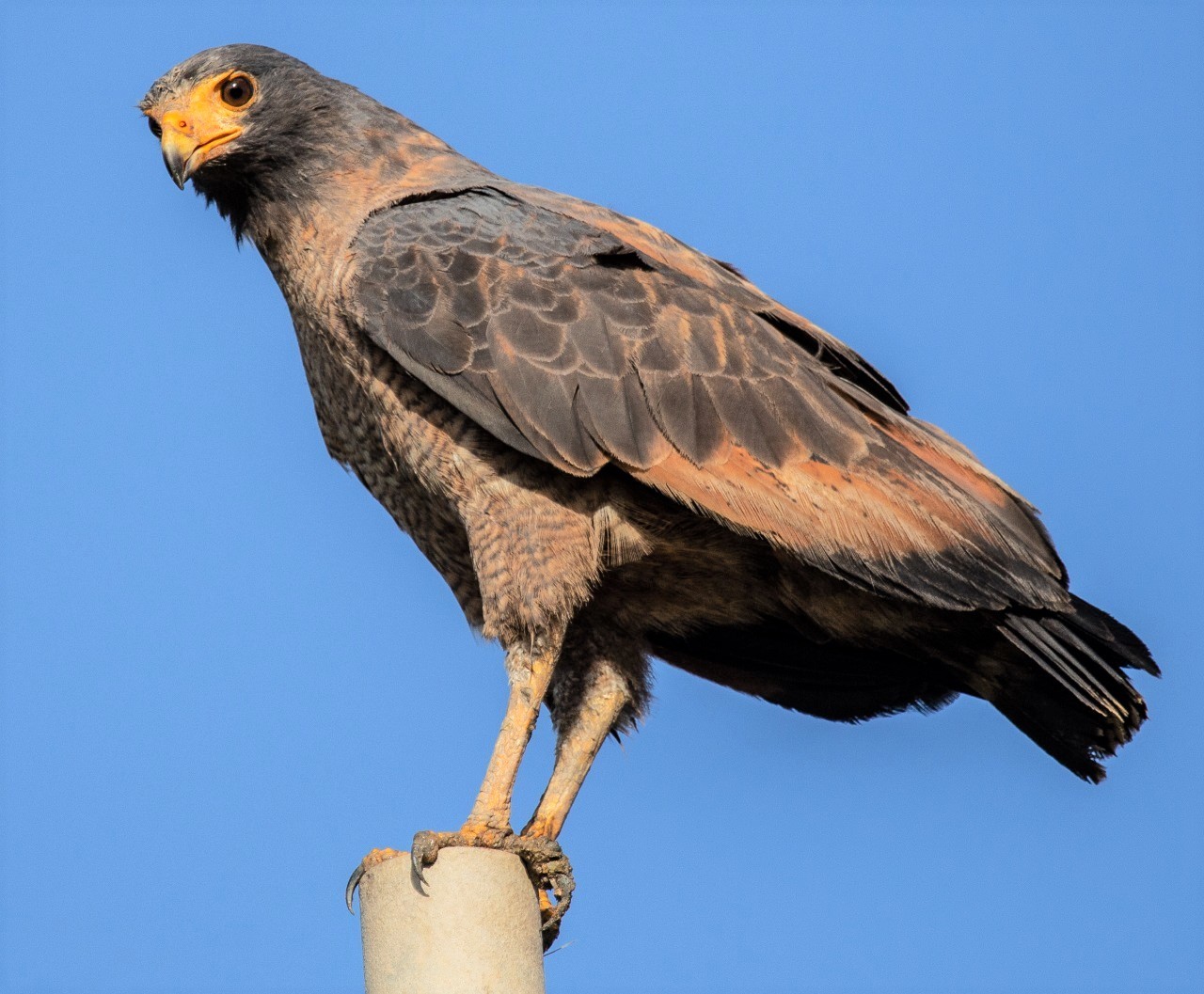
The Rufous Crab Hawk is a medium-sized, rufous hawk that lives almost entirely in mangroves and feeds on crabs. Its range is a narrow coastal strip from the Orinoco Delta to south-eastern Brazil. Within the region it occurs only in a small part of Trinidad.
Voice
A loud whistled laugh falling in pitch, ke-kee-kee-kee-kew-kew, mainly in the breeding season.
Recording: Eduardo Vieira 1301 — CC BY-NC-SA 4.0 · converted to mono · xeno-canto
Identification
43–46 cm, stocky, with broad wings and a short tail. Adults have a sooty black head and neck, a dark rufous back with pale fringes and rufous underparts with fine dark barring. The primaries are rufous with black tips, which shows as rufous wings in flight. The tail is black with a narrow white band and a white tip. Cere and legs are yellow to dull orange. Juveniles are brown to blackish brown above and white below with dark streaks, with a greyish, banded tail.
Confusion species
Savanna Hawk Buteogallus meridionalis is also rufous, but larger, with much longer legs, a grey mottled back and a head without black; it lives in open country. Common Black Hawk Buteogallus anthracinus shares the mangroves but is all black. Juveniles resemble young Common Black Hawks, but are smaller and have a shorter tail with less distinct bands.
Habitat
Mangroves and adjacent swamp forest along tidal creeks, practically at sea level. It hunts from a low perch in the mangroves, dropping briefly onto crabs on the mud or among the roots; other prey is scarcely known.
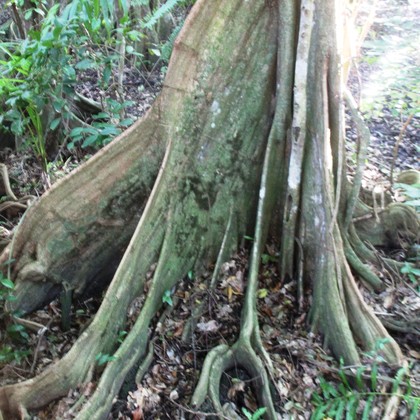
Where the bird is most at home, classified by the vegetation types of the Caribbean.

Range and movements
In Trinidad only in a few mangrove and swamp areas in the south-west, especially South Oropouche and Godineau Swamp; a small, local population. Not on Tobago. Outside the region along the Atlantic coast of South America, from the Orinoco Delta in Venezuela through the Guianas to Paraná in south-eastern Brazil.
- Resident
- dark = core range, pale = thinly spread
How and when to look
Godineau Swamp near South Oropouche, from the edge of the mangroves or by boat along the creeks at low tide, when crabs are active on the mud. Birds often sit motionless for long periods low in the mangroves; the call is usually noticed first.
Conservation status
Near Threatened. Numbers are declining through the loss of mangroves along the South American coast. In Trinidad its habitat is small and vulnerable to clearance, pollution and development.
Scientific name
Buteogallus aequinoctialis | (Gmelin, 1788)
Gmelin described the species in 1788 as Falco aequinoctialis; because it was later moved to another genus, the author and year stand in brackets. The genus Buteogallus was introduced in 1830 by Lesson. Buteogallus is Latin, from buteo 'buzzard' and gallus 'cock, fowl'; the reason for the second part is unclear. aequinoctialis is Latin for 'of the equinoctial line', i.e. of the equatorial regions where the species lives. The specimen the first description was based on came from Cayenne, French Guiana.