All species › Waders, gulls and terns › Sandpipers and snipes › Ruff
Ruff | Calidris pugnax
Kemphaan | Combatiente
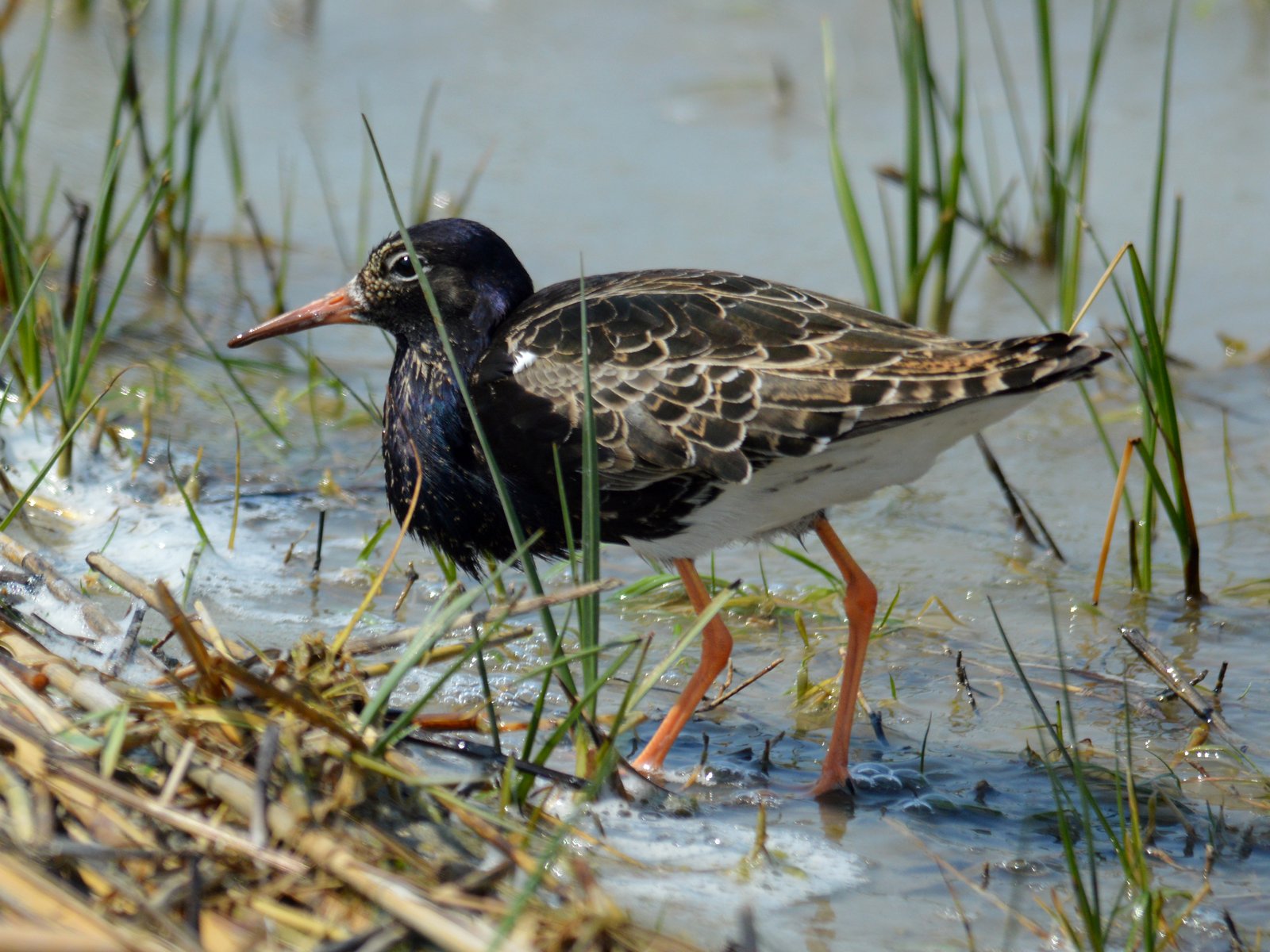
The Ruff is a wader of Europe and Asia that winters in Africa and southern Asia. A small number of birds reach the western side of the Atlantic each year, and in the Caribbean it is a rare but regular visitor, most often on Barbados. Males are much larger than females; the ruffs and ear tufts of breeding plumage are rarely seen here.
Voice
Largely silent away from the breeding grounds; sometimes a soft, low too-weet or a short grunt on take-off.
Recording: Stanislas Wroza — CC BY-NC-SA 4.0 · converted to mono · xeno-canto
Identification
Male 29–32 cm, female 22–26 cm. Small head on a fairly long neck, a short, slightly drooping bill and fairly long legs that may be yellow, orange or greenish. The upperparts look scaly from broad pale fringes to dark feather centres; in autumn the bird is often warm buff on head and breast without clear streaking, with a white belly. Often a pale ring around the bill base. In flight a narrow white wing bar and a dark rump with a large white oval on each side, giving a U-shaped pattern.
Confusion species
Lesser Yellowlegs Tringa flavipes is slimmer, with a thin straight bill, longer yellow legs and an entirely white rump. Buff-breasted Sandpiper Calidris subruficollis is smaller, with a short bill, yellow legs and plain buff face and underparts; it lacks the white ovals on the rump. Pectoral Sandpiper Calidris melanotos has a sharply demarcated streaked breast.
Habitat
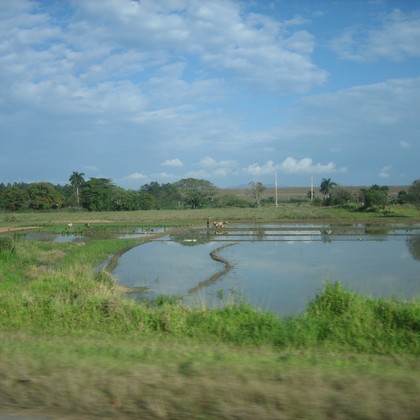
Shallow freshwater pools with muddy margins, wet grassland, rice fields, the edges of salt pans and lagoons. It feeds by walking and picking, often among yellowlegs and other waders.
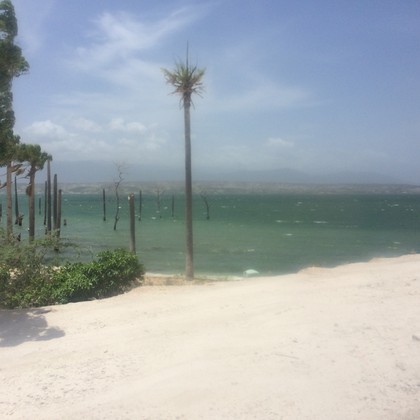
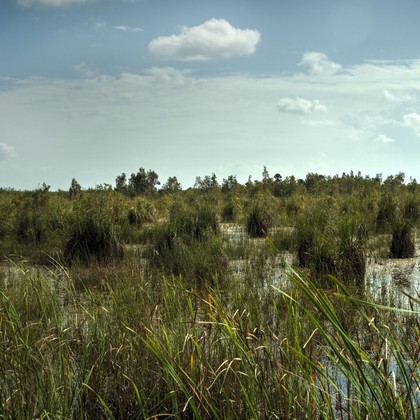
Where the bird is most at home, classified by the vegetation types of the Caribbean.


Range and movements
Most records come from Barbados, where the species is seen almost every year; it is also regular on Puerto Rico and Guadeloupe and scattered on Cuba, the Bahamas, Hispaniola, the Virgin Islands, Sint Maarten, St Kitts, Martinique, St Lucia, St Vincent, Grenada, Trinidad and Tobago, the Cayman Islands and the ABC Islands. Many islands have no records. Beyond the region it breeds from north-west Europe to eastern Siberia and winters mainly in sub-Saharan Africa and southern Asia.
How and when to look
Shallow freshwater pools on Barbados and Guadeloupe in autumn migration, among flocks of yellowlegs. A wader with a small head, short bill and scaly buff upperparts deserves a closer look; in flight the U-shaped white rump pattern is decisive.
Conservation status
Not globally threatened, although numbers in Europe are declining. In the Caribbean a rare visitor with no established population.
Scientific name
Calidris pugnax | (Linnaeus, 1758)
Linnaeus described the species in 1758 as Tringa Pugnax; because it was later moved to another genus, the author and year stand in brackets. The genus Calidris was introduced in 1804 by Merrem. Calidris goes back to Ancient Greek kalidris or skalidris, a name Aristotle used for an unidentified grey waterside bird. pugnax is Latin for 'combative', after the males' sparring at their display grounds. The specimen the first description was based on came from Sweden.